- The government will release advanced estimates of GDP for 2016-17 today
- According to a Bloomberg survey GDP may grow 6.8% in current fiscal
- Analysts expect growth to be hit by lower consumption due to note ban
Prime Minister Narendra Modi's administration is set to unveil its first assessment of how much his cash clampdown will slow one of the world's fastest-growing major economies.
India's gross domestic product will grow 6.8 percent in the year through March, according to the median of 15 estimates in a Bloomberg survey of economists, with the Statistics Office's forecast due at 5:30 p.m. in New Delhi on Friday. That's the slowest pace in three years and belies projections of a pick up to 7.7 percent made before PM Modi's Nov. 8 decision to cancel 86 percent of currency in circulation.
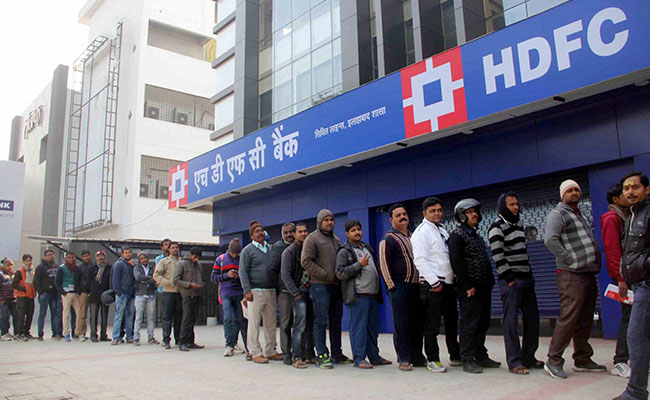
While analysts are still debating about how long the effects of the cash shortages will linger, a deep slowdown that kills jobs may turn voters against PM Modi in key state elections over the next two months. Indian stocks saw the biggest outflows in Asia last quarter and global funds sold the most rupee-debt in at least five years as the cash ban and higher U.S. interest rates deterred investors.
"Demonetization has clearly hurt all corners of activity," said Pranjul Bhandari, Mumbai-based economist at HSBC Holdings Plc, which has slashed GDP estimates by about 2 percentage points for the October-December and January-March quarters. "The investment sector may take the longest to revive."
Recent data back economists' concerns that consumption has been hit. The Nikkei purchasing managers' index signaled December contractions in both manufacturing and the dominant services sector, which contributes about 60 percent of GDP. A private gauge of consumer sentiment has dipped since mid-December and anecdotal evidence suggests job losses in India's vast informal sector that employs more than 90 percent of Indian workers.
With loan growth languishing at two-decade lows, commercial lenders slashed borrowing costs this week after PM Modi in a new year address to the nation urged them to take decisions in "national interest." The Reserve Bank of India will lower the main policy rate to 6 percent from 6.25 percent, probably at its Feb. 8 review, a Bloomberg survey shows.
The RBI last month lowered its growth forecasts but kept interest rates unchanged and said more data needs to be analyzed to assess the impact of the currency ban. Gross value added -- a key input of GDP -- will grow 7.1 percent in the year through March instead of the 7.6 percent forecast earlier, it said.
Masking the Slowdown
The government's Friday forecast is unlikely to capture the extent of demonetization due to the method used and lack of data coverage, according to Madhavi Arora and Upasna Bhardwaj, analysts at Kotak Mahindra Bank Ltd. in Mumbai. Investors may need to wait until the Feb. 28 or May 31 releases for the "earliest hint," they wrote in a report on Wednesday.
"The full extent of the effect on the fiscal year through March 2017 is likely to show up with a considerable lag in the January 2018 revised estimate release," Arora and Bhardwaj said.
That may be too late for voters and investors. The government is due to present its budget for the next fiscal year on Feb. 1 and state elections will start Feb. 4, with results scheduled on March 11.
© 2017 Bloomberg L.P
Essential Business Intelligence, Sharp Market Insights, Practical Personal Finance Advice, Daily Fuel, Gold and Silver Prices and Latest Stories — On NDTV Profit.