- Finance Ministry urges shift from Wholesale Price Index to Producer Price Index for contracts
- Price escalation clauses adjust payments based on cost changes during project execution
- PPI launched in June offers better insight into producer-level price movements than WPI
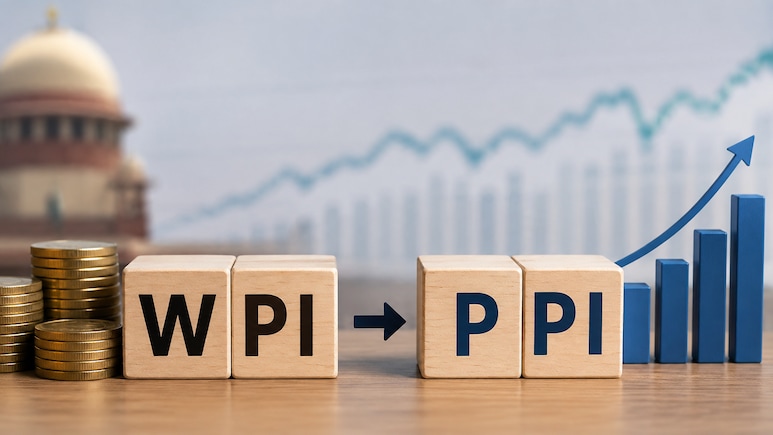
The Finance Ministry has urged all ministries and departments to shift to the Producer Price Index (PPI) from the Wholesale Price Index (WPI) for rate escalation and adjustment clauses in future government procurement contracts.
The Department of Expenditure, in an office memorandum dated July 13, said ministries and departments are "encouraged to adopt Producer Price Index (PPI) in place of Wholesale Price Index (WPI) in all price escalation clauses of future contracts, once PPI becomes available."
Price escalation clauses allow payments under government contracts to be adjusted for changes in the cost of key inputs such as materials, labour and fuel during project execution. The mechanism helps distribute the impact of inflation between the government and contractors.
Also Read | Layoffs Are Rising In Tech, But These Skills Are Helping People Unlock Better Pay
ALSO READ | India's New Inflation Trackers: DPIIT To Launch Output And Service PPIs On June 15
The move follows the Commerce Ministry's launch of monthly PPI data for goods and services from June this year. The Finance Ministry said PPI provides a better picture of price movements at the producer level and is more aligned with international practices.
The transition is also in line with recommendations of the International Monetary Fund (IMF), which has advocated a shift from WPI to PPI.
For the first time, India has Output PPI and Input PPI data, allowing a comparison between movements in output prices and input costs and providing insight into how changes in producer input costs are passed on to final output prices, according to an official statement.
The government has also introduced a revised WPI series with a new base year of 2022-23, replacing the earlier 2011-12 base. The revised series covers 957 items, compared with 697 in the previous series.
Given the widespread use of WPI in price escalation clauses, the index will continue to be published for five years from the release of the revised series alongside PPI. It will be discontinued thereafter, giving users time to transition to PPI, according to the government.
ALSO READ | WPI Inflation Rises To 10-Month High At 1.81% In January
The Output PPI covers representative goods across the economy, with manufactured products carrying the highest weight of 69.93%, followed by agriculture, forestry and fishing at 22.16%, electricity at 4.49% and mining and quarrying at 3.42%.
Service PPI currently covers seven sectors, banking, securities transactions, insurance, management of pension funds, railways, air passenger services and telecom. More services are expected to be added in subsequent phases, based on data availability.
The WPI and Output PPI are compiled monthly, while the government has said the expanded PPI framework will provide a more comprehensive measure of producer-level price movements.
Essential Business Intelligence, Sharp Market Insights, Practical Personal Finance Advice, Daily Fuel, Gold and Silver Prices and Latest Stories — On NDTV Profit.