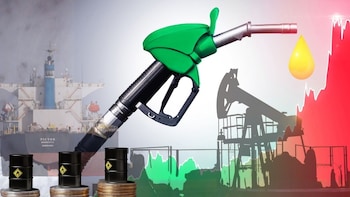
- India's Russian oil imports fell nearly one-third after US sanctions on Nov 21 took effect
- November imports averaged 1.8 million bpd, a five-month high before sanctions slowed flows
- Post-Nov 21 imports dropped to around 1.27 million bpd, with December expected near 1 million bpd
India's imports of Russian oil fell by nearly a third after stringent US sanctions on key Kremlin-linked exporters came into effect on November 21, and analysts expect further declines in December as refiners turned to alternatives to avoid breaching sanctions.
India's crude oil imports from Russia averaged 1.8 million barrels per day in November and accounted for more than 35% of its total crude import mix, according to real-time data analytics company Kpler.
The November imports, which compare with 1.5-1.6 million bpd of Russian oil flow in October, are expected to be a 5-month high, driven by increased imports before the Nov. 21 deadline.
"Before Nov. 21, imports were closer to 1.9-2.0 million bpd as buyers moved cargoes ahead of the deadline, after which volumes have slowed. It looks like refiners stocked up on crude ahead of the sanctions, planning to process it once the rules were in force," said Sumit Ritolia, Lead Research Analyst, Refining & Modeling, Kpler.
Post that, flows were tracking around 1.27 million bpd, down 570,000 bpd month-on-month. "Based on current loadings and voyage activity, we expect December arrivals to be in the range of 1.0 million bpd," he said. "This aligns with our earlier view that, in the short term, Russian flows could ease toward around 800,000 bpd before stabilising."
India, the world's third-largest oil importer, emerged as the biggest buyer of discounted Russian crude after Western countries shunned Moscow following its Feb. 2022 invasion of Ukraine.
Traditionally reliant on Middle Eastern oil, India dramatically increased Russian imports as sanctions and reduced European demand made the barrels available at steep discounts, pushing its share from under 1% to nearly 40% of total crude imports. In November, Russia remained the country's top supplier, accounting for more than a third of all crude oil imported.
But this could now change after US sanctions on Rosneft and Lukoil and their majority-owned subsidiaries took effect from Nov. 21, effectively turning crude linked to these firms as a 'sanctioned molecule'.
The sanctions have resulted in companies like Reliance Industries, Hindustan Petroleum Corporation Ltd., HPCL-Mittal Energy Ltd and Mangalore Refinery and Petrochemicals Ltd halting imports for now. The only exception is Rosneft-backed Nayara Energy, which is majorly dependent on Russian crude after supplies from the rest of the world were effectively cut off following European Union sanctions on it.
"In the medium term, refiners are already adjusting. We're seeing a shift toward non-designated Russian entities, more use of opaque trading channels, and increased sourcing from the Middle East, West Africa, and the Americas," Ritolia said. "On the Russian side, the response has been highly adaptive, involving ship-to-ship transfers near Mumbai, mid-voyage diversions, and more complex logistics to keep barrels moving and increase discounts."
As long as broader secondary sanctions aren't applied, India is likely to continue importing Russian crude - just through more indirect and less transparent routes, he said.
Nayara Energy, running almost entirely on Russian grades, has been a standout, importing roughly 400,000 bpd in November and maintaining refinery runs of 380,000-400,000 bpd, up 20,000-25,000 bpd from October. The company has efficiently managed domestic dispatches and exports to markets including Brazil, Turkey, and Sudan, while sending about a third of clean-product cargoes via ship-to-ship hubs such as Fujairah and Sohar to obscure final destinations, he said.
Emerging suppliers such as Tatneft, RusExport, MorExport, and Alghaf Marine DMCC are enabling refiners to maintain access to discounted barrels while remaining compliant, he said.
Overall, while direct Russian imports are expected to dip after November, the decline is seen as temporary, with India's supply chains quickly reorganizing to balance both geopolitical and economic considerations.
Essential Business Intelligence, Continuous LIVE TV, Sharp Market Insights, Practical Personal Finance Advice and Latest Stories — On NDTV Profit.








_portrait_on_23_March_1950.jpg?im=FitAndFill,algorithm=dnn,width=240,height=180)