The Union Cabinet, chaired by the Prime Minister Narendra Modi, has approved the Mission for Aatmanirbharta in Pulses- a landmark initiative aimed at boosting domestic production and achieving self-sufficiency (Aatmanirbharta) in pulses. The Mission will be implemented over a six-year period, from 2025-26 to 2030-31, with a financial outlay of Rs 11,440 crore.
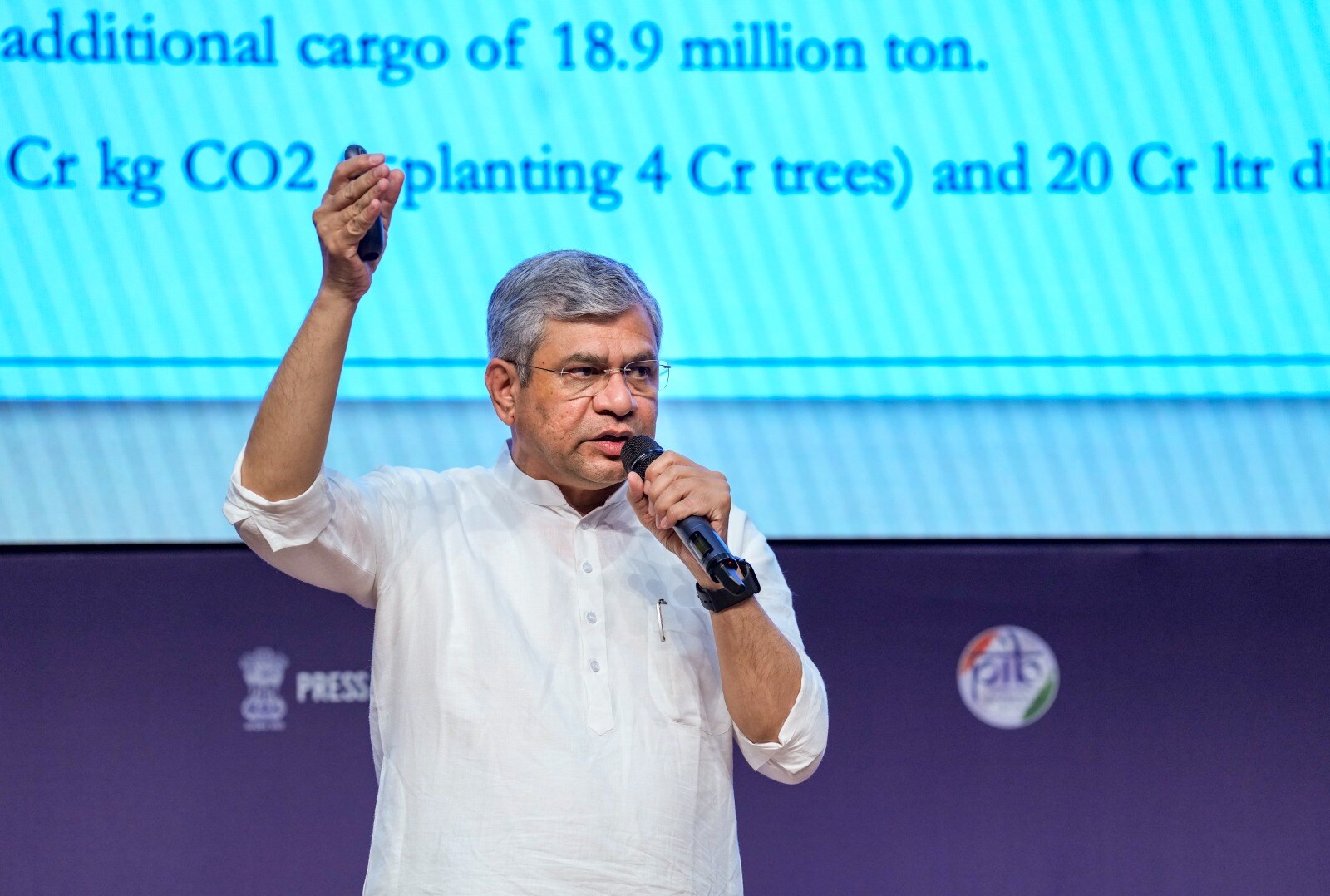
While explaining the decision in detail Union Minister Ashwini Vaishnaw said, "India is not only one of the biggest producers of pulses but also one of the biggest consumers, since for the vegetarian population pulses are a primary source of protein".

-
 NDTV Profit Ignite 2026: Experts See Opportunity In Equities, Stay Bullish For Long-Term
-
 Buy Right, Sit Tight Does Not Work for Individual Stocks, Says Dinshaw Irani
-
 'Worst Is Behind': Quant MF Sees Market Bottom, Flags 'Extreme Euphoria' In Midcaps
-
 India's Mutual Fund Industry Could Become A $1 Trillion Opportunity, Say Fund Managers
-
 'Foreign Investors Are Baraatis': Raamdeo Agrawal's Take On LTCG Tax
-
 Stay Invested Through Market Cycles: Raamdeo Agrawal at NDTV Profit Ignite
-
 Ramesh Damani Remains Bullish On India For Next 20-30 Years, Sees Bargains Amid Market Weakness
-
 CAS Came After A Long Consultation Process: SEBI Chairman Tuhin Kanta Pandey AT NDTV PROFIT IGNITE
-
 Aim To Cut FPI Onboarding Time From Mth To Five Days: SEBI Chairman Tuhin Kanta Pandey AT NDTV PROFI
-
 'One Can Never Get Good News And Bad Share Price': S Naren, ICICI Pru Life AMC On NDTV Profit Ignite
However, domestic production has not kept pace with demand, leading to a 15–20% increase in pulse imports. To reduce this import dependency, meet rising demand, maximise production, and enhance farmers income, a 6-year "Mission for Aatmanirbharta in Pulses" was announced in the FY 2025-26 Budget. The mission will adopt a comprehensive strategy covering research, seed systems, area expansion, procurement, and price stability.
Also Read | Layoffs Are Rising In Tech, But These Skills Are Helping People Unlock Better Pay
The emphasis will be placed on developing and disseminating latest varieties of pulses which are high in productivity, pest-resistant and climate-resilient. Multi-location trials will be carried out in major pulse-growing states to ensure regional suitability.
In addition, for ensuring availability for premium quality seeds, states will prepare five-year rolling seed production plans will be prepared. The breeder seed production will be supervised by ICAR. Foundation and certified seed production will be done by state and central level agencies, and closely tracked through the Seed Authentication, Traceability & Holistic Inventory (SATHI) portal.
To make improved varieties widely available, 126 lakh quintals certified seeds will be distributed to pulse-growing farmers, covering 370 lakh hectares by 2030-31.
This will be complemented by convergence with the soil health programme, sub-mission on Agricultural Mechanisation, balanced fertilizer use, plant protection, and extensive demonstrations by ICAR, KVKs, and State Departments to promote best practices.
The mission also seeks to expand the area under pulses by an additional 35 lakh hectares by targeting rice fallow areas and other diversifiable lands, supported by promoting intercropping and crop diversification. For this, 88 lakh seed kit will be distributed free of cost to the farmers.
Capacity building of farmers and seed growers will be taken up through structured training programmes to promote sustainable techniques and modern technologies.
To strengthen markets and value chains, the mission will help develop post-harvest infrastructure, including 1000 processing units, thereby reducing crop losses, improving value addition, and increasing farmer incomes. A maximum subsidy of Rs. 25 lakh will be available for setting up of processing, packaging units.
Addressing the subject of farmers' finances Vaishnaw stated, "If we focus on storage and processing, farmers' income go through a quantum jump." He added that one of the biggest challenges that arises with storing pulses is that a powder starts forming shortly after they are harvested, and therefore this problem needs to be combatted with better storage and good quality seeds.
Adopting a cluster-based approach, the mission will tailor interventions to the specific needs of each cluster. This will enable more effective allocation of resources, enhance productivity, and promote geographic diversification of pulse production.
A major feature of the Mission will be assured up to 100% procurement of Tur, Urad, and Masoor pulses under Price Support Scheme of PM-AASHA. NAFED and NCCF will undertake 100% procurement in participating states for the next four years from farmers who register with these agencies and enter into agreements.
Additionally, to safeguard farmer confidence, the Mission will establish a mechanism for monitoring global pulse prices.
By 2030-31, the Mission is expected to expand the area under pulses to 310 lakh hectares, increase production to 350 lakh tonnes, and raise yield to 1130 kg/ha. Alongside productivity gains, the Mission will generate significant employment.
The mission seeks to achieve the goal of Atmanirbharta (self-reliance) in pulses, reduce import dependency and conserve valuable foreign exchange while boosting farmers' incomes.
Additionally it aims to accrue significant environmental benefits in the form of climate resilient practices, and improved soil health and making productive use of crop fallow areas.
Essential Business Intelligence, Sharp Market Insights, Practical Personal Finance Advice, Daily Fuel, Gold and Silver Prices and Latest Stories — On NDTV Profit.