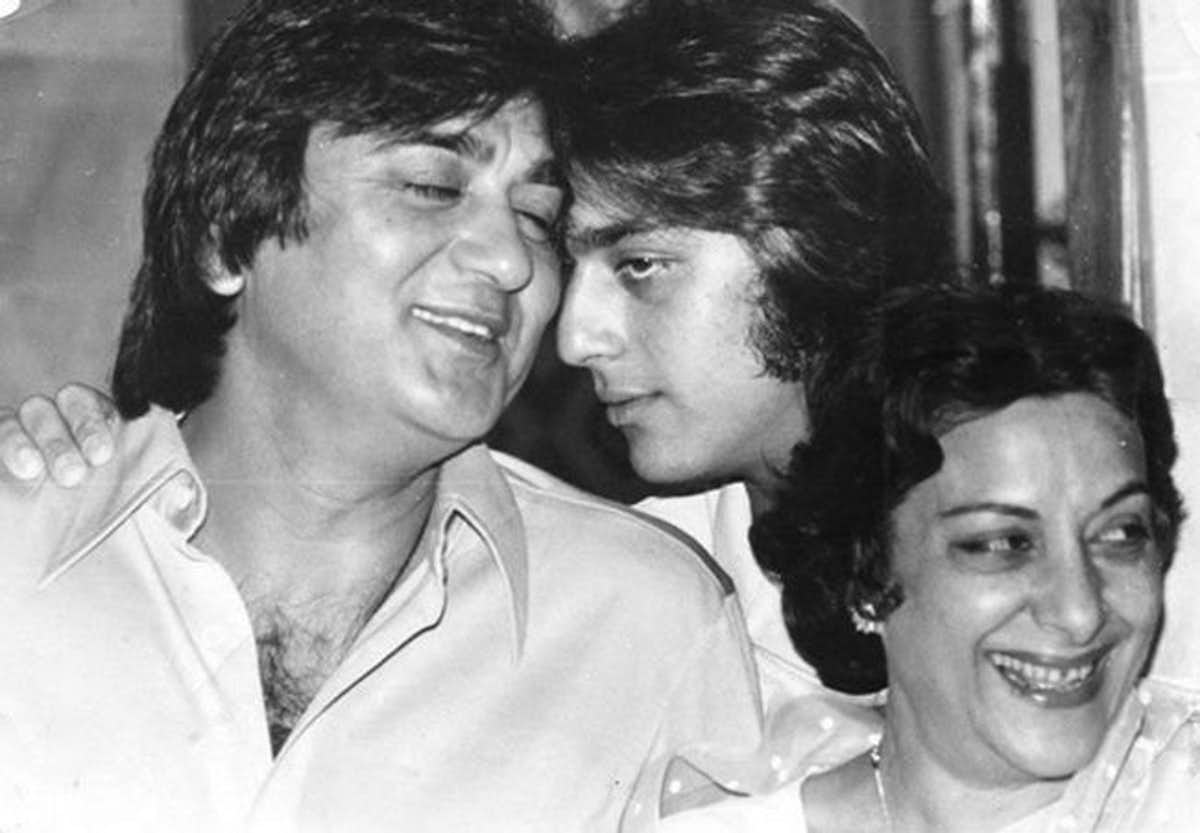
Sanju is a post-truth biopic of controversial film star Sanjay Dutt. It airbrushes vast swathes of his personal life during the two incidents that it's based on, viz his severe drug addiction in the 1980s and indictment/trial for the 1993 Mumbai blasts thereafter. His insensitive break-up with a terminally ill wife, divorce with another who stood with him through his worst days, an uneven relationship with his first-born daughter… all of this, and more, have been simply obliterated from the record. Which is why Sanju fits in well with the stark post-truth simplicities of a Trump/Modi world, that is, everything is either black or white, good or evil, friendly or inimical. No nuance, no grays.
But there is one part of the film which is real, and that is the larger than life character of Sunil Dutt, Sanju's father. There was nothing post-truth about his unwavering saintliness in the film; he was an extraordinary human being.
I came out of the theatre feeling a tinge of guilt. I have never quite acknowledged the enormous debt of gratitude I owe Dutt sahib (as he was fondly called by everybody). I must have met him no more than half-a-dozen times, but what he did for me – strangely, all of that happened at tangents to the critical moments depicted in Sanju – was almost Godly. Let me start at the beginning.
Also Read | Layoffs Are Rising In Tech, But These Skills Are Helping People Unlock Better Pay
When I Was A Fanboy…
Through my teen years in the 1970s, I was a simple fanboy of Sunil Dutt, the unusual film actor and director (his Yaadein, in 1964, was a two-hour monologue with a single actor, himself; to this day, it features in the Guinness Book of World Records in the category of “fewest actors in a narrative film”). His life was a fairy tale of struggles and self-made success. He lost his father at the horribly tender age of five. Then his land-owning family was uprooted from Pakistan during the Partition.
But he worked as a clerk with Mumbai's BEST, freelanced as a radio jockey, while completing his BA Honours in History from Jai Hind College.
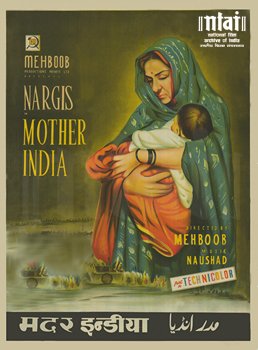
His big break came in Mother India, where he played a short-tempered son. Ironically, he fell in love with his screen mother, Nargis, when he heroically saved her from a fire that ravaged the film set.
 @NFAIOfficial/Twitter) ">
The Nargis-Sunil Dutt marriage was as controversial as it was iconic. She was a Muslim, he a Punjabi Hindu. It was the ultra-conservative 1950s. And Nargis was recovering from a bruising, hugely publicised romance with Raj Kapoor, a married superstar of those times. But whenever people questioned Sunil Dutt about marrying Nargis “on a wounded rebound”, his response would be typically straightforward: “I never knew there was a romance. I am only concerned about the person who comes into my life; what matters from that day on is how true the person is to me. The past is nothing to me.”
When I First Met Nargis And Sunil Dutt…
I first met Nargis and Sunil Dutt in early 1980, at a dinner to celebrate her nomination to the Rajya Sabha by Indira Gandhi, who had just been re-elected as India's Prime Minister. By then, Dutt sahib had become a good friend of my father's (a senior IAS officer close to the ruling establishment). Nargisji was excited, but a tad worried that she was “losing too much weight and feeling excessively tired”.
Dutt sahib was ebullient, handsome, tall, and charming at the dinner. He clung to his whiskey, taking copious gulps and ribbing my father for eating dessert. “This sugar is poison, Bahl sahib. Just look at me. I drink like a fish, but am still lean because I hardly eat, and avoid desserts like the plague”. As is usual at Punjabi dinners, a big, meaningless guffaw followed, with much jovial back-slapping. I, a gawky teenager, simply looked on in awe at all these beautiful, successful people around me.
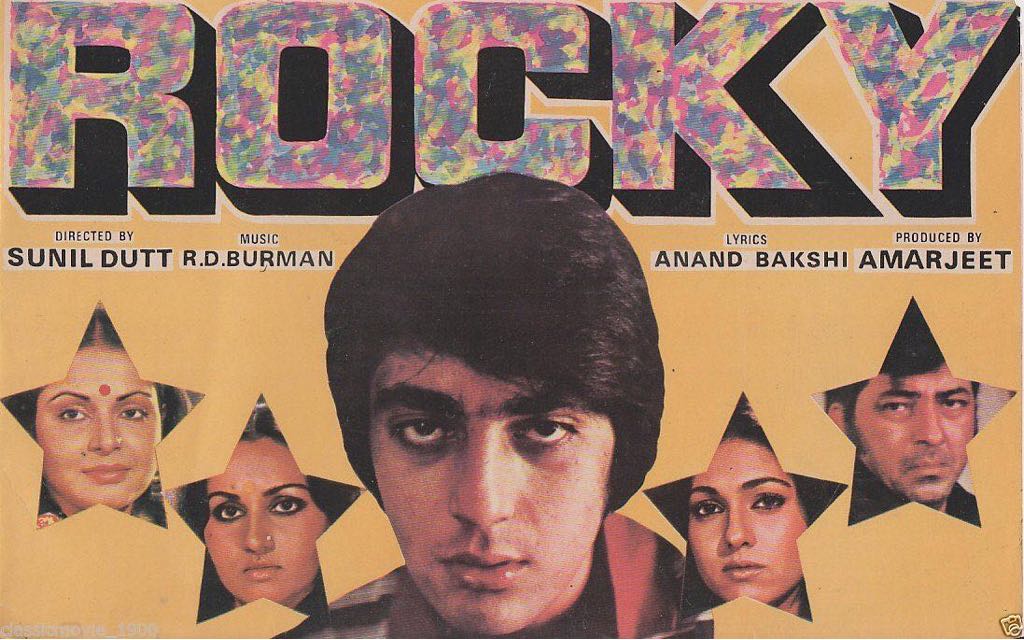
A rude shock occurred a few months later. Nargisji's “fearful weight loss” metastasized into a late-stage pancreatic cancer. Dutt sahib flew his beloved wife to Memorial Sloan-Kettering Cancer Center in New York, where the doctors tried to fight her dreadful disease. For months on end, Dutt sahib was like a rock by his wife's bedside. Unfortunately, the cancer was far too advanced. They returned to Mumbai, where she died on May 3, 1981, just four days short of Rocky's release, her son's debut film directed by her husband (all of this is shown in the biopic). My parents (and I, by implication) were dazed by this rapidly unspooling tragedy.
 @duttsanjay/Twitter) ">
Now I Fell Ill…
Then in late 1982, barely 18 months after Nargisji's death, I fell seriously ill. I was first air-lifted to Mumbai for a surgery, which was messed up. I had to be urgently evacuated to Memorial Hospital in New York. My father reached out to Dutt sahib. Luckily, he was in the Big Apple, working to build the Nargis Dutt Foundation for Cancer Patients. He asked my father to “immediately bring the boy here. I will take care of everything. Don't worry. Keep the faith. We shall fight this together”.
I landed in New York in early February 1983. The city had gotten its first blizzard of the season. Everything was white. I was rushed on a stretcher through JFK and into a waiting ambulance. We howled our way through late-evening Sunday in-bound Manhattan traffic. When we reached Memorial Hospital, there he was, in the lobby, smiling and reassuring as always. With him was Mrs. Beatty, the wife of Dr. Edward Beatty, the Director of Memorial Hospital, who had treated Nargisji, and become good friends with Dutt sahib. He persuaded them to waive the mandatory $30,000 deposit required to admit patients. It was a humongous and kind gesture. They need not have come personally on a snow-ravaged Sunday evening. Just their phone call or verbal instructions to the hospital administration would have sufficed.
But that was Dutt sahib for you, amazingly empathetic, astonishingly indulgent, a wonderful soul.
As my treatment progressed, he would often drop by, his sunlit smile adding to the radiance of my recovery. He was looking strong and healthy, what with the 6 am jogs in Central Park. One day, he convinced an unusually reticent and shy Sanju to drop by my hospital room. We were two awkward twenty-two-year-olds in a strange land, with nothing much to say to each other. It was a very brief “get well soon” encounter. As I watched Sanju, I could not help speculating whether, on that very evening, Sanjay Dutt had gone to the strip club in Manhattan, as shown in the film. Who knows!
Eventually, I got cured and returned to India. I finished my MBA, and among other work, joined Newstrack (India Today's monthly video news magazine). Dutt sahib had jumped into active politics on the Congress's bailiwick, getting elected to Lok Sabha from Mumbai North West defeating the formidable Ram Jethmalani (he won five times from this constituency, remaining undefeated; honestly, no electorate would have voted against him, he was that kind of guy).
1984 :: Congress (I) Election Campaign Poster For Actor Sunil Dutt pic.twitter.com/9OGzOi6RXf
Dutt Sahib, The Activist Politician
In the late 1980s, he undertook two massive padyatras (marathon walks for peace), one from Mumbai to Amritsar, and another from Nagasaki to Hiroshima. His sojourn through terror-afflicted Punjab was miraculous.
He was unarmed and vulnerable. But nobody dared harm him.His quest for peace climaxed in a rapturous welcome at Harmandir Sahib at the Golden Temple. Violent Punjab had saluted its peaceful son.
We ran into each other a couple of times during those years, and he would be the first to reach out (I would always hesitate, never being sure whether a colossus like him would even remember who I was). But his affections would invariably overwhelm the moment: “whenever I see you on Newstrack, my chest swells up with pride. I tell everybody around me, see how this boy has fought back. God bless you, my son, I am so proud of you.” Of course, all of this would be said in chaste Punjabi, and what I have attempted here is a sanitized English translation of his warm emotions.
A Final, Immortal Encounter
My most treasured encounter with him was in the last week of May 2005. We met on a Delhi-Mumbai Jet Airways flight. I was sitting in 1F, and he was across the aisle from me, in 1A. As usual, I wasn't sure if he would recognise me, but what a fool I was.
A loud voice rang out in Punjabi: “Ki haal hai thauda?” (How are you?)
I got out of my seat, and stood in the aisle” “I am fine sir, how are you?”
Dutt sahib (now frail and holding a stick): “Not too well today. Am running a fever. So I am going back to Mumbai. Will rest through the weekend at home, with the children. How is Bahl sahib? Still in Dehradun? Keeping well, I hope?”
I: “Unfortunately, sir, he is no more. But until his last moment, he always remembered you as a true friend.”
Dutt sahib (remember, all of this was said in Punjabi): “Oh ho, this is so sad. Your father was a great man, a great friend. Chalo, he will be happy in heaven, Rab Rakha (God bless him). But you are doing so well, my son. I see all your TV channels. Brilliant. Your business programmes are so intelligent. You know I am the Union Sports Minister now, don't you? Only young people like you can give me good ideas, because it's a young person's ministry. After I return to Delhi next week, I will come by and see you in your office to get some fresh ideas on how to pick up our sports.”
I: “Sir, I will come to your office, why should you take the trouble. It's my duty.”
Dutt sahib: “Oh, nahin yaar. Mera kam haiga, teh mai hi aawaanga.”(I had to put that down in Punjabi, to transmit the humility in real time: “No my friend. It's my work, so I will come to you.”)
The flight was about to take off; I went back to my seat, making a note in my diary to “call Dutt sahib next week and fix a meeting at his office”.
Unfortunately, Dutt sahib never returned to Delhi. Within a couple of days, he suffered a heart attack and died at his Bandra residence in Mumbai on May 25, 2005.
I have never stopped thanking my God for that last encounter with the legendary Dutt sahib. It was my celestial appointment with a man who gave so utterly, totally, completely selflessly, to me and millions of others.
R.I.P. Sir. I am so glad that you are portrayed as the saint you were in Sanju.
Raghav Bahl is the co-founder and chairman of Quintillion Media, including BloombergQuint. He is the author of two books, viz ‘Superpower?: The Amazing Race Between China's Hare and India's Tortoise', and ‘Super Economies: America, India, China & The Future Of The World'.
Essential Business Intelligence, Sharp Market Insights, Practical Personal Finance Advice, Daily Fuel, Gold and Silver Prices and Latest Stories — On NDTV Profit.