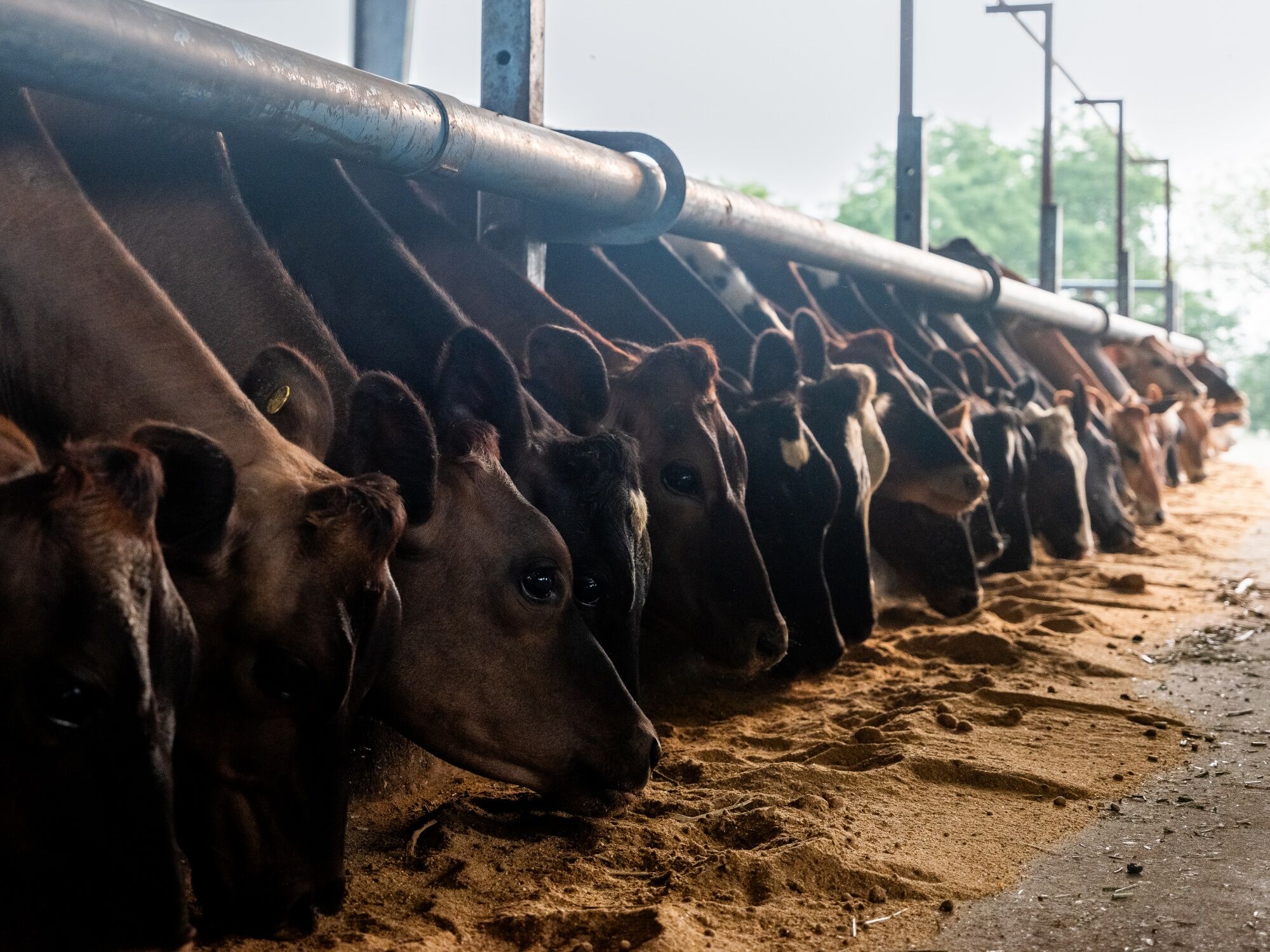
(Bloomberg) -- Greenhouse gas emissions from the world's top meat and dairy producers increased further this year, highlighting the urgent need for the food industry to clean its practices and help prevent global warming.
Disclosed emissions from the world's 20 largest publicly-listed meat and dairy companies rose 3.3% from 2022 levels, according to a report by investor network FAIRR Initiative. Its analysis includes companies like Hormel Foods Corp. and China's New Hope Liuhe Co., which supply household names like Walmart Inc. and McDonald's Corp.
“The sector is just not on track,” said Thalia Vounaki, senior manager for research and engagements at FAIRR.
The food industry's climate footprint is immense, accounting for about a third of global greenhouse gases. Livestock, which releases potent methane, makes up 14.5% of worldwide emissions.
Read more: Companies Aren't Using Quick Fix to Reduce Methane Emissions
That underlines the need to focus on food and agriculture as world leaders gear up for the upcoming COP28 summit in Dubai later this month, FAIRR said in its report. The group of investors raises awareness about the environmental, social and governance risks and opportunities in the global food sector, and is backed by more than $70 trillion in assets.
The United Arab Emirates has called for commitments to transform the food industry, while the United Nations' Food and Agriculture Organization is set to unveil a net-zero roadmap for the sector.
FAIRR's report highlights that some companies have managed to reduce their emissions, such as Tyson Foods Inc. and Danone SA. But overall there are varying levels of climate commitments and disclosure, it said. Almost two-thirds of the companies it analyzed didn't disclose so-called Scope 3 emissions, which include those that occur indirectly along a company's value chain. Only four out of top 20 companies in the sector have net-zero aims.
The report highlighted that the livestock industry has seen improvements in areas such as alternative proteins, waste and pollution and water use. While that shows “bad practice is not an inevitable part of the food supply ecosystem,” the investor group urged for more progress on environmental aspects.
“We've long known that humanity can't fix climate change without fixing the way we feed the world,” according to Jeremy Coller, private equity investor and founder of FAIRR.
More stories like this are available on bloomberg.com
©2023 Bloomberg L.P.
Essential Business Intelligence, Sharp Market Insights, Practical Personal Finance Advice, Daily Fuel, Gold and Silver Prices and Latest Stories — On NDTV Profit.