(Bloomberg Opinion) -- This is one of a series of interviews by Bloomberg Opinion columnists on how to solve the world's most pressing policy challenges. It has been edited for length and clarity.
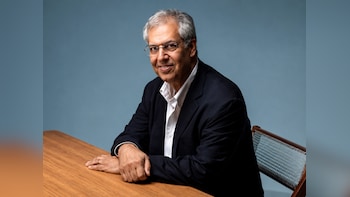
Robert A. George: You're a senior lecturer of American Studies and English at Columbia University, the former director of Columbia's famed Core Curriculum and the author of “Rescuing Socrates: How the Great Books Changed My Life And Why They Matter For A New Generation.”
Your book describes your own journey as an immigrant from the Dominican Republic and emphasizes the importance of a liberal education for all, especially immigrants and the underprivileged. So why does Socrates need to be rescued? What is the significance of Socrates in the context of modern education?
Roosevelt Montás, senior lecturer, Columbia University and author, “Rescuing Socrates”: The title hits several things. One is the imperiled condition of liberal education in the academy today. Socrates is in some ways the founding figure or patron saint of liberal education. “Rescuing Socrates” suggests the need to rejuvenate and reinvigorate and recommit to liberal education. And there's a biographical reference too, because as a sophomore in high school, I found a copy of the dialogues of Plato in a garbage can — they were the dialogues recording the last days of Socrates. Reading that book proved to be decisive in my intellectual development, beginning the road to a life in academia and a life of advocacy of the liberal arts.
RG: You were born in the Dominican Republic and came to the United States…
RM: …two days before my 12th birthday.
RG: As a 12-year-old not speaking much English, how did you find yourself fitting in?
RM: It was profoundly disorienting. I not only came from a third world country; I came from rural poverty. I grew up without 20th century appliances, no TV, no refrigerator, no stove, no telephone. When I traveled, that was the first time I was in an airplane. I lost not just a country, I lost a culture, a language, a sense of place, a sense of belonging. It was a deep trauma. And I don't want to dramatize it too much, because probably millions of people have experienced something like that. But it left me and my family adrift. My mother didn't speak English herself, hadn't even finished high school, had minimum-wage jobs. I did not kind of assimilate in a peer group.
RG: How did you end up overcoming?
RM: Books were a big part of it. I slowly mastered the language. It became clear to me that the way out of marginality, poverty and disempowerment was through education. Somehow there was a way for me to acquire the tools to become an active agent, the tools with which to take control of my life and to become somebody who could shape his own destiny. Even though the New York City public school system has a lot of problems, it was a far superior education than I had access to in the Dominican Republic.
RG: One man's trash is another man's treasure — you literally find one of the volumes of the classics in the garbage and you pick that up. What caused your high school sophomore brain to be drawn to that book?
RM: Frankly, the first thing is, it was a beautiful book, hardcover leather, tilted edge, two hundred pages; it felt like a beautiful, valuable artifact. Just learning English, I knew that I needed practice. Then, you meet this character, Socrates, an old man, 70 years old, on trial for his life for corrupting the youth and introducing new gods into the city. Especially as a young person, you always have this sense that the culture is trying to protect you from so-called corrupting influences you actually love. You actually think, wait a minute, I'm not being corrupted by this; I'm being educated, entertained and built up. So that idea that he was a man that was doing something that the establishment thought was dangerous for the youth immediately made it attractive for me. And then when it turns out what he's doing is this questioning and investigation of the deep issues of life: What does it mean to be human? What does it mean to be just? What is the beautiful? What is the pious? That really caught my attention, in a moment where I was trying to ground my own sense of coming of age as an immigrant in New York.
RG: You applied to and were accepted to Columbia University via the New York State Higher Education Opportunity Program (HEOP). Right now, the Supreme Court is looking at the issues of affirmative action in college, particularly in Ivy League institutions. Would you consider HEOP as a form of affirmative action? How should questions of merit and opportunity for the underprivileged balance out?
RM: [HEOP] is an affirmative action program, but in the sense that it seeks to lend an extra hand to students who are economically and educationally disadvantaged. To those students, it gives extra financial aid. In addition, there is academic support, including a six-week summer program, which is kind of a college prep program at Columbia. It is not affirmative action on the basis of race. It is not “for” people of color, but for people who are economically and academically disadvantaged. There were white students in my cohort and there were many immigrant people of color, but it was not race-based.
Still, affirmative action strikes me as a necessary mechanism in a society that strives towards equality of opportunity. Just like privilege, which has a tendency to accrue and to be passed on, so does disadvantage and poverty. A society committed to equality of opportunity needs affirmative action to level the playing field for some. It is embedded in our aspirations for equal opportunity in cases where opportunity is drastically unequal.
RG: You go to Columbia, graduate and get a Ph.D. and eventually end up running the university's Core Curriculum for 10 years. How did that experience put you on your current path as an evangelist for liberal education?
RM: The Core Curriculum was really extraordinary: Every undergraduate at Columbia College takes two-plus years of study of the tradition of literary, philosophical and artistic expression of the West. The first year begins with the Iliad and the Odyssey and Greek playwrights and historians, all the way to 20th century and contemporary literature. As sophomores, they read philosophical classics – Plato, Aristotle, and then coming to modernity with Locke, Hobbes, Marx, Nietzsche, Freud, etc., all the way to the 20th century. And they do the same in art and in music. This extraordinary education grounds them in the major texts, debates, and artistic idioms in which we live.
That program was absolutely transformative for me. Liberal education, I came to understand, was a countercultural practice, because the contemporary university is a hostile environment for the practice of liberal education. One of the things that motivated the writing of my book advocating for liberal education was to highlight the impact of liberal education in my own life as kind of Exhibit A.
RG: Many voices have questioned the practical value of a liberal education in terms of getting a job. Call it the pragmatic, hard knocks, criticism and — not in a political sense — the “conservative” viewpoint. And then you've got the contemporary “liberal” perspective – instead of pursuing general, big questions, students should learn about themselves, personally, culturally, their identities, etc. Is liberal education being squeezed from both sides?
RM: Yes, but neither characterization really stands up to scrutiny. Absolutely, a college education should equip students with skills that have practical value allowing them to get a job. But the point is not to do liberal education instead of that, but liberal education as the basis for technical specialization. If you want to achieve the highest degree of success and effectiveness and importance in whatever field you go into— whether engineering or business or law or medicine — you need a grounding in the human questions. That will make you a much more effective, innovative and accomplished practitioner of your craft. Liberal education grounds practical education in human values. Conversely, the contemporary “liberal” position — that students should be more involved in their own personal identity — only makes sense in the context of that which is universal or common to our humanity. You will have a deeper sense, a deeper appreciation of your own particularity when that is set up against the universality of the human experience.
RG: You ran the Core Curriculum at Columbia for 10 years, but also then launched a high school version of this.
RM: In 2009, a group of colleagues in the American Studies department launched a program to answer the question, “If we gave high school students — low-income, first-generation college aspirants — exposure to this kind of invigorating, exhilarating, exciting intellectual experience, will it do what it did for me? Will low-income, first-generation college aspirants relate to Plato, to Hobbes, to Lincoln, to Jefferson?” We started this program where we brought initially 15 such students to live on campus for a month. They take this Great Books seminar for a month the summer between junior and senior year. In the fall, we help them prepare applications to college. Over senior year, we teach them a civic engagement curriculum where they take on projects within their communities that they design themselves.
In the 13 years we've been doing this, 99% of our 300-some students have gone on to college and 79-80% them graduate within five years of registration. A graduate from our first class, Shaun Abreu, was elected last November to the New York City Council. This program proves that this kind of education isn't some kind of frivolous indulgence for the elite, but something that transforms and empowers the lives of these low-income first-generation college aspirants.
RG: There's growing interest in reviving civic education for students from elementary school onward. Could what you started with these high school students be expanded to civic education for younger students?
RM: This is civic education, but not in the narrow sense of teaching students to memorize how many branches of government there are, how many in the House of Representatives, how to appoint a judge. It's not knowledge of the mechanics of our civic structure. It is engagement with the deep questions that our political structure tries to answer. And it's reproducible. In fact, the Teagle Foundation, which was the initial funder of our program, has started a grant-making initiative to encourage other institutions to replicate what we're doing: bringing low-income, first-generation local kids to the classroom to study the Great Books, the foundational debates of our culture and political civilization. Colleges and campuses throughout the country can engage their local communities and share their intellectual wealth in this way. It will make a difference in our politics, in these communities, and most importantly, in the lives of these needy kids.
RG: Your introduction to Socrates was reading a dialogue where he's literally on trial for his life. Ultimately, his supporters were unsuccessful in “rescuing” him. Will his modern-day supporters “rescue” the liberal education tradition descended from Socrates?
RM: I am not worried about the demise of the liberal arts tradition. What I am worried about is, who will have access to it? Enough elites will continue to seek — and pay for — a traditional liberal arts education, and alumni will continue to support the institutions where they experienced the life-altering power of a liberal education. But, in keeping with the growing economic polarization in our society, I worry about a bifurcation where the already privileged pursue this high-quality education, while everyone else is steered towards technical, vocational, and job-oriented education, much of it online. That would be disastrous — perhaps even catastrophic — for our democracy.
RG: Do you remain optimistic that can be avoided?
RM: I see in the Great Books a way to break the deadlock of polarization between right and left. Rather than getting people shouting at each other about the latest headlines, what if we were to talk about the deep issues that underlie our political life? What justice is. What political power is. What the nature of government is. What the nature of individual rights are; what the idea of equality means; what the idea of inherent rights mean. Forget the politics of today. Let's talk together and debate the deeper issues.
This column does not necessarily reflect the opinion of the editorial board or Bloomberg LP and its owners.
Robert A. George writes editorials on education and other policy issues for Bloomberg Opinion. He was previously a member of the editorial boards of the New York Daily News and New York Post.
©2022 Bloomberg L.P.
Essential Business Intelligence, Sharp Market Insights, Practical Personal Finance Advice, Daily Fuel, Gold and Silver Prices and Latest Stories — On NDTV Profit.