The combined public debt of the Centre and states will reach around 90% of the GDP by March 2022, RBI Deputy Governor Michael Patra said.
However, the economic growth will continue to be higher than interest rate that the government pays on debt, Patra added. “Since that condition is fulfilled, RBI assesses that the public debt of India remains sustainable.”
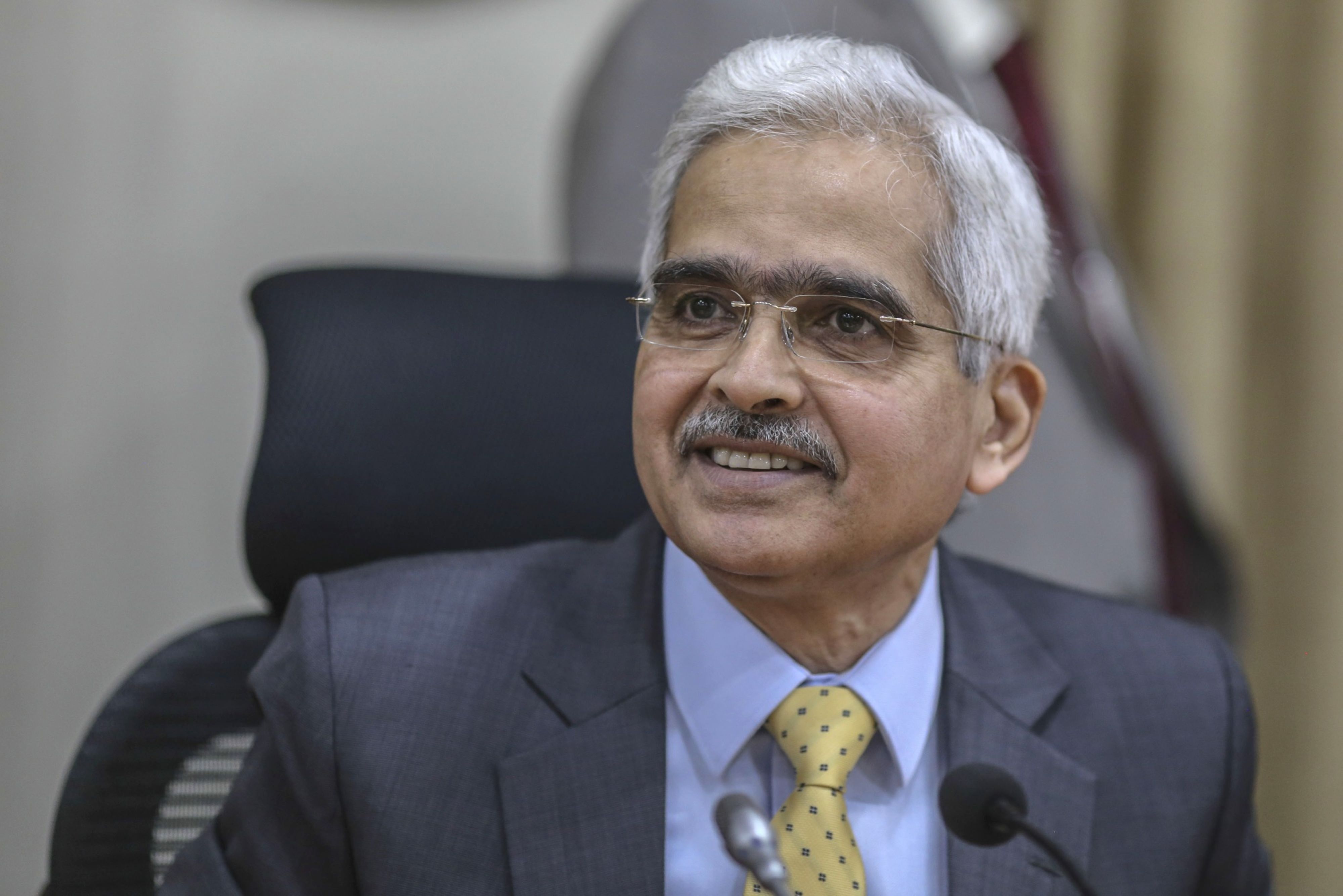
There is no change in the Reserve Bank of India’s position on cryptocurrencies, RBI Governor Shaktikanta Das said.
The central bank was, however "surprised” that some banks were still citing the 2018 circular that the Supreme Court set aside.
"We have major concerns around cryptocurrencies which we have conveyed to the government,” Das said. “Each investor should take careful and prudent call on their investments.”
- Haven’t asked banks to push credit, cannot do it as a regulator.
- Reviewed credit flow and demand situation as per banks' assessments.
- Advised banks to implement resolution framework as soon as possible.
- Can't make exact prediction on when demand situation will turn.
- Estimating that from Q2 onward, demand situation will improve.
- Advised banks and NBFCs to push up capital buffers.
- Expect NPAs will remain within our past estimates, will be manageable.
- RBI monitoring growth revival, how it is taking roots.
- Also monitoring inflation dynamics.
- As it looks today, the focus is on growth.
- Inflation projection well within MPC’s target band.
- Focus on growth will continue.
The Monetary Policy Committee’s view is that inflation is not persistent, it will become so when it is backed by demand-pull, RBI Deputy Governor Michael Patra said.
- No demand pull in inflation formation, mostly on the supply-side.
- Hence, MPC chose to look through inflation prints.
The Reserve Bank of India’s forex operations are driven by consideration of stability of exchange rate, Das said.
The governor had, in his earlier statement, said that “there are indications that India’s foreign exchange reserves have already crossed $600 billion.” He added that it gives the central bank “great confidence” to combat challenges from global spillovers.
“Emerging market economies have to build their own buffers, RBI is no exception,” Das said.
He added that the surplus transfer to the government -- Rs 99,122 crore for the nine months ended March 31, 2021 -- is purely an accounting issue.
RBI Deputy Governor T Rabi Shankar attributed the the higher than expected surplus to the decrease in risk capital provisioning.
Balance sheet increase in FY20 was Rs 12.37 lakh crore, so the increase in provision for risk was higher, Shakar said. In FY21 on the other hand, the increase was just Rs 3.64 lakh crore, so transfer of surplus funds to contingent funds has also gone down, he said.
The monetary policy committee is not thinking of normalising the stance, RBI Governor Shaktikanta Das said.
- Earlier projection on inflation at 5% has been revised to 5.1%, which is not a significant upward revision.
- Too early and premature to talk about normalisation of policy stance.
RBI is focused on the entire yield curve, across maturities, RBI Governor Shaktikanta Das said in response to a query.
- G-SAP auctions have included purchases across maturity profiles.
- 6% not a ‘sacrosanct’ level on the 10-year yield.
- Seek orderly evolution of the yield curve.
- Latest CPI inflation print gives space to step up liquidity infusion into system.
- Repo rate unchanged at 4%, reverse repo at 3.35%.
- FY22 GDP growth forecast cut to 9.5% from 10.5%.
- FY22 inflation forecast at 5.1%.
- Government bond purchase plan under G-SAP 2.0 for Q2 at Rs 1.2 lakh crore.
- Remaining Rs 40,000 crore auction under G-SAP 1.0 on June 17; to include Rs 10,000 crore in state bond purchases.
- Special liquidity facility introduced for contact intensive sectors.
- One-time restructuring window tweaked, maximum exposure threshold of borrowers raised to Rs 50 crore from Rs 25 crore earlier.
- The Reserve Bank of India has decided to provide greater flexibility to regional rural banks in availing short-term liquidity. Regional rural banks will be allowed to issue certificate of deposits, which can then be bought back to facilitate greater flexibility in liquidity managements.
- National Automated Clearing House facility, or the NACH facility will be available on all days of the week from August 1. It will not be limited to bank working days.
- There are indications that India’s foreign exchange reserves have already crossed $600 billion, RBI Governor said. "That is something which gives us great confidence to combat challenges from global spillovers."
In a relief for borrowers, the RBI expanded the coverage of Resolution Framework 2.0 that was announced on May 5.
Maximum aggregate exposure threshold under Resolution Framework 2.0 has been increased to Rs 50 crore from Rs 25 crore for MSMEs, non-MSMEs and in case of loans to individuals for business purposes.
The central bank will also extend a special liquidity facility of Rs 16,000 crore to SIDBI for on-lending and refinancing, Das said. The facility will be available at prevailing repo rate for a period of 1 year.
RBI had earlier provided Rs 50,000 crore to all-India financial institutions, which included Rs 15,000 crore to SIDBI.
RBI has decided to provide a separate liquidity window worth Rs 15,000 crore for contact-intensive sectors. Th facility will be available at the repo rate till March 2022 with a tenor of up to 3 years.
Under this programme, banks can provide support to hotels and restaurants, tourism, aviation support services and other services including bus operators, rent-a-car services, spa clinics and beauty parlours and saloons.
Banks will be allowed to park surplus liquidity to the level of these loans with the RBI at a rate 40 basis points higher than the reverse repo.
With second wave intensifying, RBI’s attention has moved from systemic liquidity to its equitable distribution. Shall continue with proactive and pre-emptive approach of transmission.Shaktikanta Das, Governor, RBI
Inflation print for April at 4.3% has brought with it some relief and policy elbow room.Shaktikanta Das, Governor, RBI
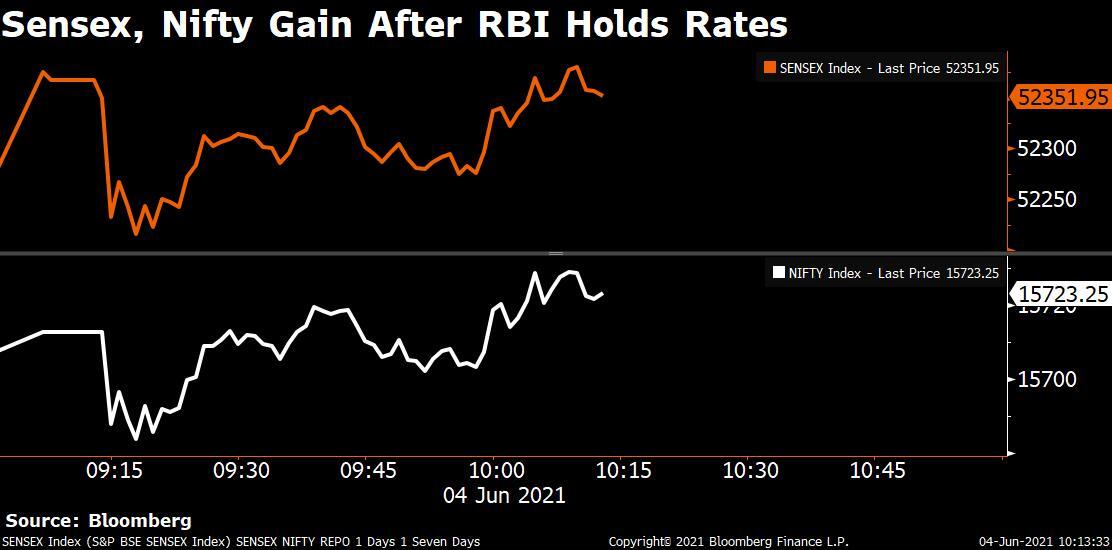
The Monetary Policy Committee voted unanimously to keep repo rate unchanged at 4%, RBI Governor Shaktikanta Das said.
The second wave of Covid-19 has been ravaging across several states since April. MPC was of the view that at this juncture, policy support from all sides is required, Das said. “Accordingly it was decided to maintain status quo and continue with an accommodative stance as long as necessary.”
Underwriters Save Another India Bond Auction Ahead of RBI Policy
Monetary Policy: RBI’s Firefight Redux
Watch out for the Monetary Policy statement of the RBI Governor @DasShaktikanta at 10:00 am on June 04, 2021
— ReserveBankOfIndia (@RBI) June 3, 2021
YouTube: https://t.co/c4TBWlvv8D
Post policy press conference telecast at 12:00 noon on the same day
YouTube: https://t.co/hBcQU0soRJ#rbipolicy #rbigovernor
Essential Business Intelligence, Sharp Market Insights, Practical Personal Finance Advice, Daily Fuel, Gold and Silver Prices and Latest Stories — On NDTV Profit.