
Ola Electric Mobility Ltd.'s LFP or Lithium Iron Phosphate cells are now ready, and will start entering their products from the next quarter onwards, Promoter and CMD Bhavish Aggarwal said in a post on X.
These cells are crucial in the electronic vehicle space as they are a type of rechargeable lithium-ion battery known for their high safety, long cycle life, and low cost.
Also Read | Layoffs Are Rising In Tech, But These Skills Are Helping People Unlock Better Pay
Our LFP cell is now ready!🔋
— Bhavish Aggarwal (@bhash) April 7, 2026
Gigafactory ramp is going really well. 1000s of vehicles powered by our 4680 cells are already on roads, clocking many millions kms in real-world conditions. Proud of the team.
Excited to announce: Our LFP cell is ready for prime time! This is our… https://t.co/GDfVjIqbb4
Aggarwal further called it a "big unlock" and explained how it will further reduce in vehicle cost, accelerate EV adoption, will become the foundation for all battery storage products, and can be seen as the next major phase of Gigafactory scale-up.
The cells are different from NMC cells, which are also a type of lithium-ion rechargeable battery.
"Excited to announce: Our LFP cell is ready for prime time! This is our 46100 format cell — bigger than our current NMC cell. It will start entering our products from next quarter," Aggarwal explained in his post.
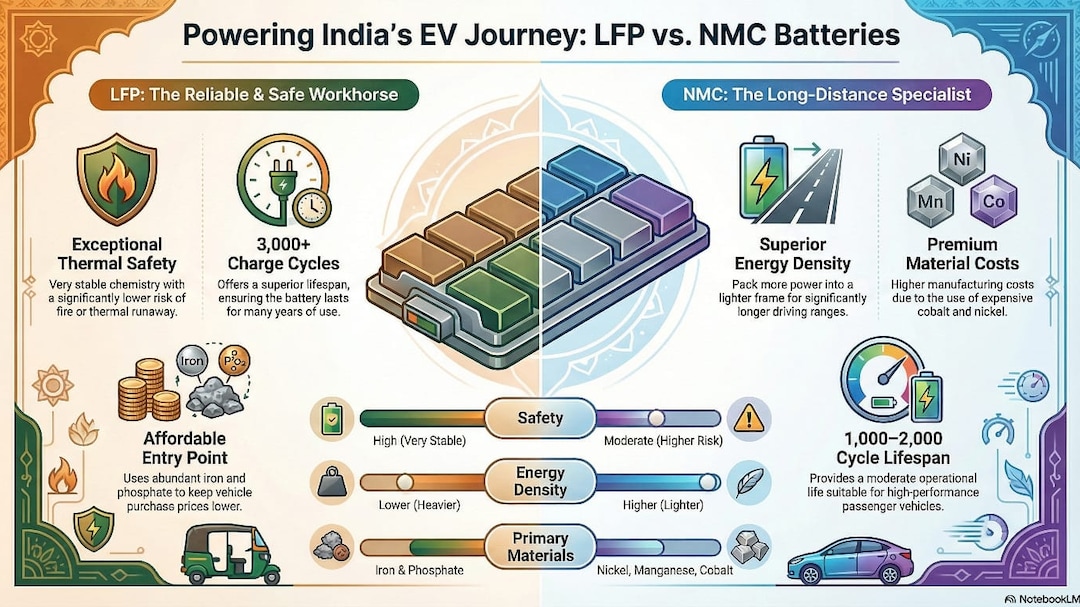
Here is a deeper look at the key differences between the two:
1. Energy Density and Range
NMC: These batteries are the "marathon runners." Because nickel is highly energetic, NMC cells can store more energy in a smaller, lighter package. This makes them the standard for long-range EVs and performance cars.
LFP: These are heavier and bulkier for the same amount of energy. Consequently, LFP-powered cars often have a slightly shorter range or require a larger physical battery pack to match NMC performance.
2. Safety and Thermal Stability
LFP: One of the biggest selling points is safety. LFP chemistry is much more stable at high temperatures. It has a higher "thermal runaway" threshold, meaning it is significantly less likely to catch fire even if the battery is punctured or damaged.
NMC: While still very safe due to advanced cooling systems, NMC chemistry is more volatile. If an NMC battery overheats, it can release oxygen, which can fuel a fire more aggressively than an LFP battery.
3. Lifespan and Degradation
LFP: These batteries are incredibly durable. They can often handle thousands of full charge cycles before seeing significant capacity loss. Furthermore, they "like" being charged to 100%, which simplifies daily use for the owner.
NMC: These cells degrade faster if they are frequently charged to 100% or discharged to 0%. Most manufacturers recommend a daily limit of 80% to preserve the battery's health over the years.
ALSO READ: Ola Electric Plans Rs 2,000 Crore Fundraise For Battery Arm
4. Cost and Sustainability
LFP: These are cheaper to produce because they don't use cobalt or nickel—metals that are expensive and often associated with ethical mining concerns.
NMC: The reliance on cobalt makes these batteries more expensive and subject to supply chain volatility. However, the industry is actively working on "High-Nickel" chemistries to reduce the amount of cobalt needed.
Essential Business Intelligence, Sharp Market Insights, Practical Personal Finance Advice, Daily Fuel, Gold and Silver Prices and Latest Stories — On NDTV Profit.