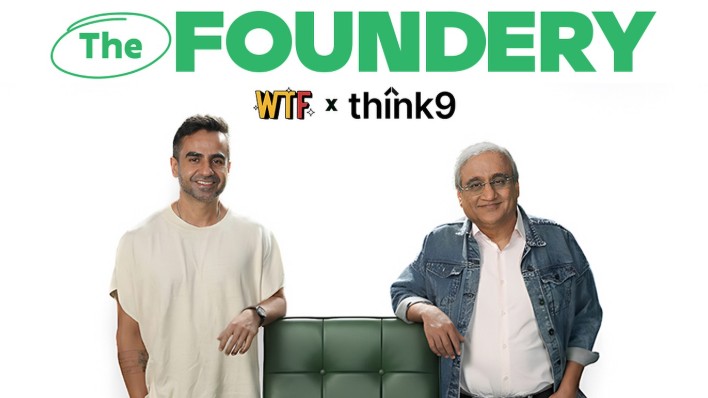
A striking print advertisement in The Economic Times on Monday has sparked conversations across India's business circles. The ad features two names that rarely share the same frame — Zerodha co-founder Nikhil Kamath and Future Group founder Kishore Biyani — standing on either side of an empty armchair. The headline reads, "Ready to be our co-founder?"
The campaign promotes The Foundery, a three-month, fully residential entrepreneurship programme set in Alibaug. Unlike traditional accelerators, The Foundery promises an immersive ecosystem where selected participants live, collaborate, and transform ideas into businesses. The initiative is part of the WTF x Think9 collaboration and ties into Kamath's podcast, "WTF is with Nikhil Kamath."
The visual is sparse — two well-known faces, a vacant chair, and a QR code for applications. The choice of personalities is striking. Kamath represents India's tech-driven startup wave, while Biyani is synonymous with the retail boom of the 1990s and 2000s. Their presence in a single frame suggests an attempt to bridge two phases of Indian entrepreneurship.
Also Read | Layoffs Are Rising In Tech, But These Skills Are Helping People Unlock Better Pay
Biyani, often called the architect of modern retail, built brands like Big Bazaar and Pantaloons before Future Group's decline amid e-commerce disruption. His inclusion adds a layer of nostalgia and perhaps credibility for those who value experience over hype.
Kamath, meanwhile, has expanded beyond broking into investing and content, using his podcast to host conversations on business and economics — including a previous episode featuring Biyani himself.
The ad itself offers little detail beyond the invitation. There's no mention of funding, equity, or programme structure — just the promise of collaboration. That minimalism could be deliberate, banking on curiosity and the stature of its ambassadors rather than specifics.
What stands out is the symbolism — an empty chair framed by two entrepreneurs from different eras. In a market where startup accelerators and incubators are plentiful, The Foundery seems to be selling an idea as much as an opportunity — a chance to sit at the table with names that shaped India's business landscape in very different ways.
'World Is in A Bubble': Ray Dalio Warns Of A Perfect Storm — Debt, Geopolitics & Tech CollidingEssential Business Intelligence, Sharp Market Insights, Practical Personal Finance Advice, Daily Fuel, Gold and Silver Prices and Latest Stories — On NDTV Profit.