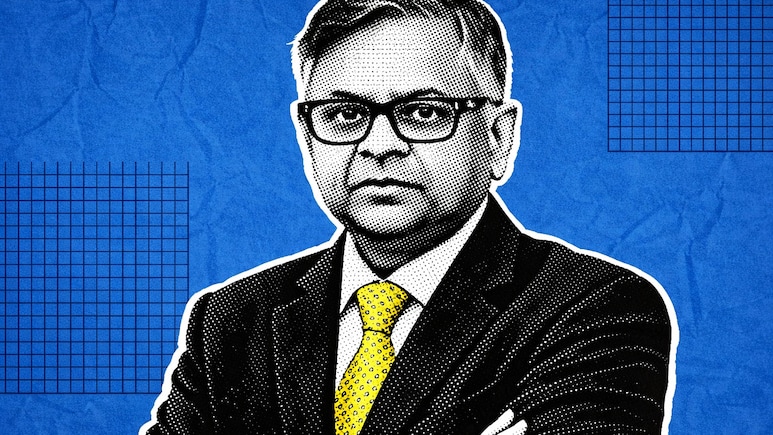
Tata Sons Chairman N. Chandrasekaran addressed an Air India employee townhall on Friday, acknowledging that the airline is going through a "challenging time" and urging staff to "stay focused on execution".
The remarks came days after CEO Campbell Wilson announced his resignation and as the carrier battles mounting losses, regulatory pressure and the lingering shadow of the deadly crash.
“While our future is bright and we have laid a solid foundation for our ambition, we are going through a challenging time, the impact of which is most visible in the airline industry," said Chandrasekaran.
Also Read | Layoffs Are Rising In Tech, But These Skills Are Helping People Unlock Better Pay
“What matters now is staying focused on execution. Our focus should be on what is within our control, where we can improve, be precise on costs and remain grounded in the reality of the situation,” he added.
ALSO READ: 'Inspections Underway': Air India's Bengaluru Flight Returns To Mumbai Shortly After Takeoff
Stressing the airline's core priorities, the chairman said, “Safety is of utmost importance for Air India. It is non-negotiable and sits at the centre of every decision we take across operations, engineering, training and customer experience."
The airline and its low-cost arm Air India Express posted a combined loss of Rs 9,800 crore in fiscal year 2024-25, even as the airline continued to invest in fleet expansion and refurbishment.
Moreover, the airline has also been under sustained regulatory and public scrutiny since the crash of Flight AI171 on June 12, 2025, when a Boeing 787-8 Dreamliner went down shortly after takeoff from Ahmedabad, killing 260 people, the deadliest aviation disaster of the 2020s.
Wilson has stepped down amid persisting financial losses, slower-than-expected operational turnaround, regulatory scrutiny following the crash, and broader industry headwinds. Though, Wilson will remain in the role until a successor is appointed, and the board has constituted a committee to find his replacement.
In December, Air India itself acknowledged the need for "urgent improvements in process discipline, communication, and compliance culture", an admission that showed how the crisis had moved beyond reputation and into the daily mechanics of running an airline.
ALSO READ: Dubai's Fresh Flight Curbs Deepens Pressure On Indian Airlines Amid Iran War
The external environment such as rising costs, disrupted international routes due to the conflict in the Middle East, and aircraft delivery delays have added to an already difficult operating situation.
In a note to employees in March, Wilson said Air India had cancelled around 2,500 flights to the region over three weeks and was operating at about 30% of its normal Middle East schedule due to restricted airspace and airport closures, warning of a significant financial impact. These disruptions affected routes to Europe and North America, with flights being rerouted and costs rising as a result. Financial pressure continued to build.
Essential Business Intelligence, Sharp Market Insights, Practical Personal Finance Advice, Daily Fuel, Gold and Silver Prices and Latest Stories — On NDTV Profit.