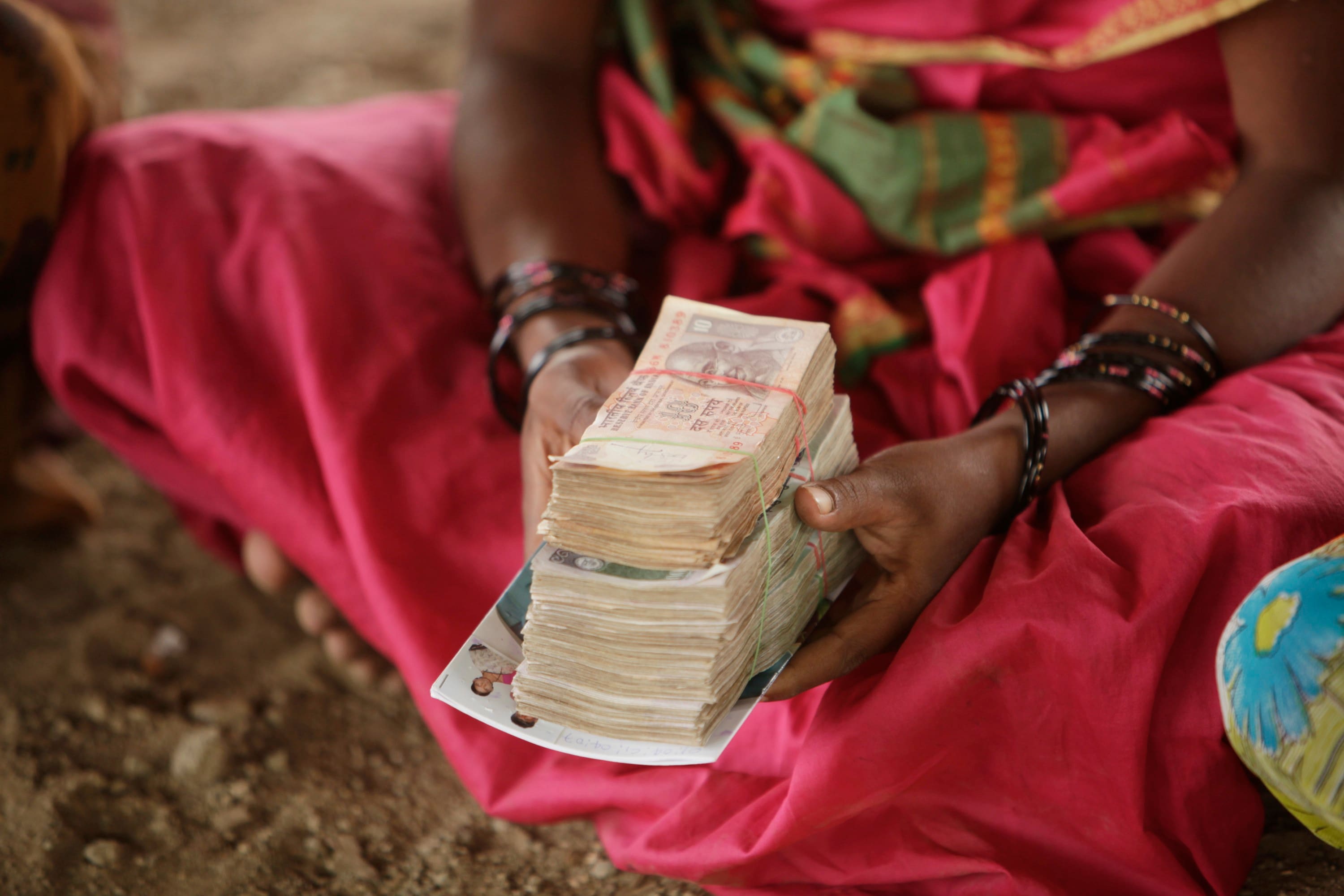
Citing demonetisation's impact on collections and asset quality, ratings agency ICRA said put three microfinance companies - Cashpor Micro Credit, Sambandh Finserve Private and SV Creditline - on ratings watch with negative implications.
The agency said that it placed its ‘BBB-' rating provided to the Rs 25-crore bond raising programme by Cashpor on watch with negative implications, PTI reported.
The risk of Cashpor's credit quality deteriorating in the near to medium term is relatively high, owing to its high leverage to net-worth of 12 times as on September 30, 2016. Its limitations on increasing core capital could impact its solvency indicators.ICRA
This was followed by a note released by Religare on Wednesday which said that microfinance institutions are facing slower collection efficiency post-demonetisation which was announced on November 8 by the Prime Minister and resulted in the withdrawal of old Rs 500 and Rs 1,000 notes. Religate added that there are near-term risks for MFIs in the sector as political rumour-mongering has delayed collections in states such as Uttar Pradesh.
In addition, the credit culture could worsen and hurt near-term collections, following rumours of loan waivers in states such as Uttar Pradesh, Madhya Pradesh and Maharashtra.Religare Institutional Research
The brokerage further added that SV Creditline's collection efficiency dropped to 80 percent after demonetisation but improved to 85 percent towards the end of the month except for regions of western UP and Madhya Pradesh. Cashpor's collection efficiency, meanwhile, stood close to 95 percent for November.
ICRA said that unless situation on the ground improves, MFIs could face further pressure on liquidity and asset quality over the next six months. The rating agency said that SV Creditline and Cashpor have unused funding mediums but the MFIs aren't jumping to disburse new loans just yet.
Microfinance institutions across the country saw a dip in collections post demonetisation, which reduced the cash availability in the economy. Some MFIs like Bandhan Bank even decided to put new disbursements on hold temporarily due to the cash crunch.
Religare maintained its “anti-consensuses” negative stance on the sector, citing rising non-performing assets and credit costs.
We believe the average credit cost in the low-ticket, fragmented and unsecured lending business over a cycle (typically 5-7 years) is 2.5-3 percent. Credit costs are skewed to near-zero levels in an upcycle, but surge to ~10 percent in a downturn. As NPAs pile up, we believe the microfinance sector is due for a sharp correction. We maintain our anti-consensus negative stance on the sector.Religare Institutional Research
Essential Business Intelligence, Sharp Market Insights, Practical Personal Finance Advice, Daily Fuel, Gold and Silver Prices and Latest Stories — On NDTV Profit.