India’s Economic Renaissance
(This is an essay I have been willing myself to write for a while. The launch of BloombergQuint.com provides a perfect occasion to trigger it. While there have been countless debates in India on how to reduce poverty, there has been negligible focus on how to become a wealthy country, which is a necessary pre-condition to eliminate poverty. At BloombergQuint, we advocate a highly liberal economic and social editorial policy. We believe in the efficacy of well regulated, free and competitive markets. We equally believe in the equality and dignity of each human being, in political, social and cultural freedoms. We reject orthodoxies and prejudices. We believe in modern ideas and enterprise. This essay is dedicated to our launch.)
Anybody who wants to transform India must ask one question: Why are Indians poor, even as India is rich? It is an agonising question, but the search for India's economic renaissance must begin with this simply worded question, which is also one of the enduring mysteries of the 20th/21st centuries. Several countries which were smaller than India, poorer than India - from South Korea to China to Brazil to Mexico, even Sri Lanka, and now Bangladesh - have forged ahead, while we are struggling with abysmal poverty. Why?
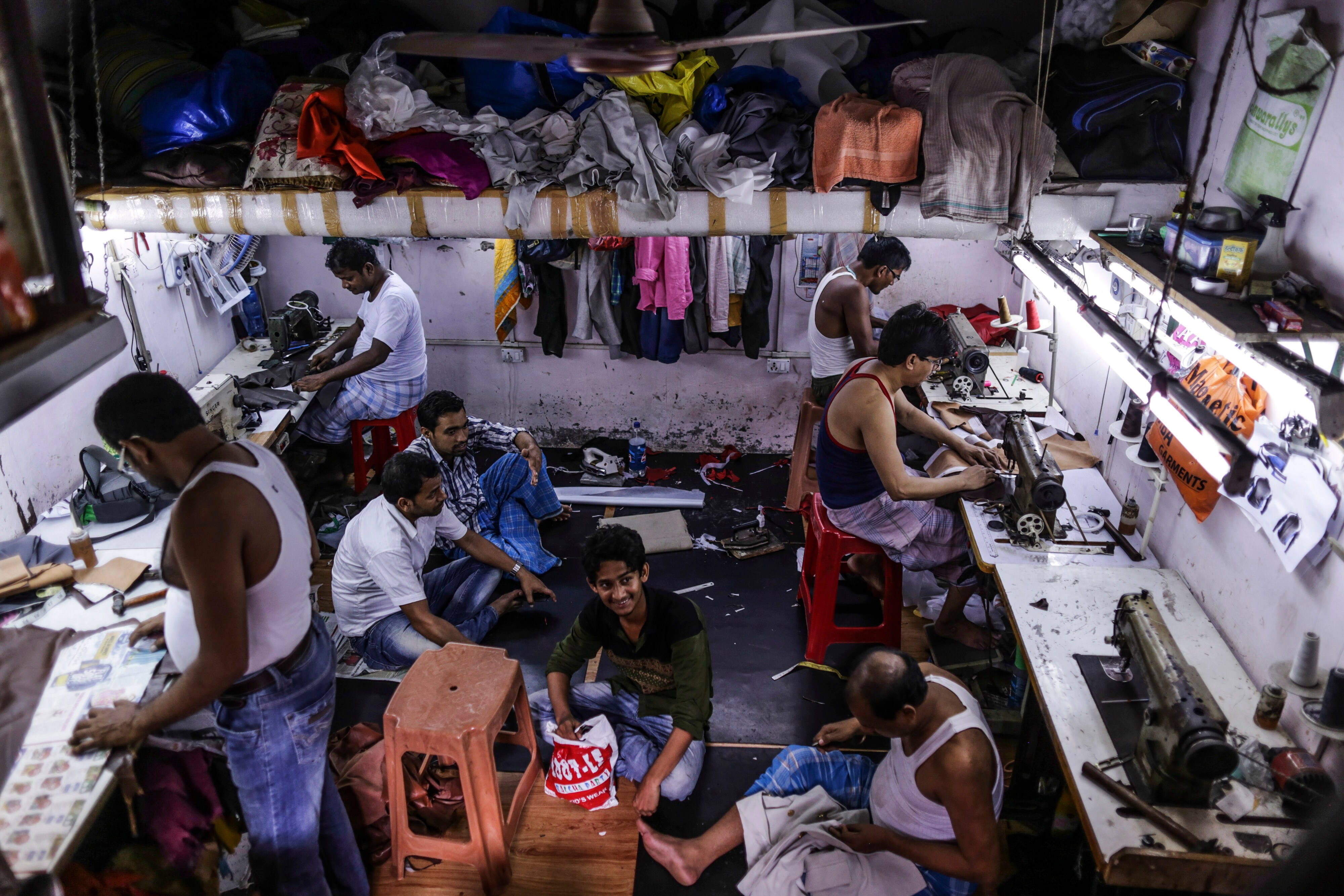
The problem is that India's rulers have always tried to lull the people with short-term tactics, slogans, policy quick-fixes and meaningless targets; like increasing doles, creating corruption-inducing and wasteful subsidies, splurging on bad loans and credit, talking about increasing the share of manufacturing in GDP to 25 percent when, in reality, it has been shrinking.
But India's economic renaissance can begin only when we honestly answer one question: Why are Indians poor?
Why are Indians Poor?
If we analyse the economic history of rich and powerful nations, we will see that three fundamental forces come together to kick start the required momentum:
1) The country has to create a large “surplus” from one or more of the following: its farms, land, labour, financial savings, trade, technology, enterprise and innovative genius of its people.
2) That surplus has to be efficiently invested in infrastructure, education, health and innovation-enhancing skills/systems. Any country which wastes or “corrupts away” this surplus comes to grief.
3) And finally, its governance and culture must encourage the genius of its people/resources – scientists, entrepreneurs, factory workers, intellectuals, everybody – to flourish.
Any country which is able to harness and unleash these three forces will become rich and powerful – it shall eliminate poverty, and become healthy and prosperous.
Unfortunately, a large amount of our economic surplus has been wasted in timid, inefficient or crony exploitation - and finally, the genius of our people has been strangled by red tape and restrictions. And that is why we are poor – because our political masters have violated each of the three conditions!
How Can India Break out of the Vicious Cycle of Poverty?
Here is how the genius and resources of our people can be harvested to create a large investible surplus:
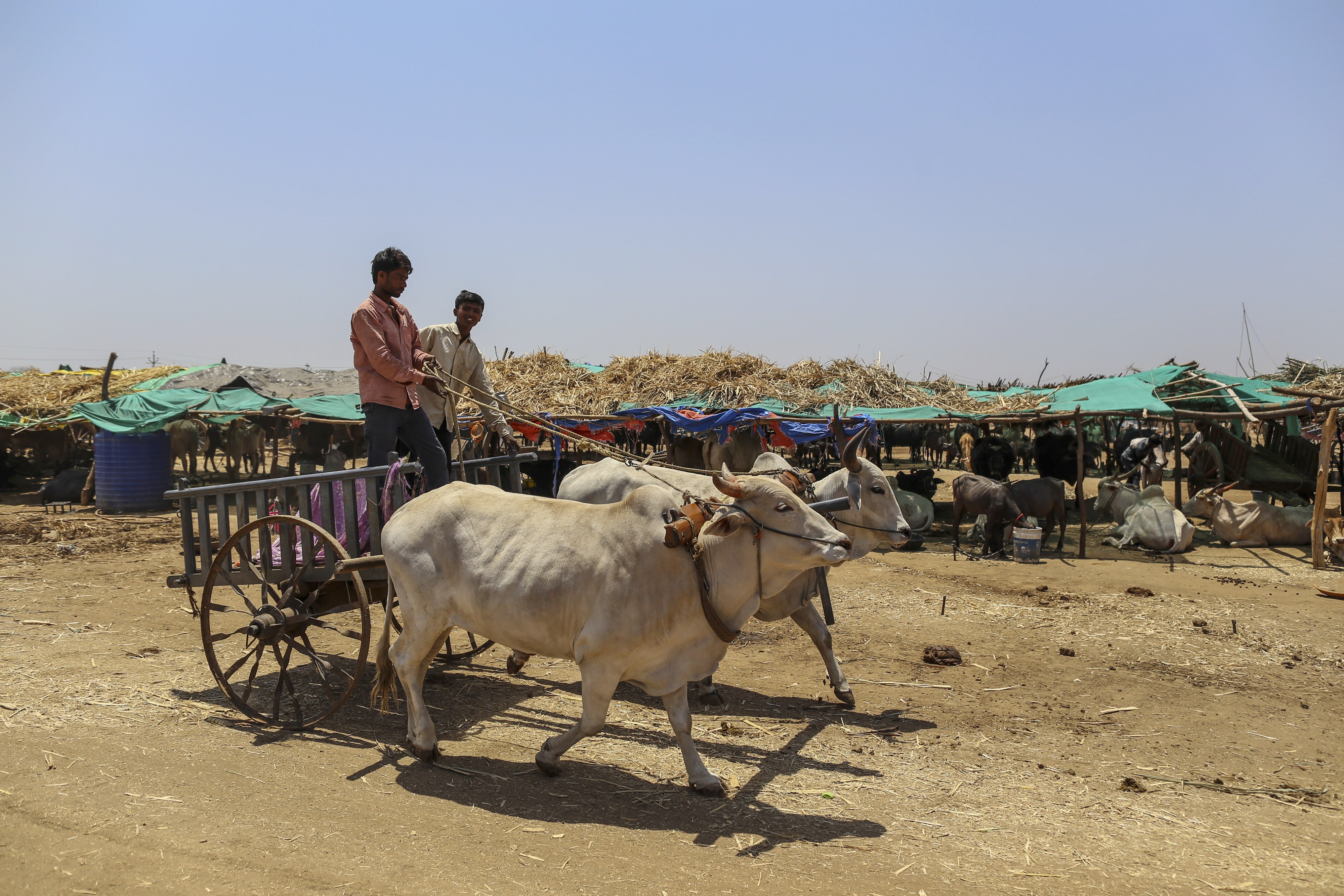
1) In agriculture, our farmers in the north-west part of the country have already created large surpluses in wheat, rice, cotton and other crops. We need to take this green revolution to the eastern part of our country. We should invest aggressively in agriculture infrastructure, irrigation, cold chains and water conservation systems. We should free our farmers to domestically transport or export their produce. We should massively invest in new seed technologies. We should empower our farmers to manage local irrigation systems. We should use the learnings from the Food Security Law to improve it, to create a stronger safety net for the really poor, while ensuring that this subsidy is not wasted on those who don't deserve it. All of this shall create a large economic surplus in the hands of our farmers.
2) It is critical for us to create surplus land that shall be made available to our manufacturing and infrastructure sectors. To begin with, we should pool all the surplus land with the government, and get big investments going on it. This shall immediately clear the land bottleneck, and enable large scale industrial and infrastructure activity. Meanwhile, the current Land Acquisition Laws should be changed so that farmers' interests are protected, but industry and infrastructure sectors also don't suffer inordinate delays.
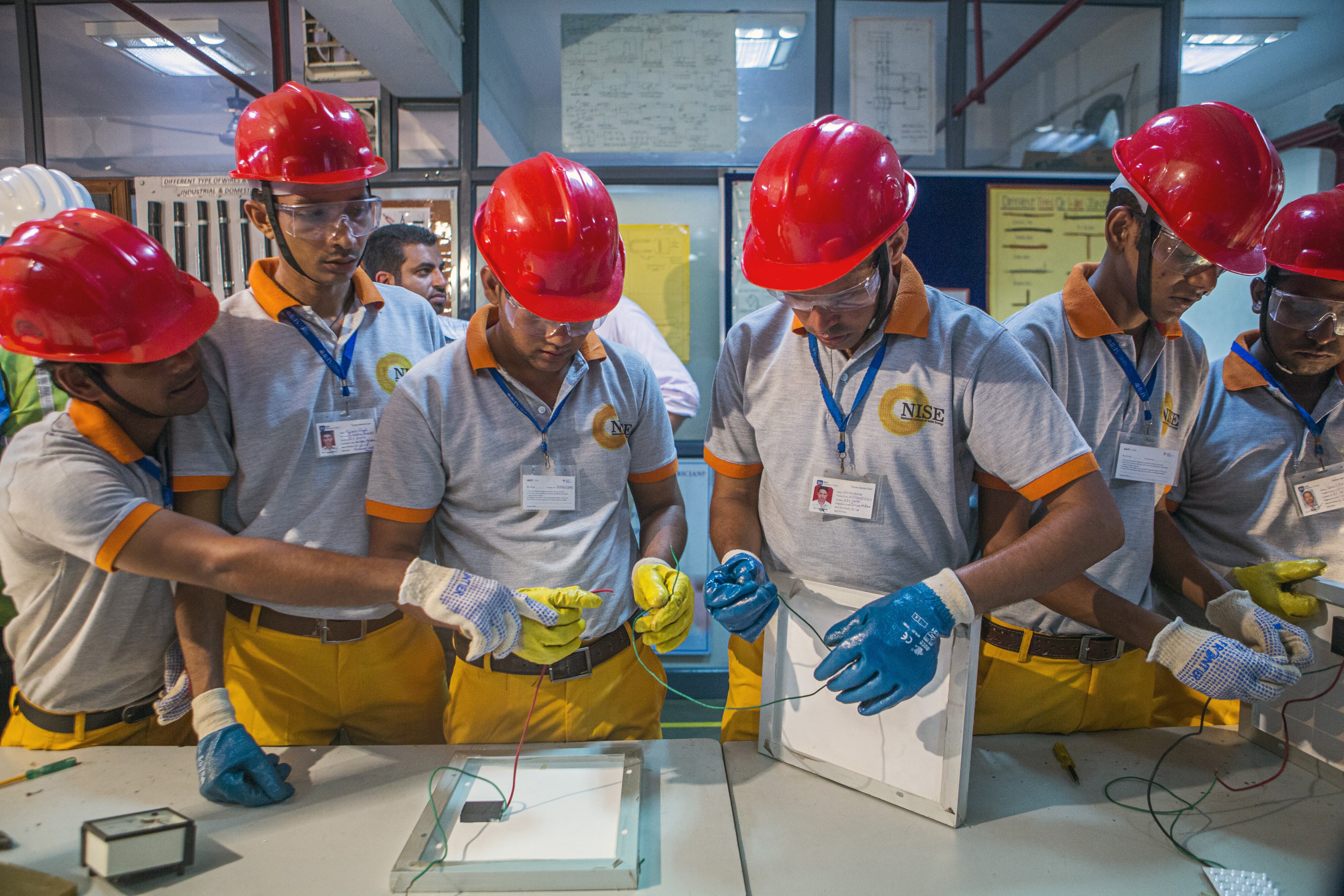
3) The third surplus we should create is in skilled labour. We should change our Apprenticeship Laws and involve industry in a massive Skill Upgrade Programme. We should devolve all powers to make labour laws to the state governments, so that they are free to craft according to their special needs.
4) We should give a special thrust to increasing the financial surplus available for investment in the country. How? We should take an axe to wasteful subsidies; we should move to direct cash transfers to the really poor, while abolishing all subsidies to those who are well off; we should rapidly move almost all energy prices to free market rates, and take care of the real poor with a cash subsidy net; nearly Rs 5 lakh crore are stuck in tax disputes – we should free that up via an energetic dispute resolution mechanism; we should re-auction/re-price terminally unviable projects. We should privatise all non-core public sector units, or put others into public-private partnerships with professional managements – just this measure alone could raise, via outright sales or asset leverage, up to a trillion dollars.
5) Finally, we should create an unquantifiable, yet extremely critical, amount of entrepreneurial surplus by removing all unnecessary procedures and obstructions. Statutory approvals should be bench-marked and time-bound. Almost every government activity should be put under e-governance. Wherever possible, we should move towards self-certification/attestation, voluntary disclosures, deemed and automatic approvals, with a concurrent focus on monitoring and compliance.
I am convinced that these actions will create between $1.5-2 trillion of investible resources over the next few years. And this is the huge surplus that we should invest to transform India.
Where Should We Invest Our Potential Economic Surplus?
We should focus on four crucial areas:
1) In upgrading ourselves to a world class infrastructure – railways, ports, power generation/transmission, roads, telecoms connectivity, aviation, financial hubs, new cities, whatever.
2) In doubling – even trebling, if possible – the percentage of GDP that we spend on education. The government should take the lead in primary education, but pull in private and foreign capital into higher education, under a competent PPP/regulatory regime
3) In doubling – even trebling, if possible – the percentage of GDP invested in health infrastructure. Once again, while the government should lead in rural/primary healthcare and sanitation, we should encourage private/foreign capital in specialised healthcare, under an ambitious PPP/regulatory regime
4) Finally, this surplus should be invested in modernising our governance infrastructure: police stations and courts should be upgraded with modern technology, capacities should be doubled and trebled, transparency-enhancing technologies like CCTVs, automatic call/process recordings etc should be used. The objective should be to ease the interface between the common citizen and the state
So now that we have seen how to create up to $2 trillion of investible surplus, and invest it in the four key areas of physical infrastructure, education, health and governance, the only thing left to do is to fulfil the third condition, viz free the enterprise of our people. That should be done by a rather simple but time-tested paradigm: create competitive and well regulated market structures to allow the genius of our people to flourish. So almost the whole of agricultural trade, manufacturing industry (defence, electronics, textiles, energy), services (tourism, financial services, banking, consumer products, information), export sector, construction and real estate should be in the private sector – the government should ensure a proper, world-class and competitive regulatory/compliance environment, and allow the genius of our people to compete, innovate and create wealth for the nation.
The End of Poverty
Today, a third element has been added to the two poles of growth and doles, and that is the “inequality of incomes”. Even the richest countries of the world have realised that a high GDP or Per Capita Income by itself is not sufficient to guarantee growth. If there is a high inequality of incomes, then even large GDP countries get condemned to low growth. The core objective of any economic plan has to be the complete elimination of poverty - what Gandhiji said “to wipe every tear from every eye” - AND build a prosperous and healthy country. This “AND” is very important. In India, the debate is highly polarised - some businessmen, entrepreneurs and free market economists want to focus solely on growth, while Leftist/Socialist/Opportunistic politicians want to beat the drum of poverty. Both these people have failed India. We need to move the action to the “centre”.
(Raghav Bahl is the co-founder and chairman of Quintillion Media, including BloombergQuint. He is the author of two books, viz ‘Superpower?: The Amazing Race Between China's Hare and India's Tortoise', and ‘Super Economies: America, India, China & The Future Of The World'.)

-
Unhedged Position: Can India See An Indonesia-Style Time Correction?

The Nifty is trading below levels it first clocked in 2024. Is there, then, as I have suggested in the headline, potential that the current time correction drags on painfully for the next three-five, even ten years?
-
Navigating Friction And Energy Realities: An Analysis Of Marco Rubio's October Visit To India
Occurring at a critical juncture marked by stalled trade negotiations and escalating geopolitical pressures over global energy supplies, the visit offers a profound window into modern US-India relations.
-
India Exports Capital. Why Not Export Trusteeship?
The big question, then, is whether India can build an institution that global borrowers, investors, banks, and lawyers can trust, even without an Indian connection.
-
France's Economy & Politics Are In Crisis | The Reason Why
Let's look at how the French economy and politics evolved under Nicolas Sarkozy, Franois Hollande and Emmanuel Macron.
-
You May Inherit The Business. You Must Earn Its Credibility.
Succession tests the founder's ability to share authority as much as it tests the next generation's readiness to assume it.
-
Signing Deals Is One Thing; Making Them Work Is Another | The Week In Whys
Sometimes, things don't turn out as planned. Indian companies have lost some bids to rivals, some projects won't produce until 2030.
-
FOMC Wall, PERM Suspension, Hospital Stocks | Talking Points This Week
A PERM suspension would directly affect green-card sponsorship rather than H-1B visas, so the near-term earnings impact could remain relatively limited. The key question is whether this marks a new phase in US scrutiny of Indian IT.
-
Everything, Everywhere, All At Once: Dalal Street's Week To Forget | Joining The Dots
Visa curbs, a Starlink spat and cancer drug caps: what connects this week's shocks for Indian markets
-
India Is Going Abroad For Critical Minerals. But It May Take Years To Pay Off | The Reason Why
Although India's steps are in the right direction, they remain modest compared with India's growing dependence.
-
When Everyone Has AI, What Gives You An Edge?
India's young workforce is entering an uncertain world of work where powerful AI tools are becoming widely accessible. The advantage will belong to those who combine deep expertise with digital fluency, and the distinctly human capabilities that technology cannot manufacture.