India’s Current Account Deficit Widens To 2.7% Of GDP In October-December Quarter
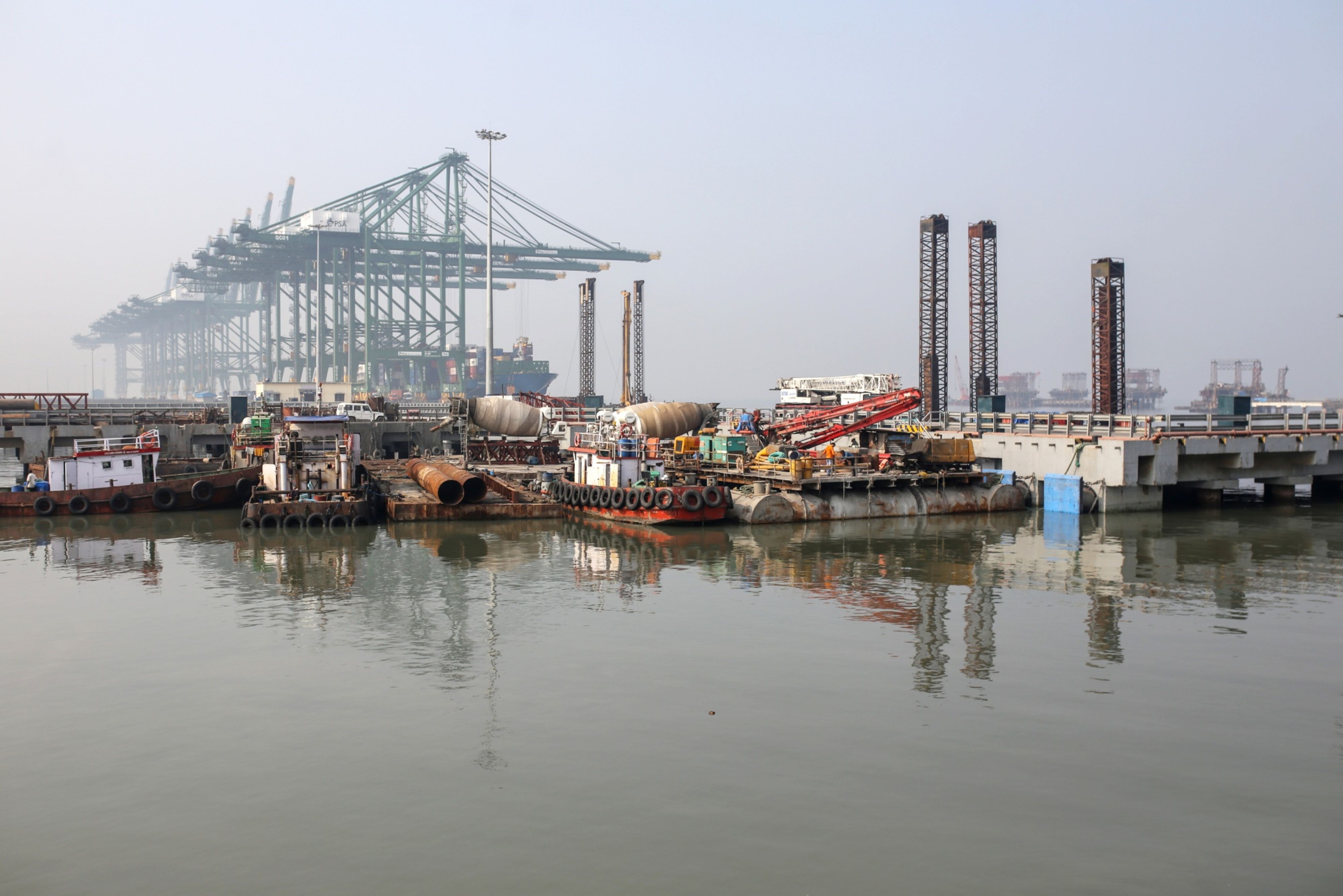
India's current account in the three months ended December 2021 widened sharply, led by a rise in the merchandise trade deficit.
The nation's current account recorded a deficit of $23 billion in the October-December quarter against a deficit of $9.9 billion in the July-September quarter, Balance of Payments data released by the Reserve Bank of India showed.
As a percentage of GDP, the current account balance was at 2.7% in the reported quarter compared with 1.3% in the preceding three months.
"The current account deficit widened in Q3 FY22, but undershot the lower end of our expectation band of $24-28 billion, with a better-than-anticipated outcome for goods, services and secondary income," Aditi Nayar, chief economist at ICRA, said. The current account deficit is expected to recede somewhat in Q4 FY22, to $17-21 billion, with the third wave temporarily curtailing certain imports, Nayar said.
The widening of the deficit was on account of a rise in the merchandise trade deficit to $60.4 billion from $44.4 billion in the previous quarter.
There was an accretion of $0.5 billion to foreign exchange reserves in balance of payment terms compared with $31.2 billion in the preceding three months.
Among key components:
Foreign direct investment recorded an inflow of $5.1 billion
Portfolio investments saw an outflow of $5.8 billion.
Net external commercial borrowings to India recorded outflow of $0.2 billion in Q3 FY22 compared with an inflow of $4.1 billion in the previous quarter.
Private transfer receipts, mainly representing remittances by Indians employed overseas, amounted to $23.4 billion, an increase of 13.1% over a year ago.

-
A New Samvat Wishlist: Inclusive Prosperity And Human Development

India has strengthened its economic foundations through infrastructure, digital access and enterprise. Its next growth chapter must deepen productivity, create better livelihoods and widen participation in prosperity.
-
Love, Sex Aur Dhokha: The Audacious Plot To Spy On Jensen Huang
A Taipei dinner, a Singapore chip buyer and a suspected Chinese asset: inside the alleged spy operation that got close to NVIDIA's Jensen Huang.
-
Ten Things I Learnt This Samvat
Patience can be a trap. Cheap stocks can stay cheap. Leverage can wipe you out. What did Samvat 2082 teach us? Niraj Shah writes on 10 lessons from the year gone by.
-
Talking Points This Week: Tech Nerves, FII Buying, And A Faraway Banking Shock
The global markets are not shining this Diwali. The exception in the large markets is, India.
-
Midterm Rally Lasted A Day. The Hard Reality Of A Divided US May Last Two Years | Opinion
Between a contested AI boom, a debt ceiling that arrives in 2027 and a president with every incentive to act alone, the next two years may prove more volatile than the first day's rally suggests.
-
Blue Wave Will Derail the AI Trade but Won't Dismantle the AI Era | Unhedged Position
The Democrats' sweep of the US Congress will see politics collide with economic forces both over the long and short term.
-
It's Time To Take The GST Council's Bet On Trust Global
Payment records can prove India's services exports, and clear, proportionate rules can bring foreign digital sellers into the tax net.
-
Opinion | India at 38: From Innovation Overperformer to Innovation Powerhouse
India now has 453 VC-backed deep science startups, 18 of them late-stage, after 117 percent growth since 2020. Laurus Labs, at USD 9.3 billion, is the most valuable deep science company in any middle-income economy outside China.
-
Navigating Energy Crossroads: S Jaishankar's Call For Diversified Supply Chains At G20 Ministerial Meeting
As geopolitical fault lines continue to test maritime trade routes and commodity flows, Jaishankar's message remains pertinent: true economic resilience requires open markets, protected transit lines, and a genuine commitment to multilateral cooperation rather than coercion.









