Recent escalations in the US-Israel-Iran war have put significant pressure on vital energy imports through the Strait of Hormuz, an artery for global energy shipments. This has led to India facing a severe gas supply crunch, which has already forced de facto supply cuts across major industries.
In light of the recent developments in the Middle East, the government has officially mandated strict natural gas rationing strategy across all industries in order to manage severe supply disruptions.
In a Gazette shared by the government, the Natural Gas (Supply Regulation) Order was enacted after international suppliers invoked force majeure clauses due to halted LNG shipments through the Strait of Hormuz. Through this emergency measure, the government has established a hierarchy of supply in order to secure distribution for critical sectors.
Also Read | Layoffs Are Rising In Tech, But These Skills Are Helping People Unlock Better Pay
ALSO READ: Alternative For Hormuz Strait: How Global Oil Chokepoints Work And What They Mean For India
This mandate supersedes all existing Gas Sale Agreements (GSAs) and commercial arrangements. The Gas Authority of India Limited (GAIL) will manage natural gas supplies to implement the directives, while a pooled price will be notified by the Petroleum Planning and Analysis Cell (PPAC).
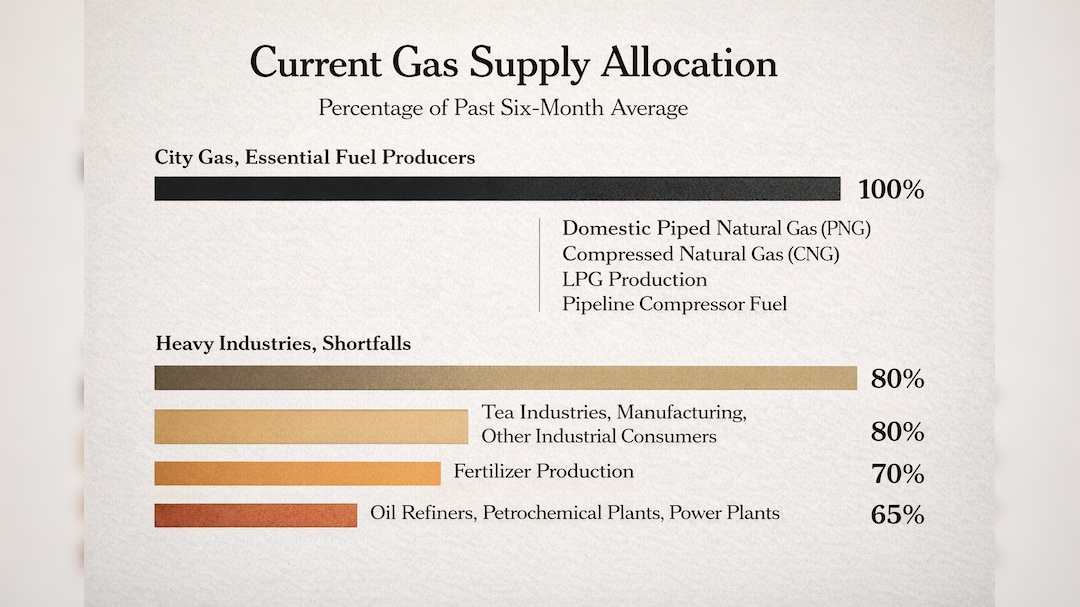
In order to protect everyday citizens, city gas networks and essential fuel producers are currently drawing their full historical requirements. However, heavy industries are absorbing significant shortfalls. Based on recent operational data, the current supply allocation stands at:
- 100% of past six-month average: Domestic Piped Natural Gas (PNG), Compressed Natural Gas (CNG), LPG Production, and Pipeline Compressor Fuel.
- 80% of past six-month average: Tea Industries, Manufacturing, and Other Industrial Consumers.
- 70% of past six-month average: Fertilizer Production.
- 65% of past six-month average: Oil Refiners, Petrochemical Plants, and Power Plants.
This squeeze on natural gas comes as the nation battles a parallel crisis in LPG. While a formal reprioritisation mandate remains on the table for policymakers, industries are already grappling with 20% to 35% supply cuts.
Energy-intensive sectors, including the massive ceramics manufacturing hub in Morbi, Gujarat, have begun shutting down units or scrambling for alternative fuels as the geopolitical crisis shows no signs of easing.
ALSO READ: Mumbai Hit By LPG Supply Disruptions Amid Iran War — Check New Rule On Refill Booking
Essential Business Intelligence, Sharp Market Insights, Practical Personal Finance Advice, Daily Fuel, Gold and Silver Prices and Latest Stories — On NDTV Profit.