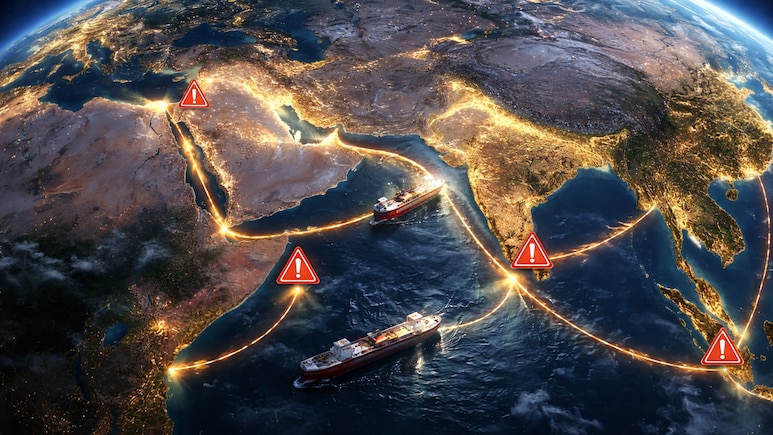
As tensions flare in the Middle East, with Iran engaging in a state of war with the United States and Israel, the Strait of Hormuz is once again in focus. Iran has already warned that any ships crossing this chokepoint will be set 'ablaze', thus reminding how fragile global energy trade can be.
This is even more so detrimental for a country like India, which imports the bulk of its crude oil, with government officials confirming that about 40% of India's supplies come from the Strait of Hormuz alone. But what about the alternatives?
Distant maritime corridors are not abstract lines on a map; they are economic lifelines. From the Persian Gulf to Southeast Asia and from the Red Sea to the Atlantic, a handful of narrow sea passages quietly shape fuel prices, inflation, and trade flows.
Also Read | Layoffs Are Rising In Tech, But These Skills Are Helping People Unlock Better Pay
Here is a geography-led explainer, breaking down the world's most critical oil chokepoints — and what they mean for India.
Global Maritime Chokepoints and India's Energy Lifeline
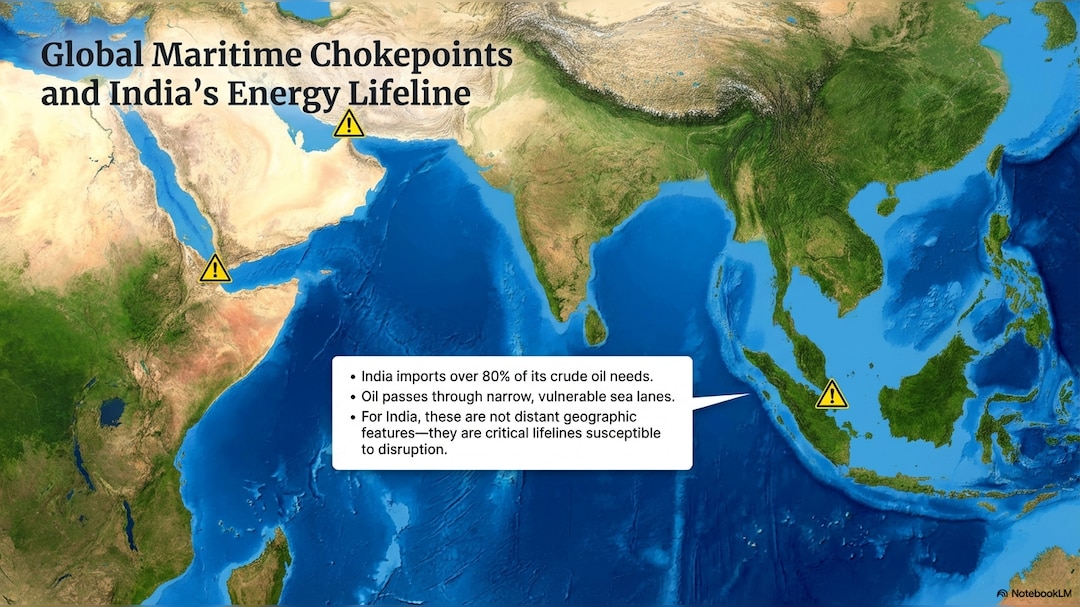
India imports over 80% of its crude needs, much of it moving through narrow, vulnerable sea lanes. One of the most critical ones is the Strait of Hormuz, an entryway for oil shipments not only to India but also to Southeast Asia.
The Hormuz Strait
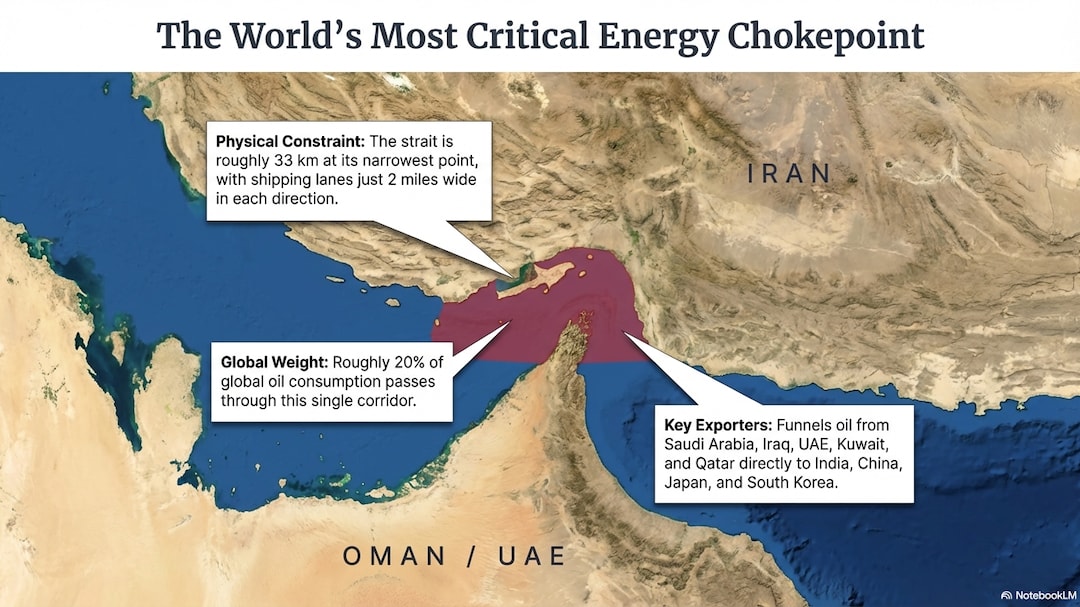
The Strait of Hormuz is just 33 km wide at its narrowest point, with shipping lanes barely two miles across. Yet, nearly a fifth of global oil passes through this single corridor linking Gulf oil producers to Asia.
India's Crude Artery
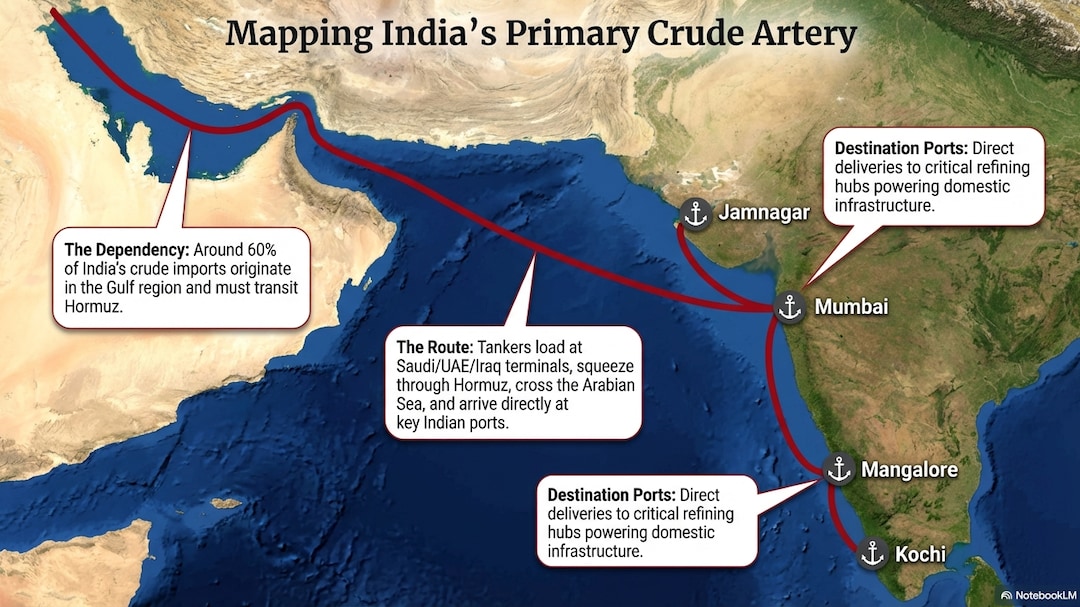
Around 60% of India's crude imports originate in the Gulf and transit Hormuz. Tankers then cross the Arabian Sea to key refining hubs such as Jamnagar, Mumbai, Mangalore and Kochi.
Implications Of Hormuz Closure
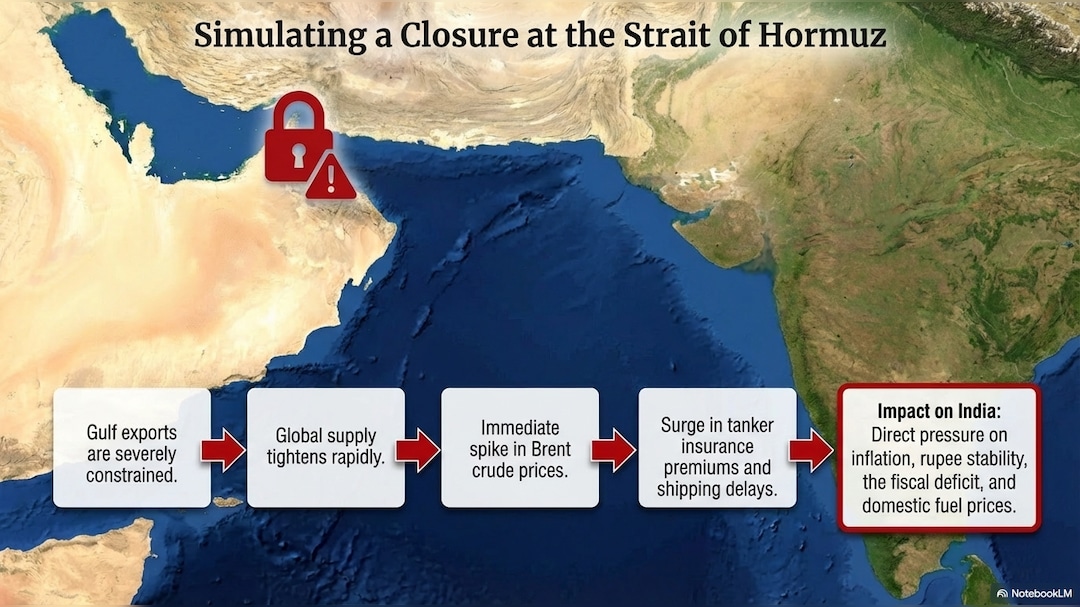
A shutdown would sharply constrain Gulf exports, tighten global supply and trigger an immediate spike in crude prices. Higher insurance costs and shipping delays would amplify the shock, pressuring India's inflation and fiscal math.
The Saudi Arabian Bypass
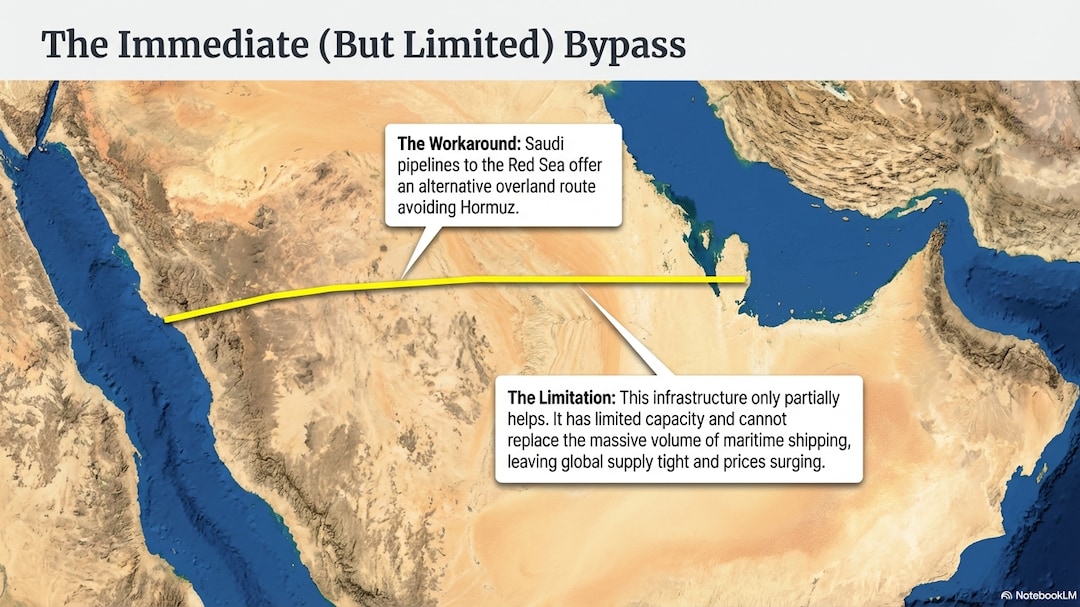
Saudi pipelines to the Red Sea offer a partial workaround, allowing some exports to bypass Hormuz. However, limited capacity means this overland option cannot fully replace massive seaborne volumes.
Bab-el Mandeb
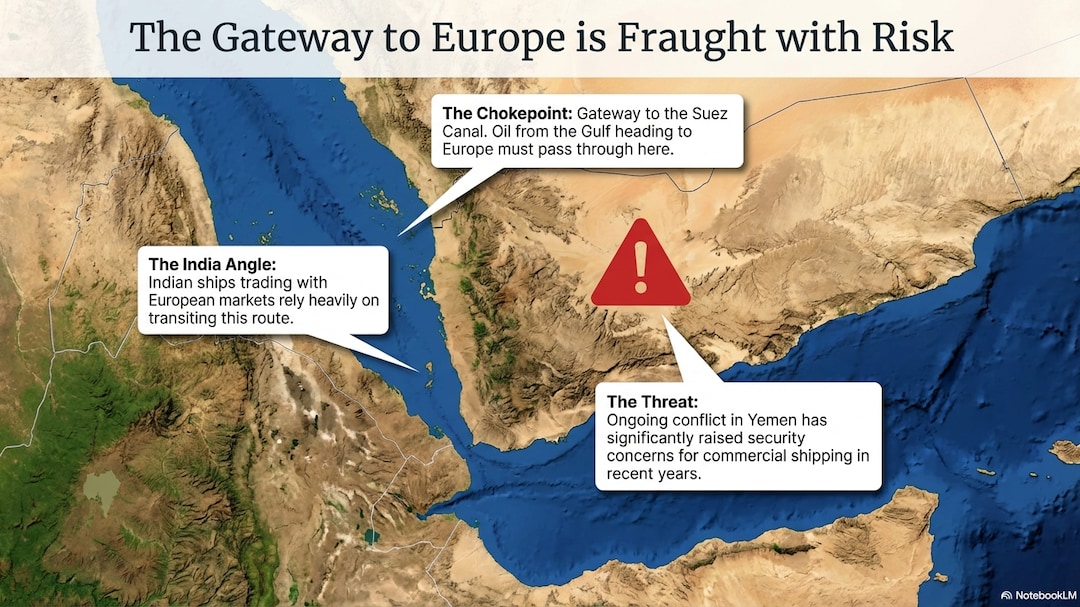
Bab-el-Mandeb links the Gulf to the Suez Canal. Ongoing regional tensions have heightened security risks, making this corridor critical not just for oil flows but also for India's trade with Europe.
The Suez Canal
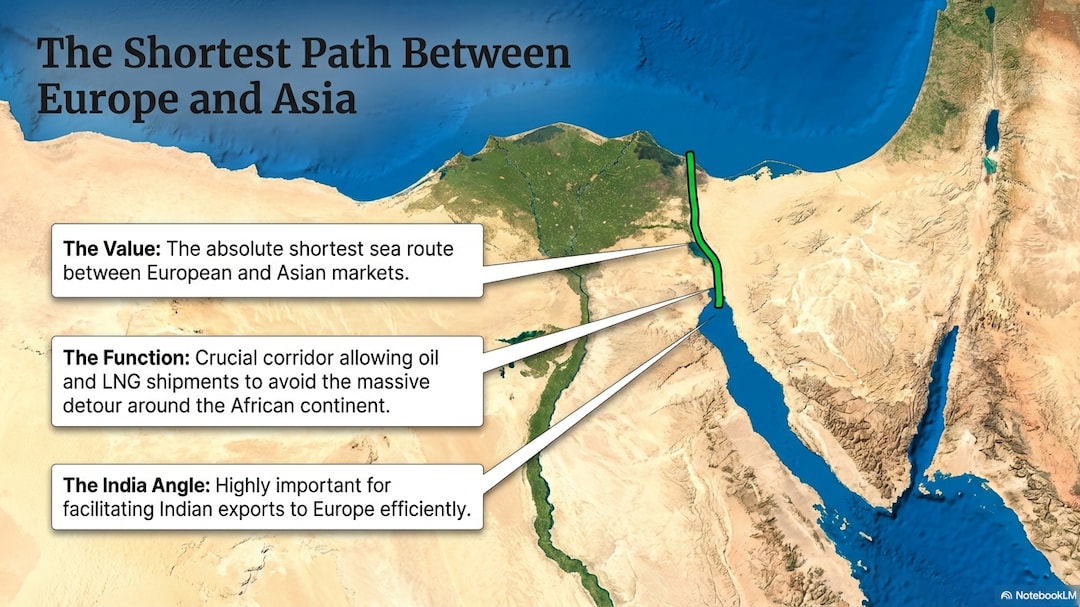
The Suez Canal provides the fastest maritime link between Asian and European markets. It enables oil and LNG shipments to avoid the long detour around Africa, saving both time and freight costs.
The Long Way Around (Cape of Good Hope)
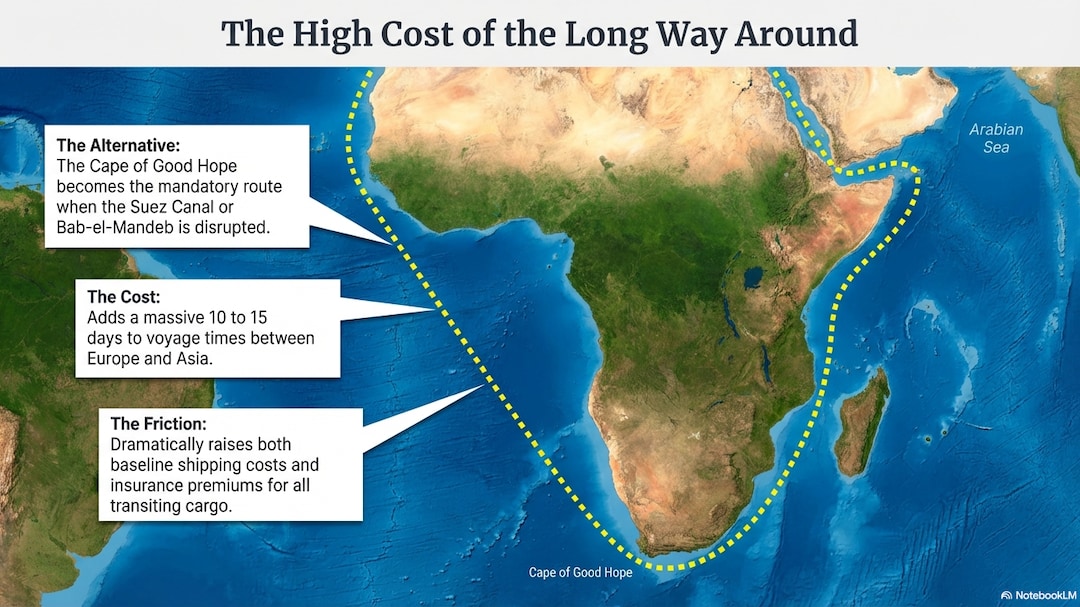
When Suez or Bab-el-Mandeb is disrupted, vessels reroute via the Cape of Good Hope. This adds 10-15 days to voyages, sharply raising shipping costs and insurance premiums across global trade routes.
The Strait Of Malacca
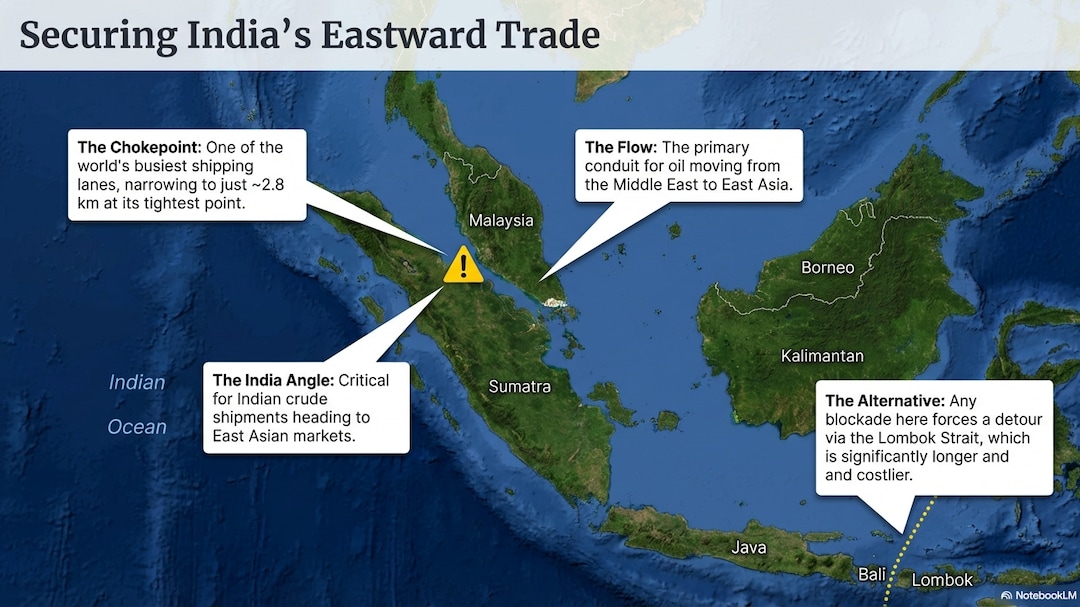
The Strait of Malacca is one of the busiest shipping lanes in the world. It is vital for oil moving from the Middle East to East Asia and for Indian cargo flows toward Southeast Asian markets.
The Panama Canal
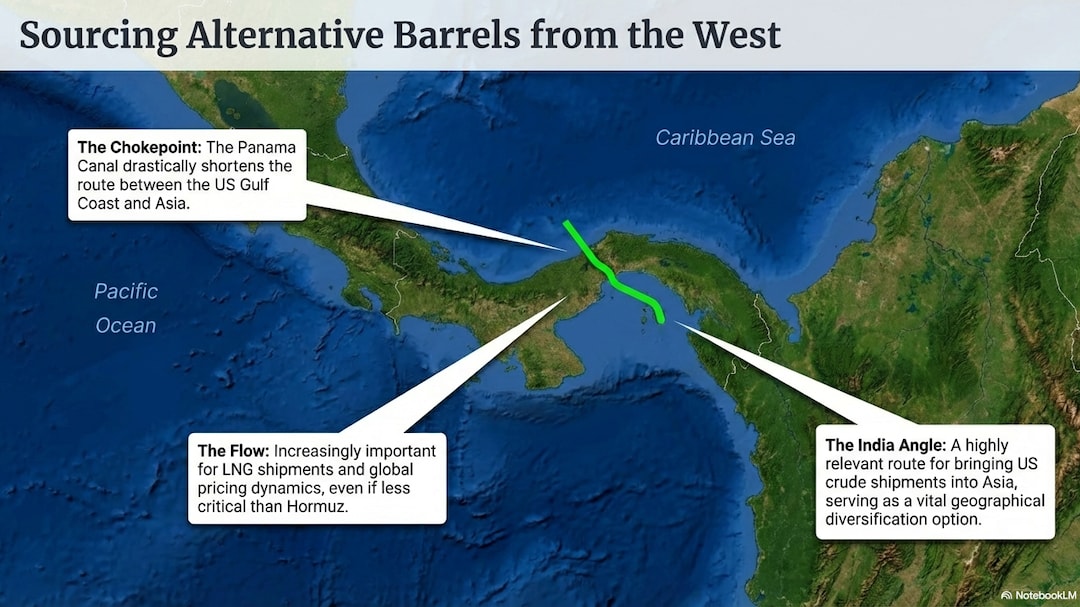
The Panama Canal shortens the route between the US Gulf Coast and Asia. While less critical than Hormuz, it has become increasingly relevant for LNG flows and diversifying crude supply routes.
Activating India's Energy Security Architecture
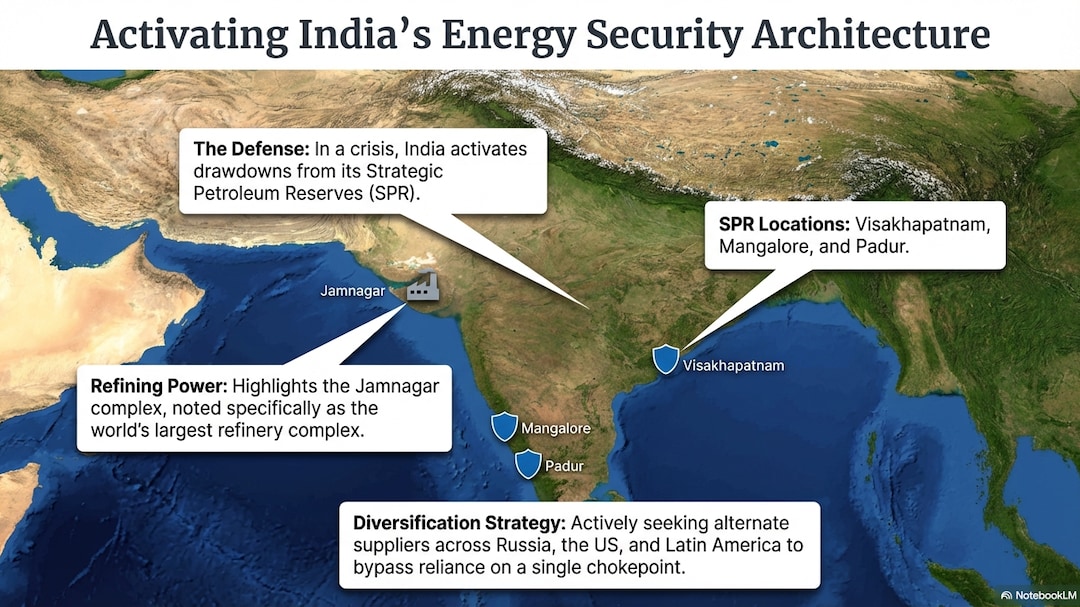
In times of crisis, India can draw from its Strategic Petroleum Reserves in Visakhapatnam, Mangalore and Padur. Combined with supplier diversification across Russia, the US and Latin America, this forms a buffer against chokepoint shocks.
ALSO READ: India Mulls Purchase Of Russian Crude As Middle East Tensions Jolt Oil Markets
Essential Business Intelligence, Sharp Market Insights, Practical Personal Finance Advice, Daily Fuel, Gold and Silver Prices and Latest Stories — On NDTV Profit.