
India's investment pots are getting bigger. But is that wealth reaching more people, or growing in the hands of those who already have it?
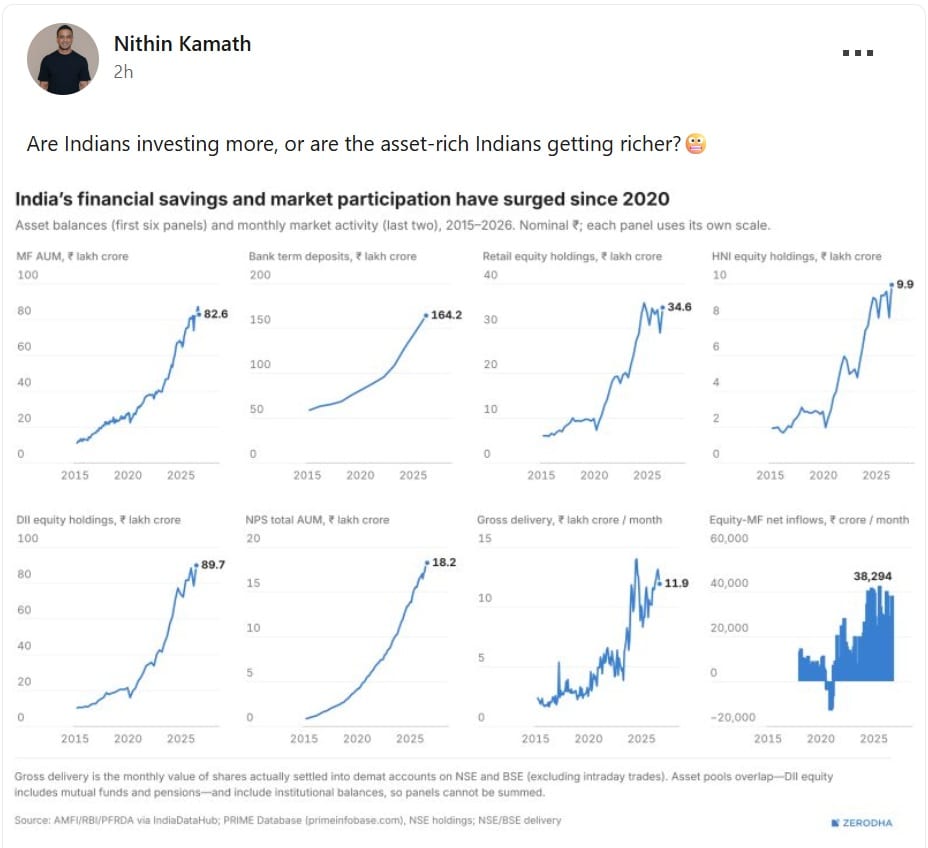
Zerodha co-founder and CEO Nithin Kamath posed the question on LinkedIn, sharing a chart tracking financial savings and market activity from 2015 to 2026.
“Are Indians investing more, or are the asset-rich Indians getting richer?” he wrote on LinkedIn.
Also Read | Layoffs Are Rising In Tech, But These Skills Are Helping People Unlock Better Pay
The chart shows sharp growth in mutual funds, bank deposits, equity holdings and pensions, particularly since 2020. What it does not reveal is how widely those gains are being shared.
Bigger Portfolios, But Whose?
Mutual fund assets under management stand at Rs 82.6 lakh crore, according to the chart's latest labelled figures. Retail investors hold Rs 34.6 lakh crore in equities, while high-net-worth individuals hold Rs 9.9 lakh crore.
Domestic institutional investors' equity holdings are shown at Rs 89.7 lakh crore, and National Pension System assets at Rs 18.2 lakh crore.
The money flowing through markets has grown too. Monthly net inflows into equity mutual funds are shown at Rs 38,294 crore. Delivery-based share transactions, which exclude intraday trades, stand at Rs 11.9 lakh crore a month.
These figures capture different things, including asset values, investment flows and trading activity. They cannot simply be added together as a measure of household wealth.
They also leave Kamath's central question unanswered. Investment balances can rise because people put in more money, because their existing investments appreciate, or both. A larger total does not necessarily mean a larger share of Indians owns those assets.
Bank Deposits Still Tower Over Mutual Funds
Despite the attention surrounding equities and mutual funds, bank term deposits remain the largest individual asset pool displayed in the chart.
At Rs 164.2 lakh crore, they are almost twice the Rs 82.6 lakh crore held in mutual funds.
One respondent to Kamath's post highlighted that gap, pointing to the continuing weight of deposits even as market-linked investments expand.
For all the enthusiasm around stock markets and systematic investment plans, the deposit remains a substantial part of India's savings story.
Investing While Carrying Debt
The discussion also turned to households that invest regularly while servicing expensive loans.
One respondent questioned whether some investors should be directing more money towards debt repayment instead of mutual fund contributions. The concern was that borrowing costs could outweigh investment gains, particularly when market returns are uncertain.
The respondent also speculated about a further interest rate increase in December and its possible effect on household decisions.
Essential Business Intelligence, Sharp Market Insights, Practical Personal Finance Advice, Daily Fuel, Gold and Silver Prices and Latest Stories — On NDTV Profit.