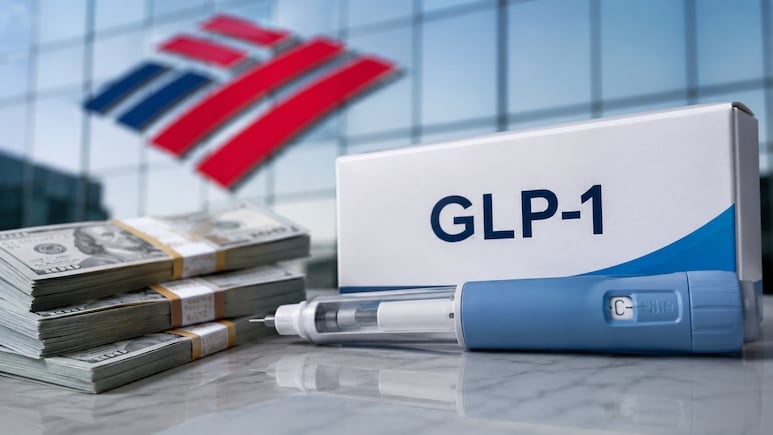
Bank of America Chief Executive Officer Brian Moynihan claimed that the lender spends more than $250 million annually on GLP-1 weight-loss medications for its employees, calling the rapidly rising expense a valuable investment in its staff.
Moynihan, in conversation with a news channel on Wednesday, said BofA spends more than $2 billion annually on healthcare for its approximately 211,000 employees. This means that GLP-1 drugs alone now make up almost 13% of all healthcare expenditures.
“We spend about $250 million or more on GLPs, and that's up from zero” four or five years ago, Moynihan told CNBC's Andrew Ross Sorkin. “We see a great impact on the employees.”
Also Read | Layoffs Are Rising In Tech, But These Skills Are Helping People Unlock Better Pay
ALSO READ: Emcure Pharma Q1: Net Profit Jumps 42%; CEO Satish Mehta Appointed As Chairman
The rising demand for GLP-1 medications like Ozempic and Wegovy, which can cost thousands of dollars per patient each year, has weighed on the expenses of employers in the US. As utilisation has increased, many self-insured businesses and public employers have reduced or eliminated coverage or questioned whether they can afford the treatments.
Moynihan said the move ultimately reflects a push to offer good benefits, even though he admitted that some employees would leave Bank of America before the business sees long-term savings from improved health.
According to the CEO, Bank of America monitors weight reduction and lifestyle changes by combining access to the medications with health coaching. Moynihan cited new clinical evidence that suggested shorter-term advantages, such as a decreased risk of cardiovascular events, in addition to long-term preventative health.
“It's been fascinating to watch our teammates' behaviour on these adjustments — the loss of weight,” he said.
According to him, the country's second-biggest lender in terms of assets is also utilising its scale to bargain with pharmacy benefit managers and prescription manufacturers for reduced rates.
“Believe me, we're pounding everybody on price and trying to get as cheap [as possible],” Moynihan said. “But our view is that [because of] the long-term health benefits, plus there may be more short-term health benefits ... it's a good investment.”
In a poll conducted in July by the International Foundation of Employee Benefit Plans, or IFEBP, which has over 30,000 member businesses or public institutions, about 36% of employers stated that they cover GLP-1s for both diabetes and weight reduction.
The poll indicated that while that number is somewhat higher than 34% in 2024, it remains unchanged from 2025.
Employers continue to base their decisions about GLP-1 coverage primarily on cost: according to the IFEBP study, the pharmaceuticals accounted for 11.4% of annual claims in 2026, up from 6.9% in 2023.
ALSO READ: Biocon Shares Surge Nearly 3% After Q1 Profit Jumps 350%
In order to increase the uptake of their therapies, obesity medication manufacturers Eli Lilly and Novo Nordisk have been advocating for increased employment coverage. For other patients, the discounted cash costs of such medications—which range from several hundred dollars per month depending on the dosage—remain unaffordable.
Lilly introduced a new initiative in March with the goal of allowing companies greater latitude in how they pay for treatments. Through the initiative, employers will be able to purchase a new multi-dose form of Zepbound at a net discounted price of $449 per month for all doses.
Essential Business Intelligence, Sharp Market Insights, Practical Personal Finance Advice, Daily Fuel, Gold and Silver Prices and Latest Stories — On NDTV Profit.