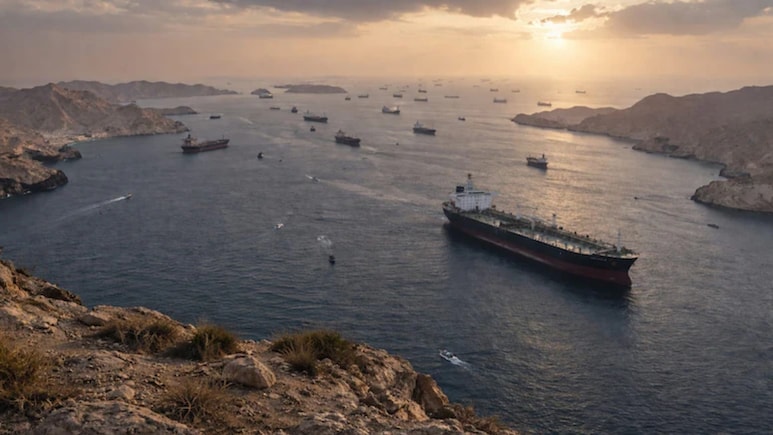
German shipping giant Hapag-Lloyd said the closure of the Strait of Hormuz amid the Middle East conflict cost the company around $600 million in the second quarter, highlighting the growing economic fallout from the disruption to one of the world's key energy routes.
Al Jazeera reported that Hapag-Lloyd's net profit fell to $83 million in Q2 from $306 million a year earlier. Strong exports from Asia and improved US demand partly offset the impact of disruptions in the Middle East, the company said.
In its Liner Shipping segment, operating profit declined to $153 million from $167 million. Hapag-Lloyd attributed the pressure to higher bunker, insurance, storage, rerouting and inland transportation costs following the Strait of Hormuz closure.
Also Read | Layoffs Are Rising In Tech, But These Skills Are Helping People Unlock Better Pay
ALSO READ: Hormuz Jolt: IEA Warns Of 1.8 Million Bpd Deficit In Oil Supply In Q3
According to Lloyd's List, the disruption is also reshaping the global tanker market, with supply replacement efforts losing momentum even as freight rates remain exceptionally strong.
The International Energy Agency said global oil inventories fell by 69 million barrels in July, including a 63-million-barrel decline in oil held on water. It also cut its 2026 global oil demand forecast by 550,000 barrels per day from its previous estimate, citing the ongoing Hormuz closure and elevated fuel prices.
Vortexa data showed global seaborne crude and condensate exports averaged 34.8 million barrels per day in the week ended Aug. 9, the lowest since late May. Flows during the Hormuz crisis have averaged 4.5 million bpd, or 11%, below the year-earlier level.
The impact has been particularly severe for very large crude carriers. VLCC cargo volumes have fallen 27% year-on-year, while spot rates have remained around three times their year-ago levels.
Fearnleys said there was huge money to be had for the risk-takers willing to take Middle East Gulf cargoes, highlighting the premium commanded by vessels operating in higher-risk areas.
ALSO READ: Beyond Oil And War: The Hidden Environmental Cost Of The Strait Of Hormuz
China remains a key swing factor for the tanker market. According to Vortexa, crude exports to China averaged 6.5 million bpd during the crisis period, down 39% from a year earlier.
Clarksons Securities said China could now become the next leg of tanker support, with higher refinery runs, recovering imports and stock replenishment potentially boosting tanker demand in the fourth quarter.
Meanwhile, the global response to lost Hormuz supply is showing signs of weakening. US crude exports have declined since early July, while Black Sea shipments have also fallen amid attacks and security threats to tankers.
Despite some tanker traffic continuing through Hormuz, crude exports from west of the strait remain 74% below pre-crisis levels, according to Vortexa data.
Essential Business Intelligence, Sharp Market Insights, Practical Personal Finance Advice, Daily Fuel, Gold and Silver Prices and Latest Stories — On NDTV Profit.