Four Celebrities Reveal A Lot About Three Decades Of India's Consumer Market | The Reason Why
As these celebrities have grown older, so have the consumers who once followed them.
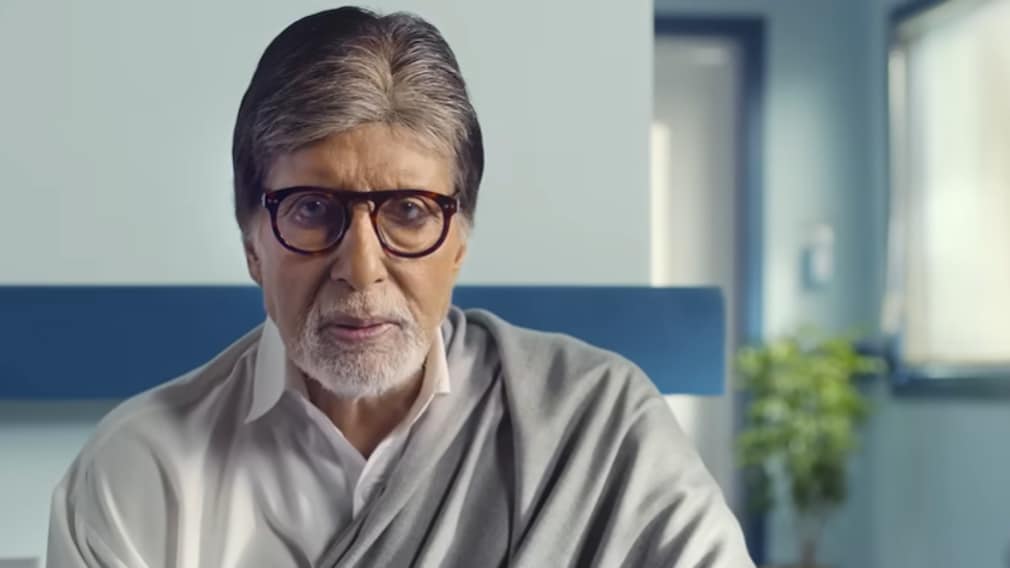
After the 2003 Cadbury's worm infestation controversy, Amitabh Bachchan became the face of its comeback. His reputation helped the company regain the public trust. It reminded us how star power can shift sentiment at scale. That is what makes celebrity endorsements interesting. Celebrities bring trust, aspiration, and a special connection with consumers.
Not only do brands adjust to changing consumer needs, but brand ambassadors also evolve along. To see how India's consumer economy has shifted and how celebrity endorsements have shifted with it, I studied over 200 brands endorsed by four long‑lasting stars: Amitabh Bachchan, Shah Rukh Khan, Sachin Tendulkar and Akshay Kumar. They aren't the whole market, but together they mirror the breadth of India's consumers and its most recognisable product categories.
From Consumers to Life Infrastructure
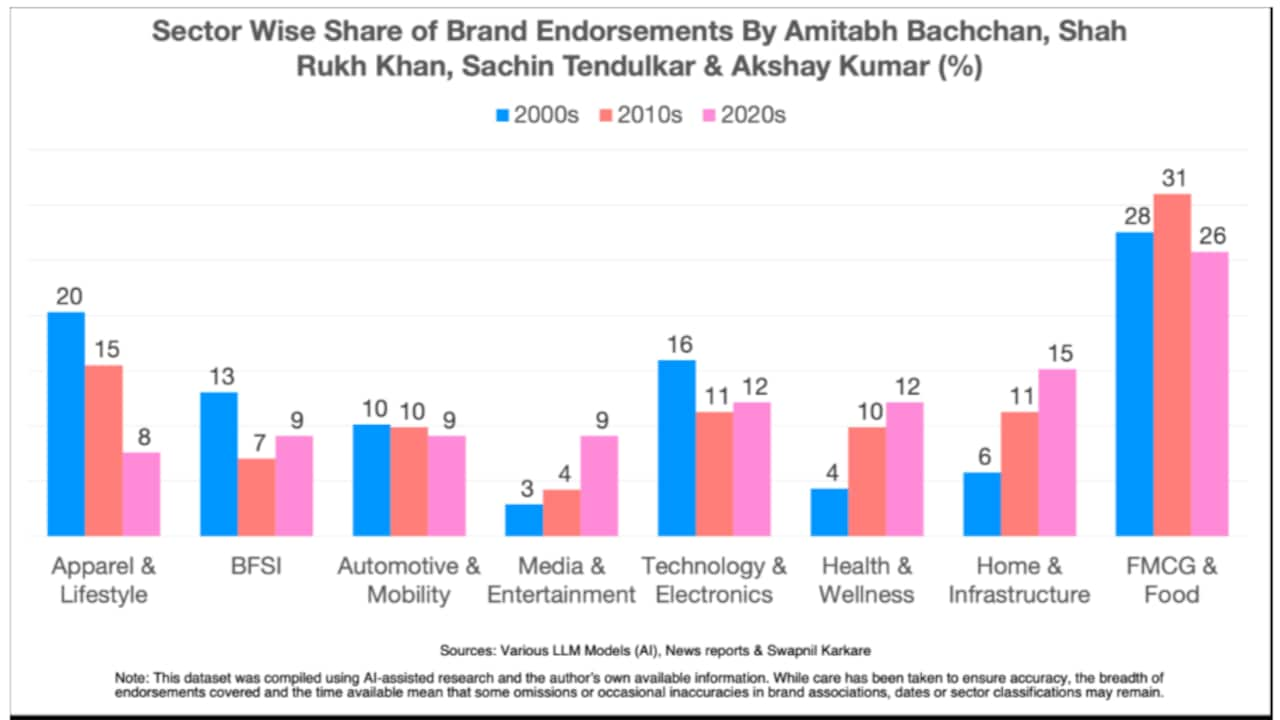
Across portfolios of these four celebrities, the shift from the 2000s to the 2020s is hard to miss. In the 2000s, they endorsed everything from mobile phones to baniyans and from chyawanprash to cars. Most of it sat in the mass-market segment, especially tangible things – something you could wear, use or aspire to own. Exceptions included luxury watches and financial products.
Today, ads for Thums Up, Tide, Kurkure, Everest and Maaza are still around, but there's been a clear rise in endorsements for things we can't easily see or touch in regular life. They include digital platforms, cement or steel that goes inside our homes and experiences like travel.
As these celebrities have grown older, so have the consumers who once followed them. That audience is now more mature, wealthier and making bigger decisions. Naturally, the brands chasing these celebrities have shifted toward products and services tied to larger, more consequential choices.
Also Read | India-Pakistan Fighting For Same Textile Market — And Trade Deals Are Changing It | The Reason Why
The Disappearance of Apparel & Moving Inside the Home
Apparel and footwear were prominent in their 2000s portfolios. We have seen ads for Levi's, Adidas, Belmonte, Grasim Suitings, and Reid & Taylor.
Today, these aren't dominating. This should not be interpreted as evidence that celebrities have stopped endorsing fashion. The better interpretation is that the traditional model of having one major star as the long-term face of an apparel or footwear company has become much less prominent thanks to social media marketing.
However, a new category has emerged: housing and home-improvement. In the 2000s, Binani Cement and Nerolac Paints remained isolated examples that used one of these faces. By the 2020s, the Big-4 celebs have endorsed cement, steel, steel pipes, paints, plywood, hardware and windows. For example, UltraTech Cement, Rungta Steel, APL Apollo, Berger Paints, Greenply, CenturyPly, SRMB Steel, Techno Paints, Häfele, Kajaria and Prominance. That tells us something interesting.
As these sectors formalise, more brands want visibility. Earlier, steel or window companies barely advertised. Now they want to reach businesses but also everyday consumers. And today's consumer is more aware and wealthy enough to build or renovate a home.
I have felt this myself. I am building a house right now and have chosen branded cement, steel, and windows myself. Earlier generations, for instance, might not have had so much agency or choice. That's where the role of superstars has shifted with changing needs and rising awareness. Their presence gives people a sense of familiarity and reassurance in categories where most of us don't have the technical knowledge.
From Global Aspiration to Indian Scale
Another notable pattern within these portfolios is the rise of Indian companies.
The 2000s contained many global brands like Nokia, HP, Adidas, TAG Heuer and Gillette. They wanted to tap India's rising consumer market, so they chose big stars. Foreign brands dominated the portfolios of these four celebrities, especially SRK's.
By the 2020s, Indian-founded companies and India-based startups became a major part of their portfolio. The Big-4's share of Indian companies in all ads rose from 58% in the 2000s to 77% in the 2020s. This is a major shift.
Changing Nature of Healthcare & Technology
Then, there are a couple of more changes: the rise of healthcare and the changing nature of tech ads.
Earlier, apart from traditional products such as chyawanprash, healthcare barely got any space. By the 2020s, these celebrities have expanded significantly, with MediBuddy, PharmEasy, Sugar.Fit, Dr Agarwal's Eye Hospital, Savlon, among others. This highlights the role of rising health awareness and preventive measures among the general public.
The character of the technology sector changed too. Earlier, tech meant hardware. Brands like Videocon, Nokia, Micromax and HP roped in these celebrities. Today, physical tech brands such as Realme, Acer and RRP Electronics remain, but they sit alongside a growing number of digital businesses and apps such as FAU-G, Unacademy, Spinny, PharmEasy and MediBuddy.
Final Take
There is one obvious limitation: all four celebrities in this analysis are men. That creates a bias, and I acknowledge it. These four celebrities do not represent India's entire endorsement market, but their journeys offer an interesting window into how brands, consumers, and the Indian economy have changed.
Their brand portfolios reflect not just what India buys, but what India has become. They endorse more of what goes into our homes, bellies, and phones. Yes, those aren't all the healthiest available choices for consumers, but that's a small sign of progress – not just about the corporate marketing teams, but also the consumers in India.
Also Read | US Bond Buyback Will Not Lower Yields | The Reason Why
-
Gold Is Rs 22,000 Cheaper Than A Month Ago. Should You Buy Amid The Wedding Season?

Gold's potential slide to $3,500 could save around Rs 4,700 per 10 grams, but a soft inflation print could just as easily push prices back up. One way to split the risk is to buy in parts, some now and the rest after the Fed's Dec. 9 decision.
-
AI Agents Are Gaining Power. Who Governs Them?
Artificial intelligence agents promise to transform productivity by moving machines from assisting decisions to executing them. But as organisations delegate greater authority to these AI-agents, they must first establish who controls that authority and who remains accountable when things go wrong.
-
Why Swapping Your Old Gold Can Trigger A Rs 5 Lakh Tax Bill, And How You Can Avoid It Legally
Swapping old gold for new is taxed as a sale and a fresh purchase. Getting your own gold remade can cut most of that bill, though it has its own costs.
-
The AI Trade is Done. The Real Opportunity for Investors Starts in 2027 | Unhedged Position
As pureplay AI stocks plunge and circular, capex-led financing unwinds, 2027 is set to be a year of reckoning for AI companies. Yet the bust clears the way for a better opportunity for investors in 2027 -- shifting the spotlight from AI builders to the companies using AI.
-
Leadership As Mission: Why The Age Of AI Demands More Human Leadership
Debjani Ghosh examines how AI is changing leadership, arguing that its success must be measured by its impact on people and the accountability of those guiding its use.
-
We May Need Another Tukaram Mundhe To Fight Air Pollution | The Reason Why
Developers may install basic measures such as sprinklers and green nets, resume work, and continue violating rules when this equipment stops working.
-
Extracting Value From Battery Scrap Could Be Challenging For India | The Reason Why
A discarded lithium-ion battery still contains valuable materials such as lithium, nickel and cobalt. These can be recovered and reused. When such batteries are crushed and shredded, they produce a dark powder called black mass.
-
One El Nino, India Can Handle. Two Could Break The Granary
India's grain stocks can absorb one bad year, but a second El Nino could drain the buffer in two to three years, economists say.
-
India's Troika Of Good Luck | Joining The Dots
As Jensen Huang's exit drags Nvidia down, a cooling AI trade and resilient earnings have revived investor interest in India. A likely RBI rate hike looms.
-
Talking Points This Week: Leadership Shock At Nvidia, Earnings Strength, And The Fog Over Hormuz
The Anthropic IPO pricing and first trading day, Nvidia's upcoming earnings, and any fresh signals from Iran will set the tone for the following week.









