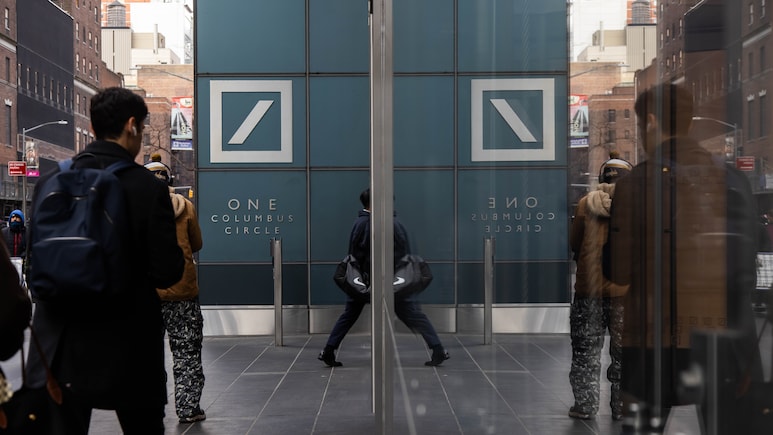
Deutsche Bank AG flagged a €26 billion ($30 billion) exposure to private credit, an asset class that's grappling with fund redemptions, scrutiny of underwriting standards and the impact of AI on some borrowers such as software makers.
The German lender's private credit portfolio increased to €25.9 billion of loans at amortized cost last year, from €24.5 billion in 2024, according to its annual report published Thursday. The lender said it is not exposed to “significant risks” related to non-bank financial institutions, but that it could face potential indirect risks through interconnected portfolios and counterparties.
Deutsche Bank, which also flagged a potential $1 billion litigation risk on Thursday, fell 6.1% at 4:50 p.m. in Frankfurt trading, putting it on track for the biggest one-day drop since April.
Also Read | Layoffs Are Rising In Tech, But These Skills Are Helping People Unlock Better Pay
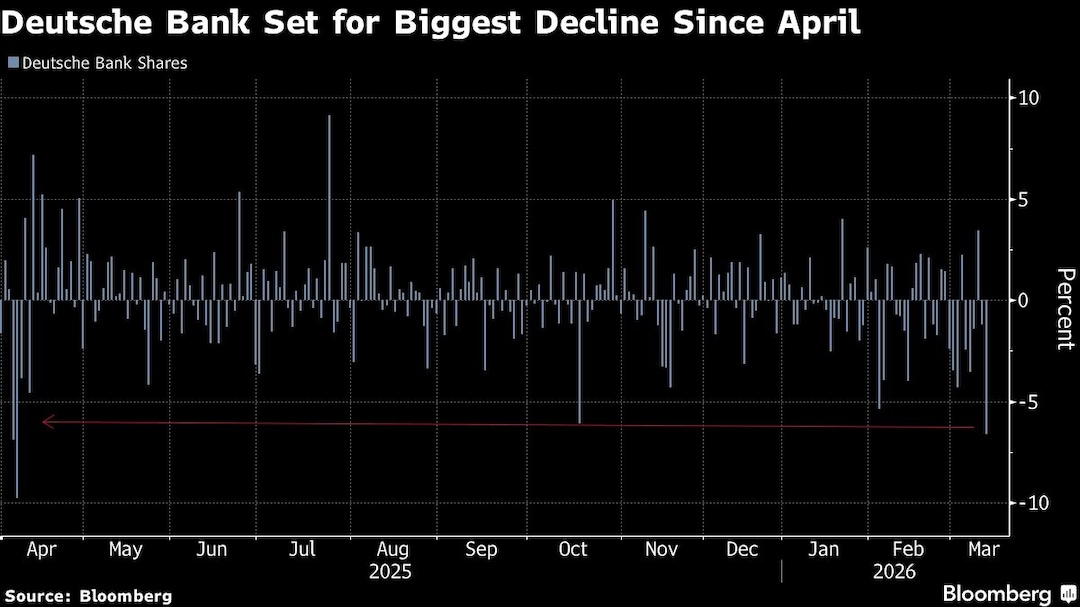
Photo Credit: Bloomberg
The $1.8 trillion private credit market is witnessing an exodus of investors after some high-profile corporate blowups led to mounting concerns over loan quality and exposure to software firms, whose business models are being threatened by rapid strides in artificial intelligence. JPMorgan Chase & Co. is restricting some lending to private credit funds after marking down the value of certain loans in their portfolios.
The latest credit shock to rattle both banks and private lenders was the collapse of UK mortgage lender Market Financial Solutions Ltd, which is facing allegations of fraudulent behaviour. Accusations of wrongdoing also surfaced last year in the failures of US auto parts supplier First Brands Group LLC and subprime auto lender Tricolor Holdings LLC.
ALSO READ: Cred Gets RBI Nod To Operate As Payment Aggregator
“Failures of a select number of sub-prime lenders in the U.S. increased investor focus on risks associated with private credit and raised wider concerns around underwriting standards and fraud risk,” Deutsche Bank said in its report.
An exposure of around $30 billion would make Deutsche Bank one of the bigger lenders to the asset class when compared with Wall Street peers. US banks had lent about $300 billion to private credit providers as of late June, with Wells Fargo & Co. leading the group with around $60 billion in exposure, Moody's Ratings said in October.
Research from UBS Group AG in December showed Deutsche Bank has the largest exposure among European lenders to non-bank financial institutions. About 30% of the German bank's loans, advances and debt securities were tied to investment firms, funds, insurance companies, pension funds, clearing houses and other financial intermediaries, compared with an average exposure of 8% among Europe's largest banks.
The UBS analysts said at the time that they used a broad definition of NBFIs, many of which it would expect to be fully collateralized and low-risk, and that it would not be sensible to assume that all “other financial corporations” exposures are of similar type and risk.
Deutsche Bank said its exposure to private credit represents about 5% of its loan book. While it identified the asset class as a “key risk,” it did not mention any losses or provisions tied to the private credit exposure.
“We believe that both the private credit and technology exposure are well managed and we do not see any particular source of concern at this stage,” analysts at Kepler Chevreux said in a note to clients.
About 73% of the exposure is to “multi-asset lender facilities (ABS) collateralized by highly diversified mid-market corporate loans in the U.S. and the EU, across industry sectors, with conservative advance rates of ~65% and almost entirely investment grade rated,” Deutsche Bank said. The rest is “diversified across single and multi asset lenders Net Asset Value (NAV) Financing, Single Asset Financing, non-bank CRE lending, business development companies (BDC) and subscription finance.”
Deutsche Bank's loan exposure to the technology sector, including software, accounts for €15.8 billion at amortised cost, up from €11.7 billion, the annual report showed. People familiar with the matter said last month that the German firm is part of a group of lenders who have been unable to sell about $1.2 billion of loans backing the acquisition of a software provider in a rare hung deal.
While Deutsche Bank is warning of risks in private credit, its asset management arm DWS Group plans to expand its own private credit offering. The bank said it intends to widen distribution through selective regional expansion and the joint development of innovative products and digital investment solutions with its private bank.
Essential Business Intelligence, Sharp Market Insights, Practical Personal Finance Advice, Daily Fuel, Gold and Silver Prices and Latest Stories — On NDTV Profit.