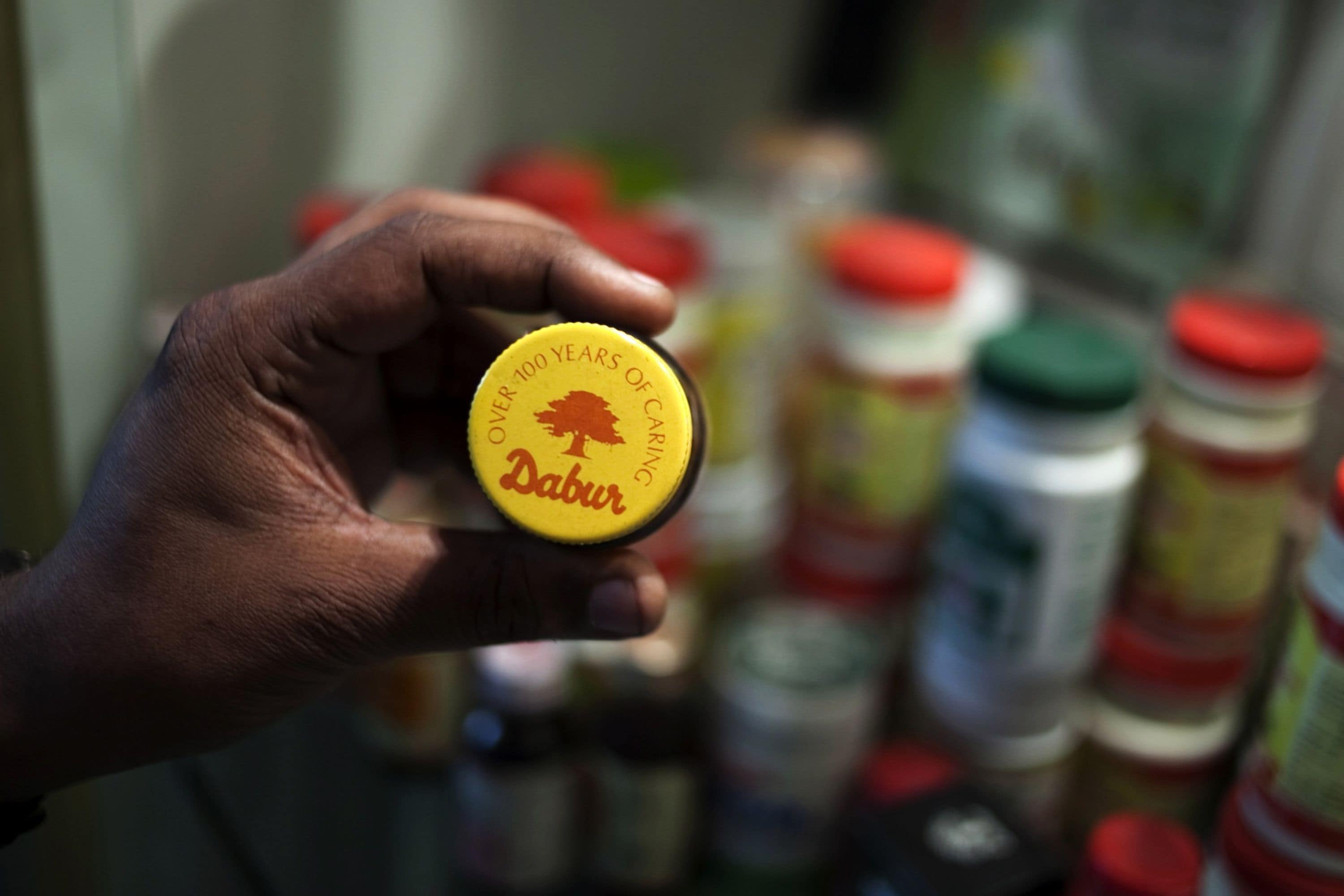
Dabur India Ltd.'s quarterly profit rose, beating estimates, and margin expanded overcoming higher input cost inflation.
Net profit attributable to shareholders of the maker of Vatika hair oil and Real fruit juice rose 15% sequentially to Rs 504.4 crore in the three months ended September, according to its exchange filing. That compares with the Rs 478.8-crore consensus estimate of analysts tracked by Bloomberg.
Q2 Highlights (QoQ)
Revenue rose 8% to Rs 2,817.6 crore, compared with the estimated Rs 2,706 crore.
Operating profit rose 12% to Rs 620.7 crore, against the Rs 587-crore forecast despite higher raw material costs.
Margin stood at 22% against 21.1%. Analysts had pegged the metric at 21.7%.
Raw material costs, including excise duty, rose 3.53% sequentially to Rs 1,203.9 crore
Its India business grew 11.9% year-on-year with volumes growth at 10%, marking the fifth successive quarter of double-digit growth.
"While the Covid fears have largely receded with the vaccination drive gathering pace and mobility improving, the operating environment remained challenging with unprecedented inflation impacting consumer sentiments in the run up to the festive season," Dabur India Chief Executive Officer Mohit Malhotra was quoted as saying in a statement. The company, he said, has taken calibrated price hikes to offset cost pressures.
The home and personal care segment, which contributes 49.9% to sales, saw double-digit growth across brands except Sanitize as Covid tailwinds subsided. Excluding the Sanitize range, the portfolio posted a 27% growth. Similarly, the health supplements witnessed a de-growth of 13.6% in Q2 as Chawanprash and Dabur Honey registered muted growth on a high base.
New product launches such as Dabur Health Drops, health juices and other immunity boosting products saw reduced traction. Ayurvedic medicines grew 12.6% on the back of aggressive digital initiatives. Overall, the company has gained market share across over 95% of its portfolio.
Dabur has been investing heavily to expand rural footprint and strengthen its digital capabilities. As of September-end, e-commerce contribution to domestic sales stands at 7%. "We have also surpassed our rural coverage target of 80,000 villages 18 months ahead of schedule and are now covering around 83,500 villages," Malhotra said, adding that rural demand has outpaced urban demand during the second quarter.
Dabur's international business grew 13.8% in constant currency terms during the quarter led by Sub-Saharan Africa (25%), Egypt (17.8%), SAARC (17.6%), US-based personal care firm Namaste (16.7%) and Middle East & North Africa (12.8%).
Both gross and operating margin contracted 204 basis points and 60 bps, respectively, over the preceding year. Pressure on gross margin was expected given that most consumer goods makers are bearing the brunt of the steep rise in commodity costs. Emami Ltd. reported a 150-basis-point decline in gross margins year-on-year amid higher input prices, despite a 3.5% price hike. Marico Ltd., too, saw its gross margin contract, while Nestle India Ltd. and ITC Ltd's margins remained stable. However, Hindustan Unilever Ltd. saw its margin expand over the preceding three months, aided by price hikes. It warned that "unprecedented inflation" of its key raw material-palm oil-could weigh on margins in the near-to-medium term.
On a two-year annualised basis, Dabur clocked revenue of 12.9% from domestic business versus Emami's 11%, Nestle's 10%, Marico's 15%, Colgate's 5% and HUL's 7%.
The company has declared an interim dividend of Rs 2.50 per equity share aggregating to a total payout of Rs 441.98 crore for the current fiscal.
Shares of Dabur remained largely unchanged on Tuesday compared with the S&P BSE Sensex's 0.18% fall.
Essential Business Intelligence, Sharp Market Insights, Practical Personal Finance Advice, Daily Fuel, Gold and Silver Prices and Latest Stories — On NDTV Profit.