(Bloomberg) -- Chinese President Xi Jinping signaled that a sharp slowdown in growth and lingering deflationary risks won't be tolerated, making a series of rare policy moves to boost the economy while refraining from massive stimulus.
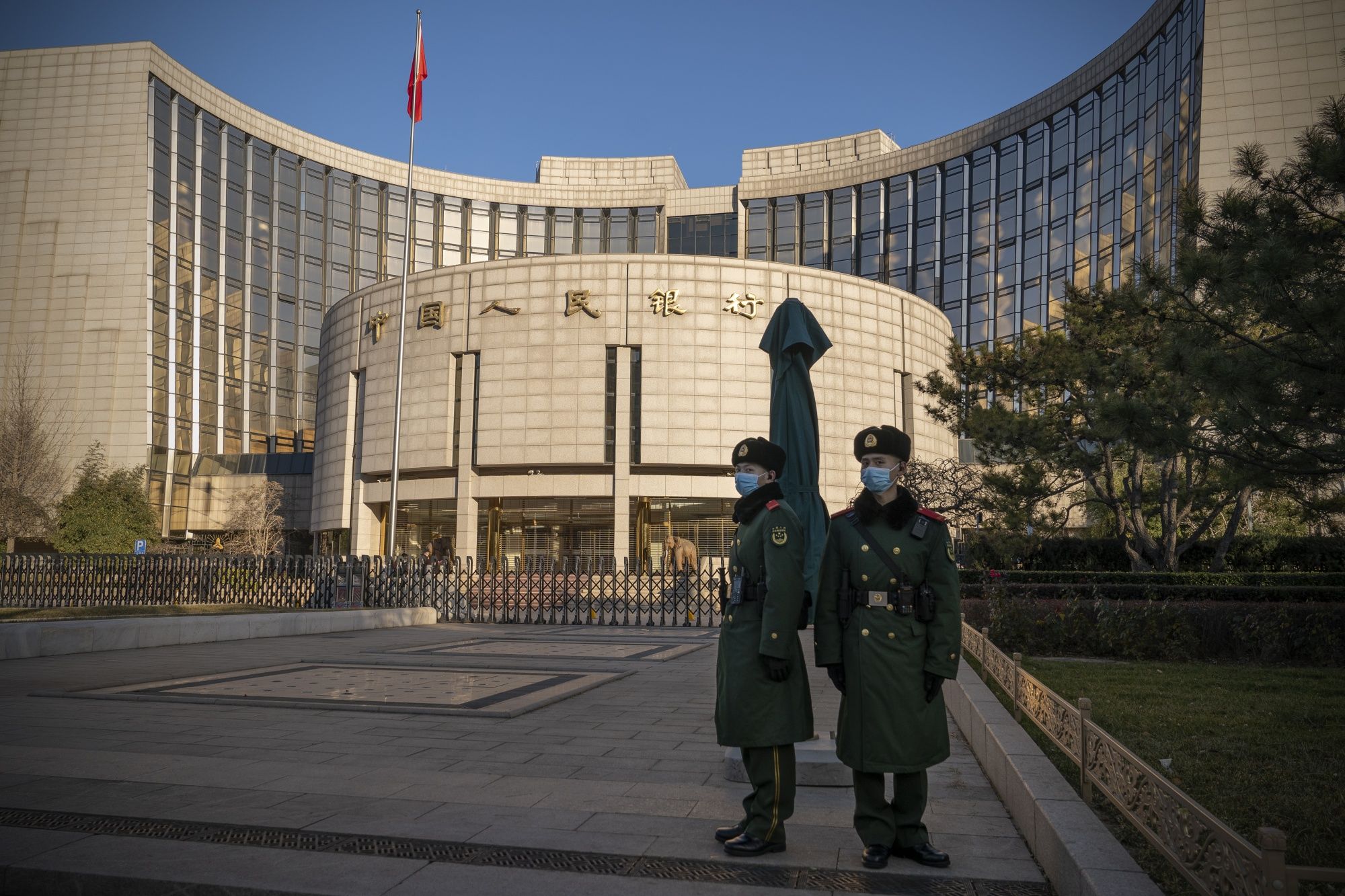
The government increased its headline deficit on Tuesday to the largest in three decades and unveiled a sovereign debt package that marked a shift from its traditional model for fiscal support. Xi also made an unprecedented trip to the central bank — sending a strong message about his focus on the economy.
The one trillion yuan ($137 billion) budget boost and willingness to exceed a long-adhered to 3% limit to the deficit-to-GDP ratio suggests a determination by Beijing to shore up growth for 2024 and avoid complacency. It comes even after strong economic data published this month put the government on target for its goal of about 5% this year.
The unusual budget change is “a firm signal from policymakers that they intend to support growth,” said Peiqian Liu, Asia economist at Fidelity International. “Raising funds by central government leveraging is a strong sign that the government will not hesitate to expand its balance sheet when needed.”
The stimulus raises expectations for the world's second-largest economy in 2024, and comes after several government-linked economists called for a growth target as high as 5% for next year. The ruling Communist Party will next week hold a twice-a-decade financial policy gathering that may provide more policy clarity.
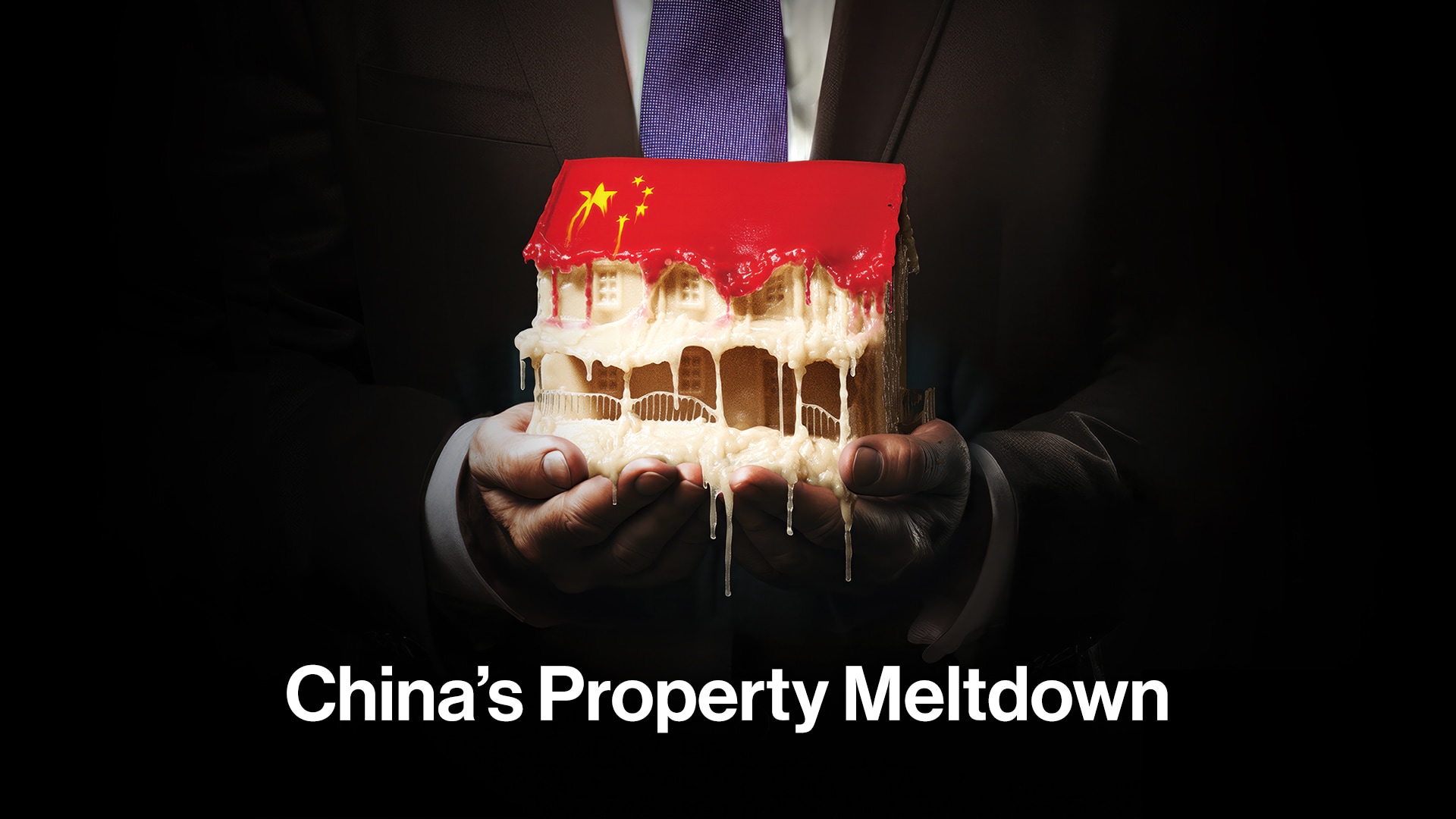
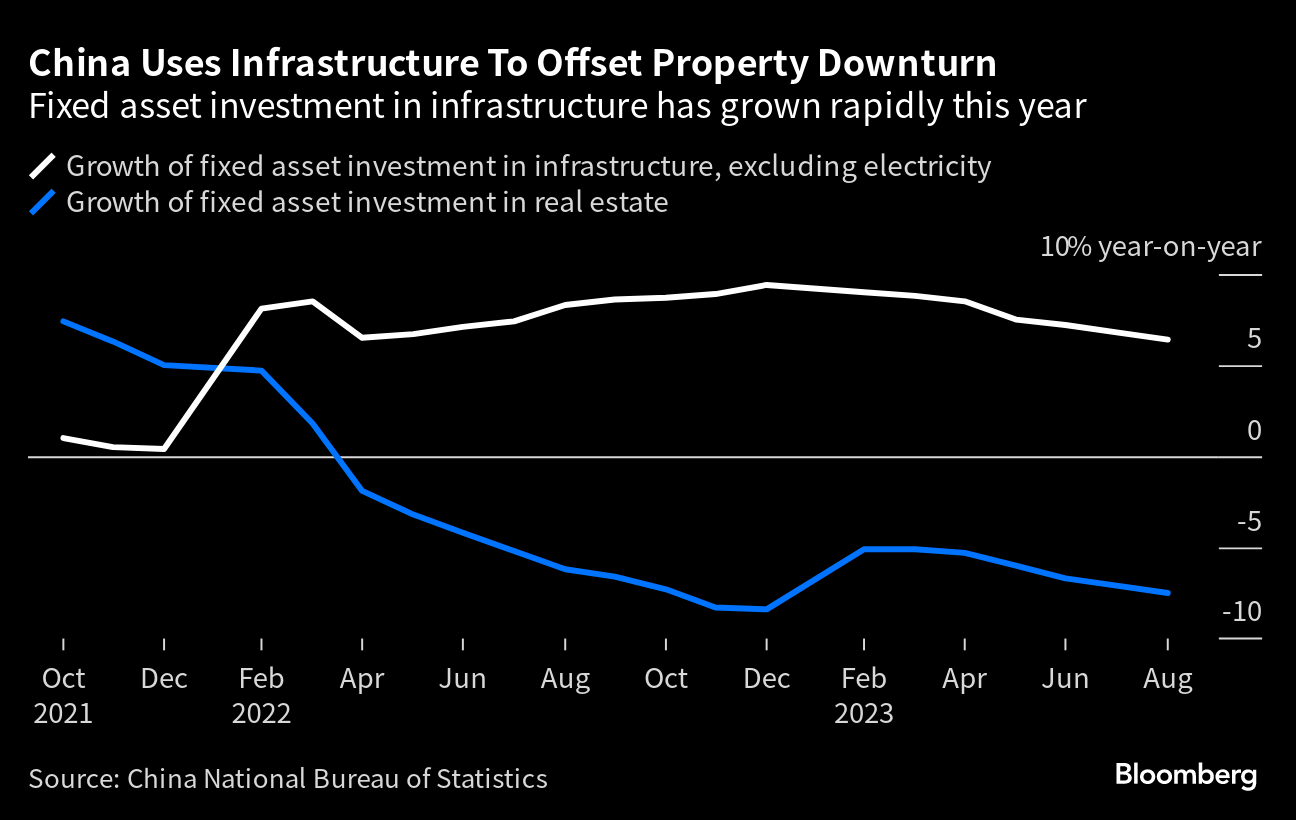
A two-year slump in China's property construction — combined with strained local government finances and falling exports — are creating deflationary pressures.
Investment in fixed assets in the first nine months of the year grew at the slowest pace since 2020. The nation's widest measure of prices, the GDP deflator, was negative for two consecutive quarters for the first time since 2015, according to Bloomberg estimates based on official data.
Real estate troubles are expected to persist into next year. Additional debt issuance may reflect “policymakers' acknowledgment that the pressure to stabilize growth next year will increase,” Shenwan Hongyuan Group Co. analysts including Jia Dongxu wrote in note.
Chinese equities reacted positively to the support measures, although traders doubt if the rally is sustainable. The CSI 300 Index closed 0.5% higher on Wednesday, more than halving its earlier advance. The Hang Seng China Enterprises Index finished up less than 1% after gaining more than 3%. China's sovereign wealth fund has made a rare intervention to buy stocks in the past week.
No ‘Bazooka'
The method by which Beijing is delivering this package may be more significant than its size. The budget boost, equivalent to about 0.8% of GDP, is small relative to “bazooka” stimulus worth multiple percentage points of GDP that China used during past downturns.
The new debt issuance “is not huge” and aims to support growth while “trying to make sure the debt is not increasing in a dramatic way,” Zhu Min, former deputy governor of the People's Bank of China, told Bloomberg TV. China's GDP could grow between 4.5% and 5% next year, he added.
The package will lift GDP growth by 0.1 percentage points in the fourth quarter and 0.5 percentage points in 2024, according to Bloomberg Economics analysis.
The move to use the central government's balance sheet by issuing sovereign bonds suggests a shift away from China's previous stimulus model, which relied on local governments adding leverage. Local governments are finding it harder to service existing debt this year due to the property downturn cutting their revenues.
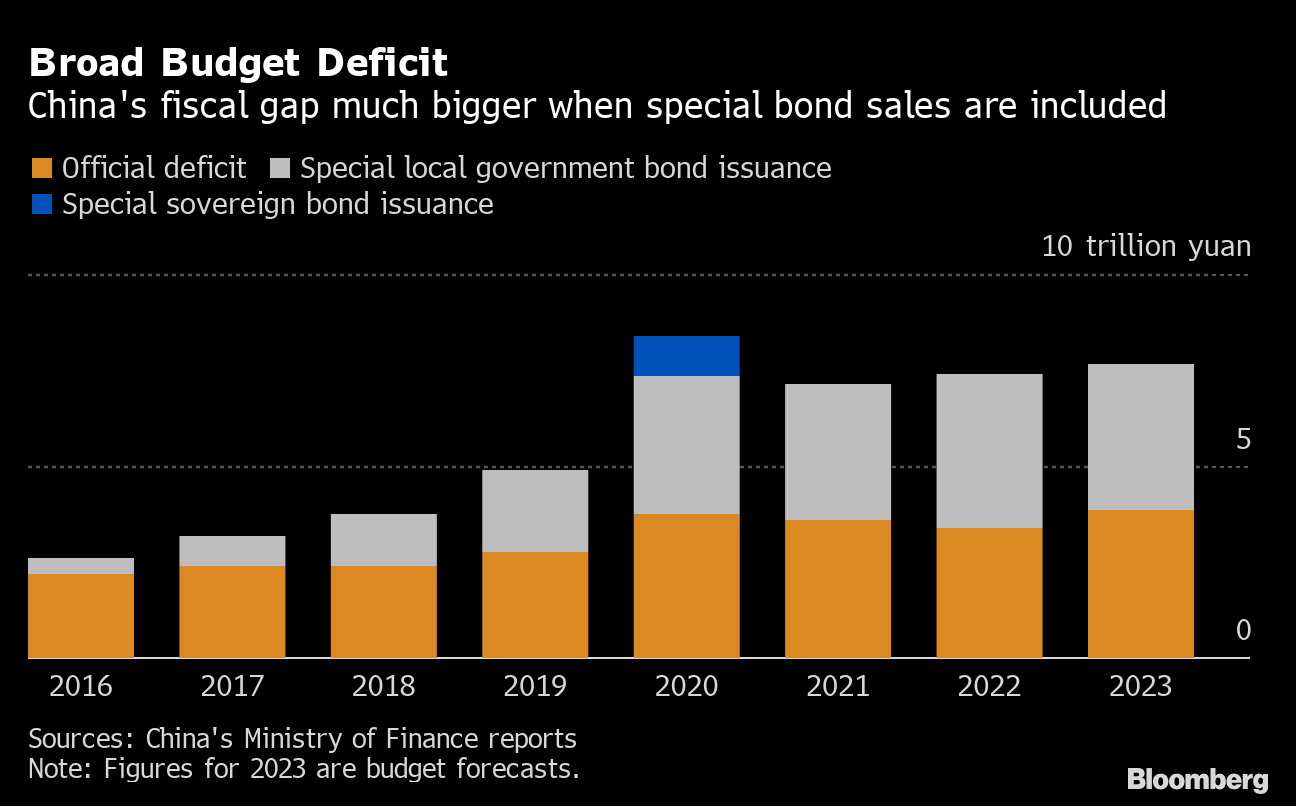
“The repayment of principal and interest will be borne by the central government, and will not increase the repayment burden of local governments,” Zhu Zhongming, vice finance minister, said during a press briefing Wednesday.
The budget revision could also signal a more flexible approach to fiscal policy. China has rarely adjusted the budget outside its annual parliamentary gathering, having previously done so in periods including 2008, in the aftermath of the Sichuan earthquake and in the wake of the Asian financial crisis in the late 1990s.
The headline deficit ratio of 3.8% outlined Tuesday would be the highest since central-local tax sharing reform in 1994, according to the Shenwan analysts note.
Local Governments
Economists see the package as allowing local governments to keep infrastructure investment — which grew 6.2% on-year in the first nine months of this year — expanding close to its current pace, rather than accelerating. That's because local governments issued their entire quota of “special purpose” bonds used mainly for construction at the end of September, leaving a gap in their funds toward the end of this year.
The State Council, China's cabinet, has restricted the ability of 12 heavily-indebted local governments to take on new debt and placed limits on what new projects they can launch, Reuters reported Wednesday, citing people familiar with the matter.
Half of the bond issuance will be spent early next year, while local government bond quotas can also be assigned ahead of the 2024 budget generally set in March, China's Communist-controlled parliament said when announcing the moves.
“The extra central government bonds and early local government bond issuance should ensure the rebound that started in August continues into the new year,” said Adam Wolfe, an economist at Absolute Strategy Research.
The People's Bank of China, where Xi visited on Tuesday, will likely have to ease monetary conditions to support the elevated issuance of government bonds in the next few months. Economists said a fourth-quarter cut in the reserve requirement ratio for banks was more likely following the stimulus announcement.
The stimulus retains a traditional focus on construction. The funds are earmarked for post-flood recovery and disaster prevention, allowing Xi to tie together his two priorities — economic development and security.
That comes despite growing economist calls for China to begin offering support directly to the household sector, which they argue could provide a greater boost to the economy than infrastructure investment.
“Beijing still refuses to consider income transfer to households, which will delay the rebalancing of the Chinese economy,” said Houze Song, a fellow at the Paulson Institute.
--With assistance from Fran Wang, Jacob Gu, Stephen Engle and Zhu Lin.
(Updates with Reuters report on China curbing debt growth in some regions. A previous version of this story corrected the headline deficit ratio to 3.8%.)
More stories like this are available on bloomberg.com
©2023 Bloomberg L.P.
Essential Business Intelligence, Sharp Market Insights, Practical Personal Finance Advice, Daily Fuel, Gold and Silver Prices and Latest Stories — On NDTV Profit.