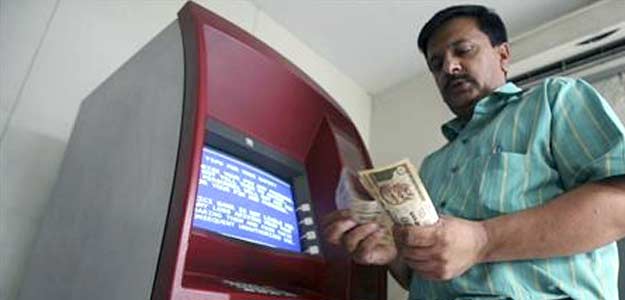
Have you ever faced difficulty in transferring cash to a friend or relative who does not have a bank account? Well, not any more. Many lenders have started the facility of cardless withdrawals enabling customers to transfer cash from their bank accounts to anyone with a mobile number across India. The senders themselves can avail this facility if they don't want to carry to carry the debit card (for example while travelling) or have left the card at home.
Here's how the facility works:
1) The cardless cash withdrawal facility can be initiated by savings account customers (senders) through mobile and internet banking. Some banks allow this facility through cardless cash withdrawal-enabled ATMs. The recipient may or may not be a bank customer.
2) To initiate a cardless withdrawal transaction, the sender must add the name of the recipient to the list of cash withdrawal beneficiaries and provide the mobile number, name and address to the bank.
3) Once the sender's request to register the recipient is accepted, the fund transfer can be initiated. The sender will get a code on his/her cell phone, which has to be passed on to the recipient.
4) The bank will also send an SMS with another code to the recipient's mobile.
5) The recipient has to visit the cardless cash withdrawal-enabled ATMs, where cash can be withdrawn after entering both the codes and mobile number.
6) Charges: Senders typically have to pay around Rs 25 per transaction for using this facility to send money.
7) Cancellation: A sender can cancel an unpaid transaction either through bank's enabled ATMs or through bank's internet banking. However, the transaction fee will not be refunded.
8) No additional fee is levied for cancelling a transaction.
9) Expiry: Some banks allow the transaction and code to be valid up to 14 days. Thereafter, in case the code is not used, the transaction amount will be reversed to the sender's account. However, the transaction charges will not be refunded.
10) Limit: Such transactions are capped at Rs 5,000 or Rs 10,000. There's also a cap on the maximum amount that can be transacted per account in a day. The maximum amount transferred per recipient cannot exceed Rs 25,000 per month.
Essential Business Intelligence, Continuous LIVE TV, Sharp Market Insights, Practical Personal Finance Advice and Latest Stories — On NDTV Profit.