Bata Reworks Expansion Strategy to Boost Revenue Per Store
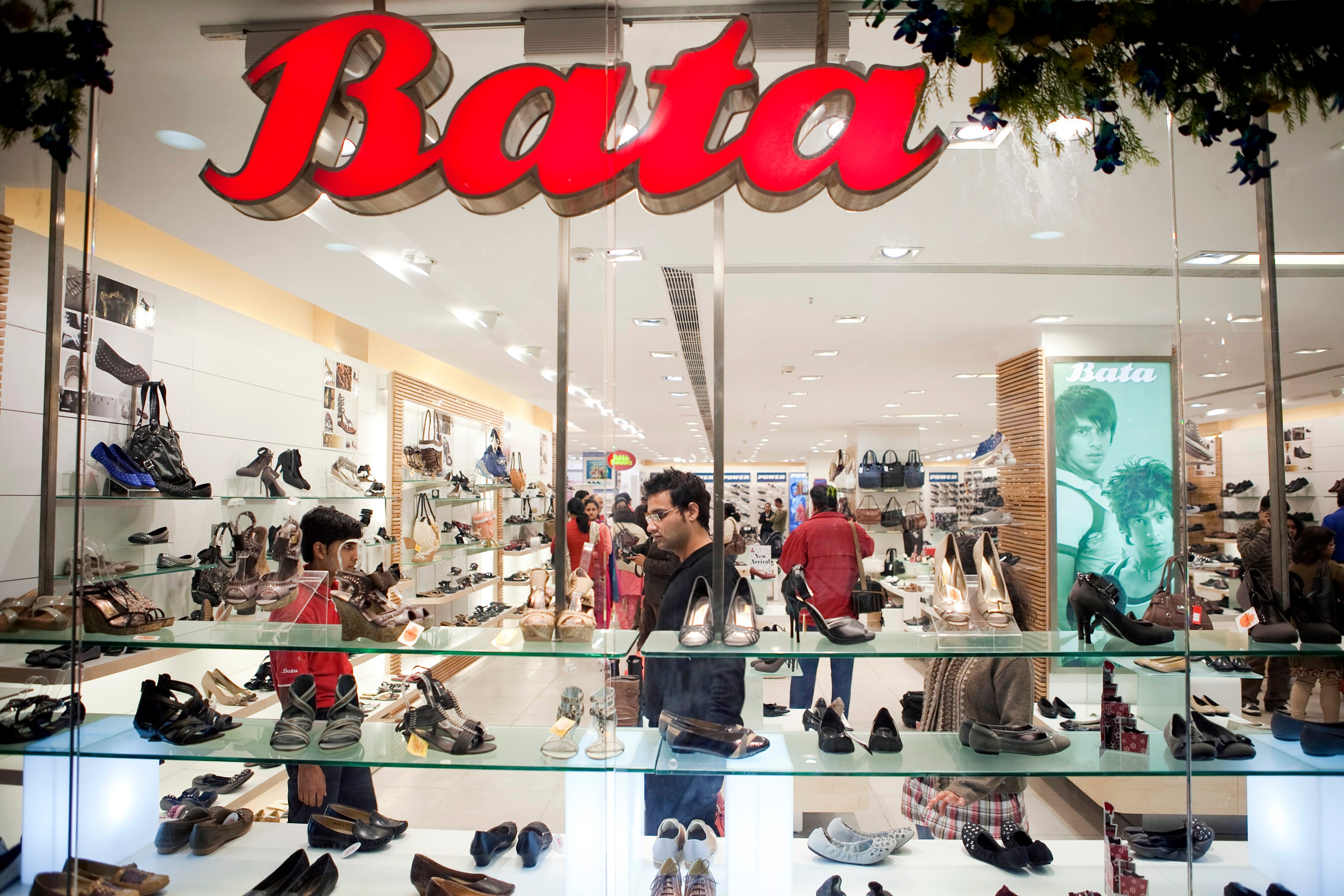
Bata India Ltd. is changing its expansion strategy. The footwear maker will launch 50-60 stores per year, compared to 100 stores earlier, and instead focus on increasing revenue per store.
Speaking to BloombergQuint, Rajeev Gopalakrishnan, the managing director & president of South Asia business for Bata India, said that the company will open fewer, but larger stores. Gopalakrishnan added that the company will focus on franchises to tap into rural and semi-urban markets.
Here are edited excerpts from the interview:
What products will the company sell in Tier-II & Tier-III cities?
Product category will depend on the city. Hush Puppies, i.e., our premium product's share will be around 15 percent to 20 percent of the total.
Why did the company change its policy to open only 50-60 stores a year?
Previously the plan was to open around 100 stores a year as the company was trying to increase its market presence, which the company did achieve. Currently, we are opening fewer stores, but larger stores which become destination stores. Wherever we see a requirement to open a storewe manage to do that. Company is now focusing to drive more revenue per store.
Why is Bata preferring to open franchise stores? How will that effect your margins?
Now as we are going into smaller towns, we have chosen the franchising model. The margin would roughly remain the same, thoughproduct portfolio might differ a bit.
Which product categories will generate more revenue for the company?
Volume growth will come from a range of products. We are looking at three categories. One is women segment, as more working women join the workforce. Second is the younger audience, which is actually going to drive footfall. And the third is the kids category.

-
Where You Live Shapes How You Get To Work | The Reason Why

Two-wheelers are the most popular way to get to work in India, accounting for nearly 43% of workplace commutes.
-
High US Salaries, No Green Card Certainty: The Financial Calculation Facing Indian H-1B Families
The suspension of PERM processing at eight technology employers does not cancel existing H-1B visas. What it does is force a question many Indian families have been avoiding: is the US salary worth tying your career and family plans to one employer?
-
Unhedged Position: Can India See An Indonesia-Style Time Correction?
The Nifty is trading below levels it first clocked in 2024. Is there, then, as I have suggested in the headline, potential that the current time correction drags on painfully for the next three-five, even ten years?
-
Navigating Friction And Energy Realities: An Analysis Of Marco Rubio's October Visit To India
Occurring at a critical juncture marked by stalled trade negotiations and escalating geopolitical pressures over global energy supplies, the visit offers a profound window into modern US-India relations.
-
India Exports Capital. Why Not Export Trusteeship?
The big question, then, is whether India can build an institution that global borrowers, investors, banks, and lawyers can trust, even without an Indian connection.
-
France's Economy & Politics Are In Crisis | The Reason Why
Let's look at how the French economy and politics evolved under Nicolas Sarkozy, Franois Hollande and Emmanuel Macron.
-
You May Inherit The Business. You Must Earn Its Credibility.
Succession tests the founder's ability to share authority as much as it tests the next generation's readiness to assume it.
-
Signing Deals Is One Thing; Making Them Work Is Another | The Week In Whys
Sometimes, things don't turn out as planned. Indian companies have lost some bids to rivals, some projects won't produce until 2030.
-
FOMC Wall, PERM Suspension, Hospital Stocks | Talking Points This Week
A PERM suspension would directly affect green-card sponsorship rather than H-1B visas, so the near-term earnings impact could remain relatively limited. The key question is whether this marks a new phase in US scrutiny of Indian IT.
-
Everything, Everywhere, All At Once: Dalal Street's Week To Forget | Joining The Dots
Visa curbs, a Starlink spat and cancer drug caps: what connects this week's shocks for Indian markets









