
CLSA and Morgan Stanley have made diverging calls on Bajaj Finance Ltd. after the non-bank lender's quarterly update showed an increase in assets and loans booked.
While loan growth was in line with expectations, CLSA reiterated sell call citing a fall in customer acquisition, flat sequential deposit book, reduced liquidity levels and premium valuations.
Morgan Stanley, however, remained 'overweight/attractive', citing assets growth. A decline in cost of funds and underlying credit costs, among others, could aid the stock, it said.
The company's assets under management stood at Rs 1.97 lakh crore as on March 31, 2022, compared with Rs 1.53 lakh crore a year ago, Bajaj Finance said in its fourth-quarter business update released on the bourses on Monday. New customer additions, however, declined during the period.
Key Highlights
Customer franchise stood at 5.76 crore as on March 31, 2022, compared with 4.86 crore a year ago.
New loans booked stood at 63 lakh in Q4 FY22 against 55 lakh in Q4 FY21.
Core AUM, excluding IPO financing receivables, grew 26% year-on-year.
Deposit book stood at Rs 30,800 crore as on March 31, 2022 compared with Rs 25,803 crore as on March 31, 2021.
Shares of Bajaj Finance have fallen nearly 2% over the last two days. Of the 31 analysts tracking the company, 20 maintain a 'buy', six suggest a 'hold', and five recommend a 'sell', according to Bloomberg data. The 12-month consensus price targets implies an upside of 10.5%.
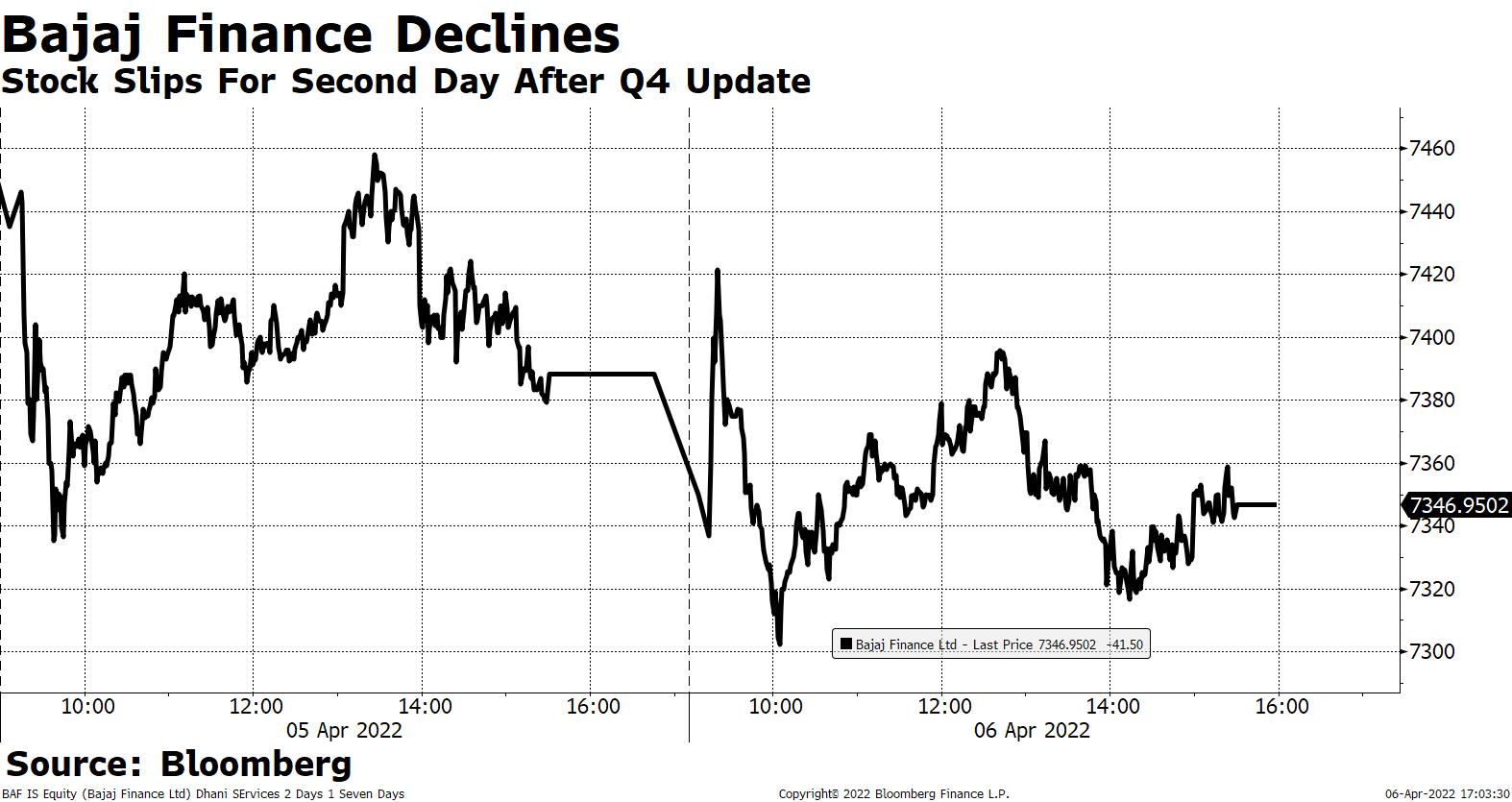
Here's what analysts have to say about Bajaj Finance:
CLSA
Reiterates 'sell' with a target price at Rs 6,500, an implied downside of 13%.
Core AUM is in line with FY21-22 estimate, but reduced liquidity, flat deposit book on a quarter-on-quarter basis and weak customer acquisition remain key challenges.
The company's growth outperformance versus HDFC Bank Ltd. has contracted to 5 percentage points in the fiscal compared to pre-Covid levels of 15 percentage points.
The valuation premium enjoyed by Bajaj Finance is unjustified.
Key investment risks: Potential adverse impact due to subsequent waves of Covid-19 and rising competitive intensity, among others.
Morgan Stanley
Reiterates 'overweight/attractive' call on stock with target price kept unchanged at Rs 8,750; an implied return of 16.81%.
AUM growth exceeded forecasts in fourth quarter of FY21-22.
New customer acquisitions declined 14% quarter-on-quarter due to the impact of Omicron in January and February.
Customer franchise rose to 57.6 million, while new loans rose to 6.3 million versus 5.5 million year-over-year.
Company has not opted for deferment despite RBI's decision to defer the applicability of income recognition and asset classification or IRAC norms.
Key risks to upside: Sharper decline in cost of funds, rise in loan spreads, decline in underlying credit costs and significantly higher-than-expected growth in AUM and/or profitability.
Key risks to downside: No return to normalcy in business conditions due to deeper economic recession, and risk in competition or fund issues which will decelerate AUM growth and lead to net interest margin compression.
Essential Business Intelligence, Sharp Market Insights, Practical Personal Finance Advice, Daily Fuel, Gold and Silver Prices and Latest Stories — On NDTV Profit.