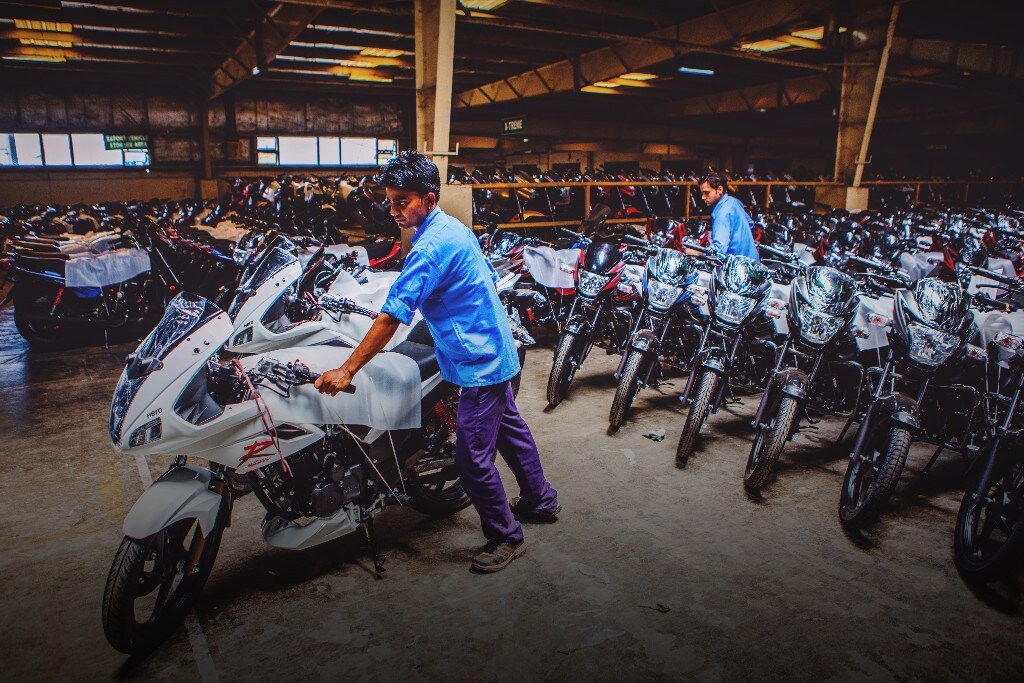
Indian automobile manufacturers still have unsold vehicles worth Rs 5,000 crore lying at dealerships across the country that are no longer compliant with the latest emission norms as the industry explores ways to offload this inventory.
The industry has seen losses worth Rs 6,200 crore following the Supreme Court's March 29 order that barred the sale of vehicles compliant with the older Bharat Stage-III norms from April 1, according to Vishnu Mathur, Director General of the Society of Indian Automobile Manufacturers (SIAM).
Of this, around Rs 1,200 crore was on account of discounts the automakers offered to clear the inventory ahead of the April 1 deadline to switch to Bharat Stage IV (BS-IV) emission norms, Mathur told BloombergQuint.
The apex court ordered manufacturers to sell only BS-IV compliant vehicles from April this year. This left the industry with almost 8 lakh unsold vehicles, according to data submitted by SIAM before the court.
What happens now to the unsold inventory? Mathur said companies are left with two options – either export the vehicles or take them back to the factory and update emission-related parts in compliance with new norms.
Conversion is the more expensive option because the inventory is lying with dealers. It cannot be converted at dealerships. It involves taking out critical emission-related components and putting in newer components. Then you have to validate that if the vehicle is actually meeting BS-IV emission norms. Bringing back the vehicle to the factory is not a viable option.Vishnu Mathur, Director General, SIAM
Passenger Vehicles Unscathed
At 2 percent of the unsold BS-III inventory, passenger vehicles were largely unaffected by the ban.
This was reflected in latest sales numbers. Passenger vehicle sales crossed the 3-million mark for the first time ever in a financial year, according to the monthly SIAM data. Driven by higher growth in the sports utility vehicles segment, domestic passenger vehicle sales rose 9.23 percent in FY17 over the previous financial year.
Also Read: Passenger Vehicle Sales Lead The Way In March
The impact of demonetisation on this segment was short-lived, according to Mathur. “The impact was spread over a month, month and a half, but that turned around really fast,” he said. “By the end of January, we saw demand (for passenger vehicles) coming back on stream,” he added.
The two-wheeler segment wasn't so lucky though. Domestic wholesales in FY17 were 6.9 percent higher than the previous year but grew only marginally in March. Two-wheelers formed the largest part of the unsold BS-III inventory with around 6.7 lakh units. Demonetisation hurt this segment the most since purchases are largely-cash driven.
The impact was prolonged on the two-wheeler segment because a large part of the demand comes from the rural markets. The propensity of buying in cash is higher, and remonetisation in rural markets took longer.Vishnu Mathur, Director General, SIAM
Mathur said he expects the industry to return to normal by next month.
Essential Business Intelligence, Continuous LIVE TV, Sharp Market Insights, Practical Personal Finance Advice and Latest Stories — On NDTV Profit.