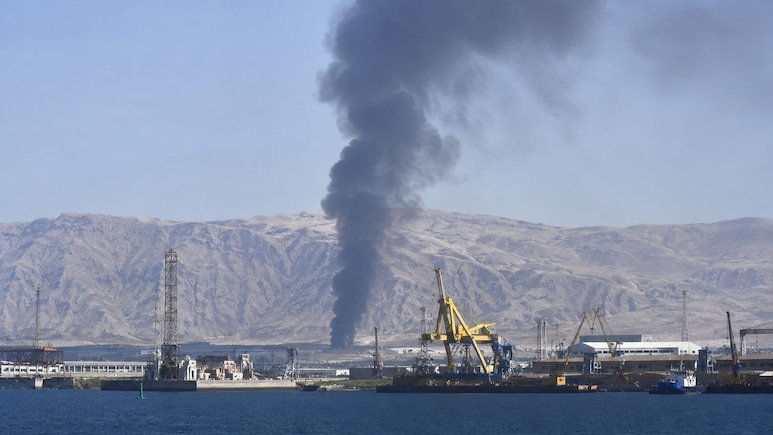
Iran's Islamic Revolutionary Guard Corps (IRGC) said two oil tankers were disabled after hitting sea mines while attempting to transit the Strait of Hormuz, raising concerns over the security of the strategic waterway amid renewed US-Iran tensions.
In a statement carried by Iranian state media, the IRGC said the tankers had been forced to disembark their crews and were placed in the hands of US operatives while attempting to pass through what it described as an illegal route in the Strait.
Al-Jazeera reported that IRGC Navy had previously warned vessels against using the mined passage. It also warned that shipping companies choosing what it called an unauthorised route could face additional penalties.
Also Read | Layoffs Are Rising In Tech, But These Skills Are Helping People Unlock Better Pay
The development comes after a separate incident involving the SIDR vessel. Saudi shipping company, Bahri, said two crew members were killed while the vessel was transiting the Strait of Hormuz on Monday. Both victims were from the Philippines.
The incidents add to concerns over potential disruptions to one of the world's most important oil shipping routes, particularly as the US-Iran conflict shows signs of renewed escalation.
ALSO READ: Two Turkish-Flagged Vessels Collide Off Istanbul, Contact Lost With One
Separately, Pakistan has expressed concern over the latest attacks by the US and Iran, calling the escalation undesirable. According to Al-Jazeera, Pakistan Foreign Ministry said Islamabad remained hopeful that both sides would return to the negotiating table.
The ministry added that recent visits by Pakistani military officials to Tehran had generated considerable momentum towards resolving the Strait of Hormuz crisis.
Oil prices remained volatile following the latest developments. Brent crude futures were up 9 cents, or 0.1%, at $94.74 a barrel by 08:05 GMT, after earlier climbing to more than one-month highs. US West Texas Intermediate crude futures fell 19 cents, or 0.21%, to $90.03.
ALSO READ: US Base In Erbil On Fire After Iran's Attack? X Users Report Loud Blasts, Share Videos
“The market is facing a binary risk,” Saxo Bank's head of commodity strategy Ole Hansen said.
Hansen said any indication of progress towards a deal could trigger a sharp fall in oil prices, while further escalation could push prices higher by undermining hopes for a peace agreement. He estimated that fresh developments could result in a potential $5-a-barrel move in either direction.
Essential Business Intelligence, Sharp Market Insights, Practical Personal Finance Advice, Daily Fuel, Gold and Silver Prices and Latest Stories — On NDTV Profit.