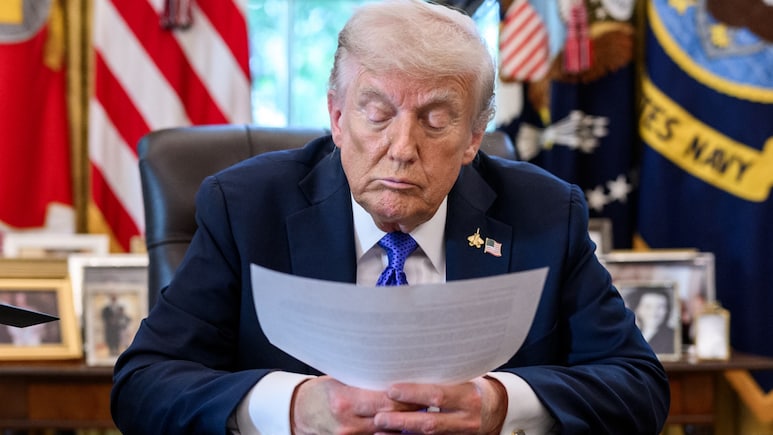
- US Supreme Court struck down Trump's global tariffs under emergency law with a 6-3 ruling
- Trump announced new 10% tariffs under Section 122 of the Trade Act of 1974 on all trading partners
- Existing tariffs under Sections 232 and 301 will remain in effect despite the court ruling
US President Donald Trump announced 10% global tariffs on Friday, barely a few hours after the Supreme Court struck down his policy of imposing so-called reciprocal levies on all trading partners.
Trump, in a White House press briefing, said he will be using powers vested under Section 122 of the Trade Act of 1974 to impose new tariffs on all trading partners of up to 10%. Additionally, all import levies pressed under Section 232 and Section 301 will "remain in effect", as the apex court order does not annul them, he added.
There is a "backup plan" with him, Trump said, adding that he will use alternative measures to reimpose the "reciprocal" levies. The fresh 10% tariffs will be addition to the existing levies that were struck down by the court, he claimed.
Also Read | Layoffs Are Rising In Tech, But These Skills Are Helping People Unlock Better Pay
Furious over the Supreme Court loss, Trump accused the US judiciary of weighing in foreign interests. "My opinion that the court has been swayed by foreign interests," the President said, adding that the case carring economic security implications.
The administration, Trump said, will be using Section 301 to look into potentially unfair trade practices. This may result in additional new tariffs being imposed, he noted.
ALSO READ: India Deal Stands, Won't Change, Trump Says After US Supreme Court's Tariff Verdict
Earlier on Friday, the US Supreme Court struck down Trump's sweeping global tariffs imposed under a national emergency law. The 6-3 decision marked a significant setback for Trump, who had made tariffs a central pillar of his economic and foreign policy during his second term.
The ruling, authored by Chief Justice John Roberts, upheld a lower court's finding that Trump exceeded his authority by using the 1977 International Emergency Economic Powers Act (IEEPA) to impose tariffs without congressional approval.
Roberts wrote that the president must “point to clear congressional authorization” to justify such an extraordinary use of power. “He cannot,” Roberts added.
The majority said the US Constitution clearly gives Congress — not the president — the power to impose taxes, including tariffs. “The Framers did not vest any part of the taxing power in the Executive Branch,” Roberts wrote.
Trump, however, marked his disagreement in the press briefing, stating that he does not require consent from lawmakers to decide on tariffs. “I don't have to [work with Congress], I have the right to do tariffs, and I've always had the right to do tariffs."
Essential Business Intelligence, Sharp Market Insights, Practical Personal Finance Advice, Daily Fuel, Gold and Silver Prices and Latest Stories — On NDTV Profit.