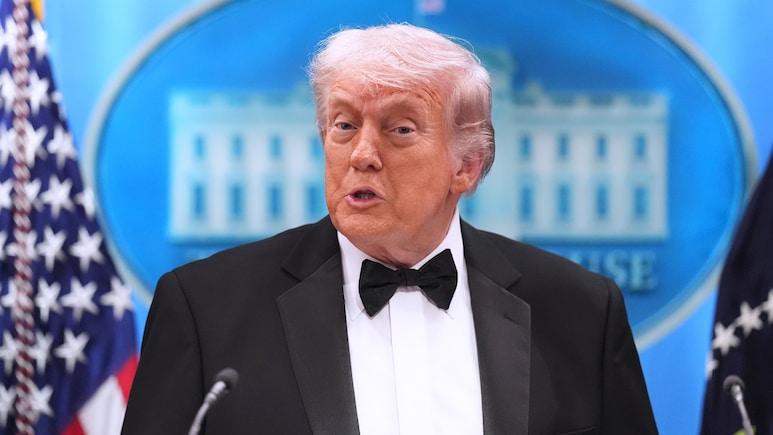
US President Donald Trump has asked aides to prepare for a prolonged blockade of Iran, choosing sustained economic pressure instead of widening the conflict or stepping back, the Wall Street Journal reported on Wednesday.
The move sharpens focus on the Strait of Hormuz, one of the world's most watched energy routes, as markets and governments assess how long the disruption could last.
The report said Trump decided in recent meetings to tighten restrictions on Iranian trade by stopping shipping to and from the country's ports, with a particular focus on limiting oil exports. The strategy aims to cut revenue to Tehran and increase pressure on its leadership.
Pressure Mounts
US Central Command said American forces boarded and later released a commercial vessel suspected of heading for Iran. Video posted on X showed US marines descending from a helicopter onto the ship.
The Comoros-flagged M/V Blue Star III was intercepted in the Arabian Sea, east of the Strait of Hormuz. The vessel was released after an inspection found that its voyage did not include an Iranian port call.
Earlier today in the Arabian Sea, U.S. Marines from the 31st Marine Expeditionary Unit boarded M/V Blue Star III, a commercial ship suspected of attempting to transit to Iran in violation of the U.S. blockade of Iranian ports. U.S. forces released the vessel after conducting a… pic.twitter.com/UFx329OsHj
— U.S. Central Command (@CENTCOM) April 28, 2026
ALSO READ: Trump's $1.5 Trillion Defense Plan Draws Rare Republican Pushback
The US military said 39 vessels have now been redirected since the blockade on shipping linked to Iranian ports began. Officials said the measure is designed to deprive Tehran of oil revenue and intensify economic pressure.
Oil Shock Risk
Iran earlier proposed a deal to end its chokehold on the strait if the United States lifted its blockade and ended the war. The proposal was passed to Washington through Pakistan and would postpone talks on Iran's nuclear programme. Trump has most likely not accepted the offer.
The standoff has increased pressure on Trump at home as oil and petrol prices have risen before key midterm elections. It has also strained ties with Gulf allies that depend on the waterway to export oil and gas.
Higher costs for fertiliser, food and other basic goods have also added to wider concerns over global energy security.
Next Flashpoint
Investors will now watch whether Washington tightens enforcement further or reopens negotiations with Tehran. Any change in shipping flows through the Strait of Hormuz could keep oil prices and geopolitical risk in focus.
Track US-Israel-Iran War Live News Updates
Essential Business Intelligence, Sharp Market Insights, Practical Personal Finance Advice, Daily Fuel, Gold and Silver Prices and Latest Stories — On NDTV Profit.