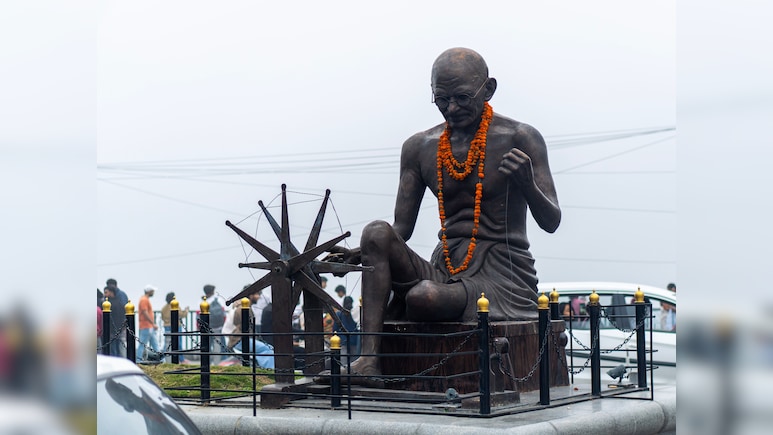
Celebrated on October 2 every year, Gandhi Jayanti marks the birth anniversary of Mahatma Gandhi. In 2026, the country will observe the 157th birth anniversary of the freedom fighter. The day is observed across India in memory of Gandhi and his emphasis on truth, non-violence, self-discipline and social service.
This day also has international significance. The United Nations observes the date as the International Day of Non-Violence, established by a UN General Assembly resolution adopted in 2007. The UN describes the day as an occasion to spread the message of non-violence through education and public awareness.
Also Read | Layoffs Are Rising In Tech, But These Skills Are Helping People Unlock Better Pay
Why is Gandhi Jayanti celebrated on October 2?
October 2 is observed as Gandhi Jayanti because Mohandas Karamchand Gandhi, popularly known as Mahatma Gandhi or Bapu, was born on that day in 1869, in Porbandar, Gujarat.
Gandhi went on to become a prominent leader of India's independence movement and became internationally associated with non-violent resistance, civil disobedience and Satyagraha. His approach to challenge injustice without relying on physical violence influenced movements for civil rights and social change beyond India. The United Nations describes Gandhi as a pioneer of the philosophy and strategy of non-violence.
ALSO READ: Gandhi Jayanti 2026: Are Banks Open Or Closed Tomorrow On October 2? Check RBI Holiday
Gandhi Jayanti 2026: History
Mahatma Gandhi's influence during India's freedom struggle grew through campaigns that brought ordinary people into political action. Among the major movements and campaigns associated with him were the Champaran movement, Non-Cooperation Movement, Salt March, Civil Disobedience Movement and Quit India Movement.
The Salt March of 1930 became one of the most internationally recognised examples of this approach. Gandhi and his followers marched from Sabarmati Ashram to Dandi, where he broke the British salt law by making salt. The Salt March became a major episode of mass civil disobedience during India's freedom struggle and remains closely associated with Gandhi's philosophy of non-violence.
On January 30, 1948, he was assassinated by Nathuram Godse, a Hindu nationalist who opposed Gandhi's tolerance towards Muslims and his efforts to achieve communal harmony.
Gandhi Jayanti 2026: Celebrations
People mark the occasion with prayer services, commemorative events, and cleanliness drives across the country.
Schools, colleges, and government institutions organise activities such as essay competitions, skits, and speeches that reflect on Mahatma Gandhi's life and teachings.
Leaders across the nation also pay homage at Raj Ghat, New Delhi, which houses the samadhi of Mahatma Gandhi.
Essential Business Intelligence, Sharp Market Insights, Practical Personal Finance Advice, Daily Fuel, Gold and Silver Prices and Latest Stories — On NDTV Profit.