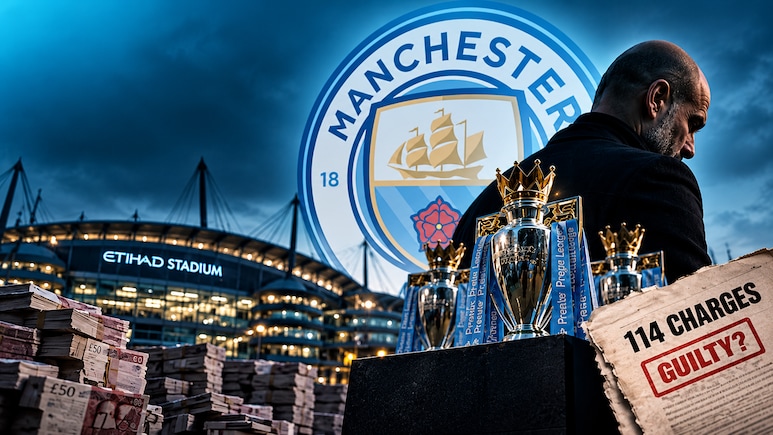
- Manchester City was found guilty of 114 financial charges from 2009 to 2018 by an independent commission
- The club recorded £949.94 million in sponsorship revenue, mostly funded by Abu Dhabi United Group
- City transformed from financial losses in 2010 to Premier League champions by 2012 through heavy spending
Manchester City's transformation from a club struggling to keep pace with England's established football powers into one of the world's dominant teams has been accompanied by an extraordinary financial story.
In 2010, the club generated around £125 million in revenue but spent £133 million on wages alone, while recording a £121 million loss for the year. Two years later, City won their first Premier League title of the modern era.
Now, that financial transformation is at the centre of one of the biggest cases in Premier League and club football history.
Also Read | Layoffs Are Rising In Tech, But These Skills Are Helping People Unlock Better Pay
ALSO READ | Manchester City Found Guilty Of Most Of 115 Premier League Financial Charges: Reports
An independent commission has found Manchester City guilty of 114 of 115 charges relating to financial rules covering the between 2009 and 2018.
The commission found that £830.69 million ($1.08 billion) within £949.94 million ($1.26 billion) of total sponsorship revenue recorded by City was funded by Abu Dhabi United Group (ADUG) rather than the sponsors themselves, forming part of what it described as a disguised funding scheme.
City have rejected the findings and are expected to appeal.
The case raises a fundamental question about the economics of City's rise: how did the money flowing into the club translate into player signings, their huge wages, a glut of trophies and eventually a global football business?
Manchester City And The Financial Gap
When Sheikh Mansour bin Zayed Al Nahyan's ADUG took control of Manchester City in 2008, the club was nowhere near the commercial scale of Manchester United - their city rivals.
United were the reigning UEFA Champions League and Premier League champions at the time and their global commercial machine was already generating hundreds of millions of pounds.
At the same time, Chelsea had established themselves among England's biggest spenders after being bought by Russian billionaire Roman Abramovich in 2003.
Chelsea enjoyed almost immediate success. They won back-to-back Premier League titles in 2004-05 and 2005-06, and had lost to United in the 2008 Champions League final.
City, under their new Abu Dhabi ownership, made their intentions clear: they wanted immediate success. They began investing heavily in player recruitment.
Their first significant signing was former Brazilian forward Robinho from Real Madrid for £32.5 million, then a Premier League record. He seemed destined to join Chelsea, but City got his signature.
This would become a theme in the next few years.
By the 2009-10 financial year, the club had recorded a £121 million loss. Revenue stood at around £125 million, while wages reached £133 million - meaning the wage bill alone exceeded the club's total turnover.
While their attempt to sign Brazilian superstar Kaká failed, City recruited other top players such as Carlos Tevez, Yaya Touré, David Silva, Sergio Agüero and Edin Džeko as they attempted to build a squad capable of challenging the established elite.
Touré, who joined in 2010 from Barcelona, became one of the highest-paid players in the Premier League, with contemporary reports putting his wages at around £200,000 to £250,000 a week.
The investment began producing results almost immediately.
From Spending To Silverware
City's breakthrough came in 2011 when they won the English FA Cup. They beat United along the way in the semifinals.
A year later came the defining moment of their transformation.
On May 13, 2012, Agüero scored the most famous goal in Premier League history in stoppage time against Queens Park Rangers on the last day to secure City's first league title.
The goal - remembered simply as "93:20" - delivered the club's first league championship since 1968.
It also became a symbol of a new football economy: enormous investment in talent had been converted into trophies.
But as City's spending increased, football's financial regulations were changing.
The Financial Fair Play Challenge
UEFA's Financial Fair Play rules were introduced with the stated aim of preventing clubs from consistently spending beyond their means.
City soon found themselves under scrutiny.
In 2013, leaked documents reported by Der Spiegel alleged that the club had faced a £9.9 million shortfall in its calculations under UEFA's financial rules. The documents alleged that additional sponsorship income was discussed as a way of closing the gap.
UEFA subsequently found City in breach of its Financial Fair Play (FFP) rules in 2014. The club agreed to a settlement that included a €60 million fine, of which €40 million was suspended, alongside restrictions on its Champions League squad.
But that didn't stop City from spending heavily.
In July 2015, the club signed Raheem Sterling from Liverpool for a reported £49 million, making the transfer a British record for an English player at the time.
A few weeks later in August 2015, the club signed Belgium playmaker Kevin De Bruyne from Wolfsburg for a reported £55 million making him the second most expensive transfer in British football history at the time.
The spending did not stop there.
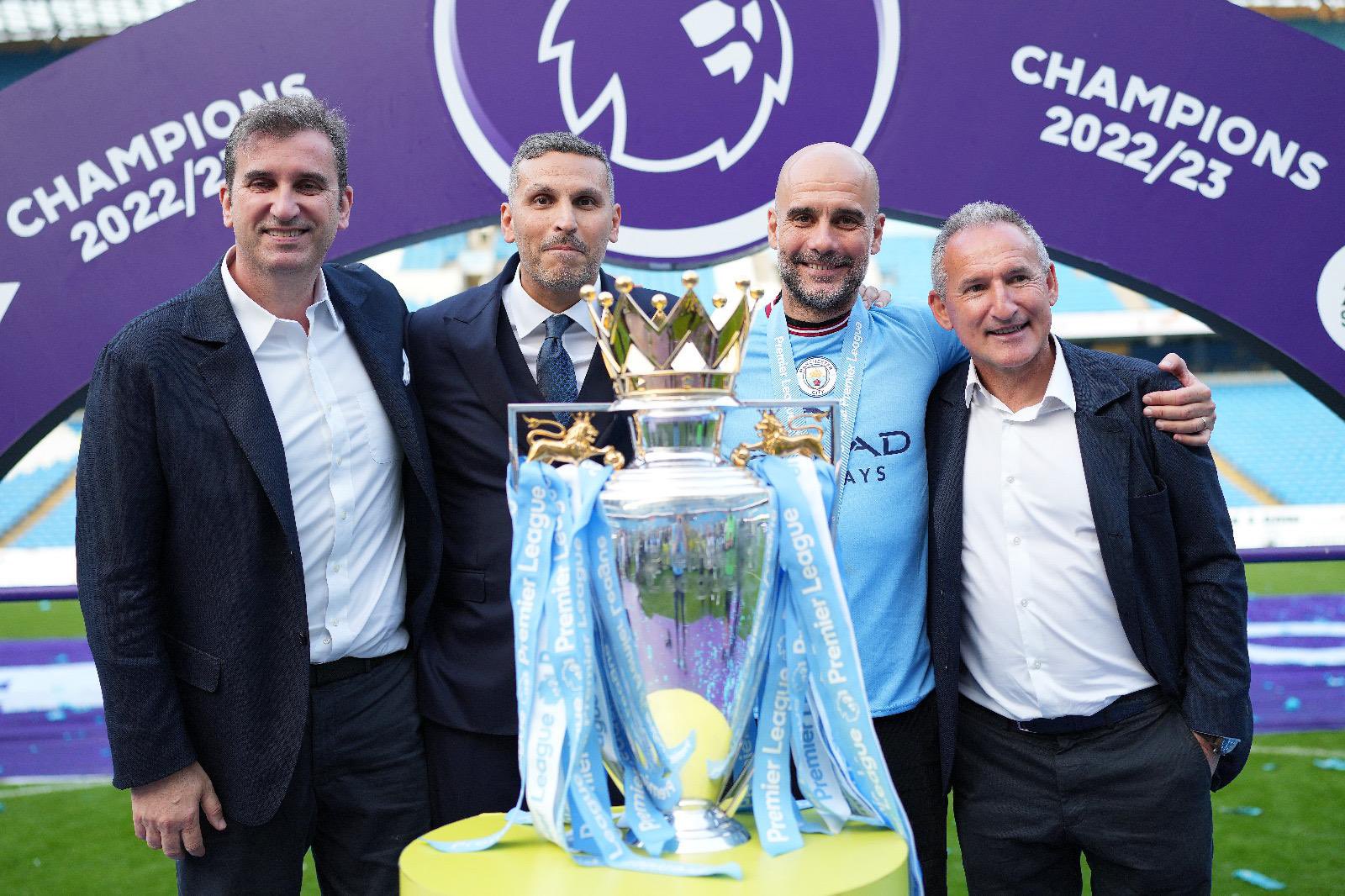
Pep Guardiola spent 10 years as Manchester City manager.
Photo Credit: @PepTeam/X
The Pep Guardiola Era And The Spending Flywheel
ESPN later reported that some of these signings were made with future manager Pep Guardiola in mind. The Spaniard arrived at City in the summer of 2016.
The club then embarked on another major rebuilding programme. Guardiola's first season went trophyless and City finished an unimpressive third in the Premier League.
To ensure that did not happen again, in the summer of 2017 alone, City spent heavily. They bought three defenders - Benjamin Mendy (£52 million), Kyle Walker (£45 million) and Danilo (£26.5 million).
Another defender Aymeric Laporte joined in January 2018 for a reported £57 million. The combined spending on the four defenders was more than £180 million.
That figure was striking when compared with the club's financial position only a few years earlier.
City's transfer spending continued as players such as Bernardo Silva (£43.5 million) and Ederson (£35 million) arrived.
Reportedly they spent between £272 million and £282.5 million for the 2017-18 season alone. This was spending never seen before, even from the likes of Spanish giants Real Madrid and Barcelona.
The investment translated into unprecedented domestic success.
In the 2017-18 season, Guardiola's City got 100 points - the first and so far only team in Premier League history to reach that mark - while scoring a record 106 goals.
The club won the league again in 2018-19 by getting 98 points and continued to build one of the deepest squads in European football.
The economic cycle had changed.
Investment brought elite players. Elite players produced trophies. Trophies increased global visibility and commercial revenues. Higher revenues created greater spending power.
That cycle became central to City's rise.
What Is The £900 Million Figure?
The current legal case is not about Manchester City spending millions of pounds on players.
The £900 million figure relates to the sponsorship arrangements and financial reporting examined by the independent commission.
According to the commission's findings, City booked £949.94 million in sponsorship revenue from Abu Dhabi-based companies across the nine seasons under investigation.
Of that amount, only £119.25 million was identified as the base sponsorship fee. The commission said £830.69 million ($1.08 billion) consisted of additional sums funded by ADUG and recorded as sponsorship revenue.
The commission concluded that the sponsorship agreements were "shams" and that the arrangements artificially inflated City's reported revenues.
That distinction matters.
The case is therefore about whether Manchester City's financial accounts accurately represented where the club's money came from and whether those arrangements allowed it to comply with spending regulations.
The Trophy Question
The timing of the charges makes the case particularly significant for English football. The period under investigation covers years in which City transformed themselves into a Premier League powerhouse.
The club won Premier League titles in 2011-12, 2013-14 and 2017-18 during the period examined by the commission.
City have subsequently gone on to dominate English football, winning a total of eight Premier League titles since Sheikh Mansour's takeover in 2008, as well as the UEFA Champions League in 2023.
While many of their big trophies came after 2018, there is a belief that City could never have achieved the following success without the immense spending done between 2009 and 2018.
ALSO READ | Pep Guardiola Stands With Manchester City After Guilty Verdict Over Financial Breaches
The independent commission's findings could therefore have consequences extending beyond financial penalties.
Potential sanctions could include massive points deductions, transfer restrictions, relegation, expulsion, or even a forceful change in ownership although no final sporting punishment has yet been imposed.
The question of whether past titles could be affected is also likely to become part of the wider legal and football debate.
What Happens Next?
Manchester City have rejected the commission's findings and said they will appeal. The club have argued that the case contains significant legal and factual errors and maintain that their financial arrangements were legitimate.
Their principal sponsor Etihad Airways, affiliated with Abu Dhabi state, has stated they are considering taking legal action against the Premier League. That means this financial reporting story is not yet finished.
For City, the original transformation was straightforward in football terms: spend heavily, attract elite players, win trophies and build commercial value.
The current legal battle raises a more complicated question - whether the financial foundations beneath that transformation complied with the rules governing the Premier League.
The answer could ultimately affect not only City's finances and future sanctions, but also how some of the most successful years in modern English football are viewed.
Essential Business Intelligence, Sharp Market Insights, Practical Personal Finance Advice, Daily Fuel, Gold and Silver Prices and Latest Stories — On NDTV Profit.