WhatsApp is testing a new feature to mark dubious messages as ‘suspicious' on the messaging platform as it continues to look at ways to curb fake news and block spam in India—its biggest market.
The label will automatically apply to messages that have unusual characters in their links or web address, Facebook Inc.-owned WhatsApp said on its website. The feature will alert users in case a spammer is tricking to visit a fake website. The feature is in a beta testing mode and is only available for Android users.
“Spammers may use these character combinations to trick you into tapping on links that appear to go to a legitimate website, but actually take you to a malicious site.”
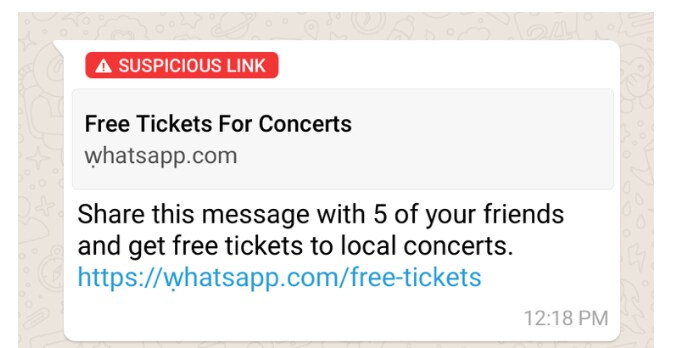
The company, which has more than 200 million users in India, said the label will automatically appear when the link has unusual characters. That comes when India has warned WhatsApp to curb fake news. Mob lynchings triggered by social media rumours have been reported from different parts of the country.
The company last week said in a blogpost that it will test a “lower limit of five chats at once”. What that means is a user won't be allowed to send a message to more than five people in one go, a company spokesperson told BloombergQuint. The global limit is 20.
The feature was not active when BloombergQuint tested it by sending a chat to more than five people on July 24. WhatsApp didn't immediately respond to emailed queries.
The messaging platform will also remove the quick forward button that appears next to media messages. It also introduced a ‘forwarded' label to distinguish original messages from the ones forwarded.
WhatsApp also issued full-page advertisements in English and Hindi newspapers warning readers on fake news.
Last week, the government issued a second notice to WhatsApp demanding a more stringent solution to check fake news. It's yet to respond to the second letter. In response to the first notice, it had said fake news, misinformation and hoaxes can be checked by the government, civil society and technology companies “working together”.
Essential Business Intelligence, Continuous LIVE TV, Sharp Market Insights, Practical Personal Finance Advice and Latest Stories — On NDTV Profit.