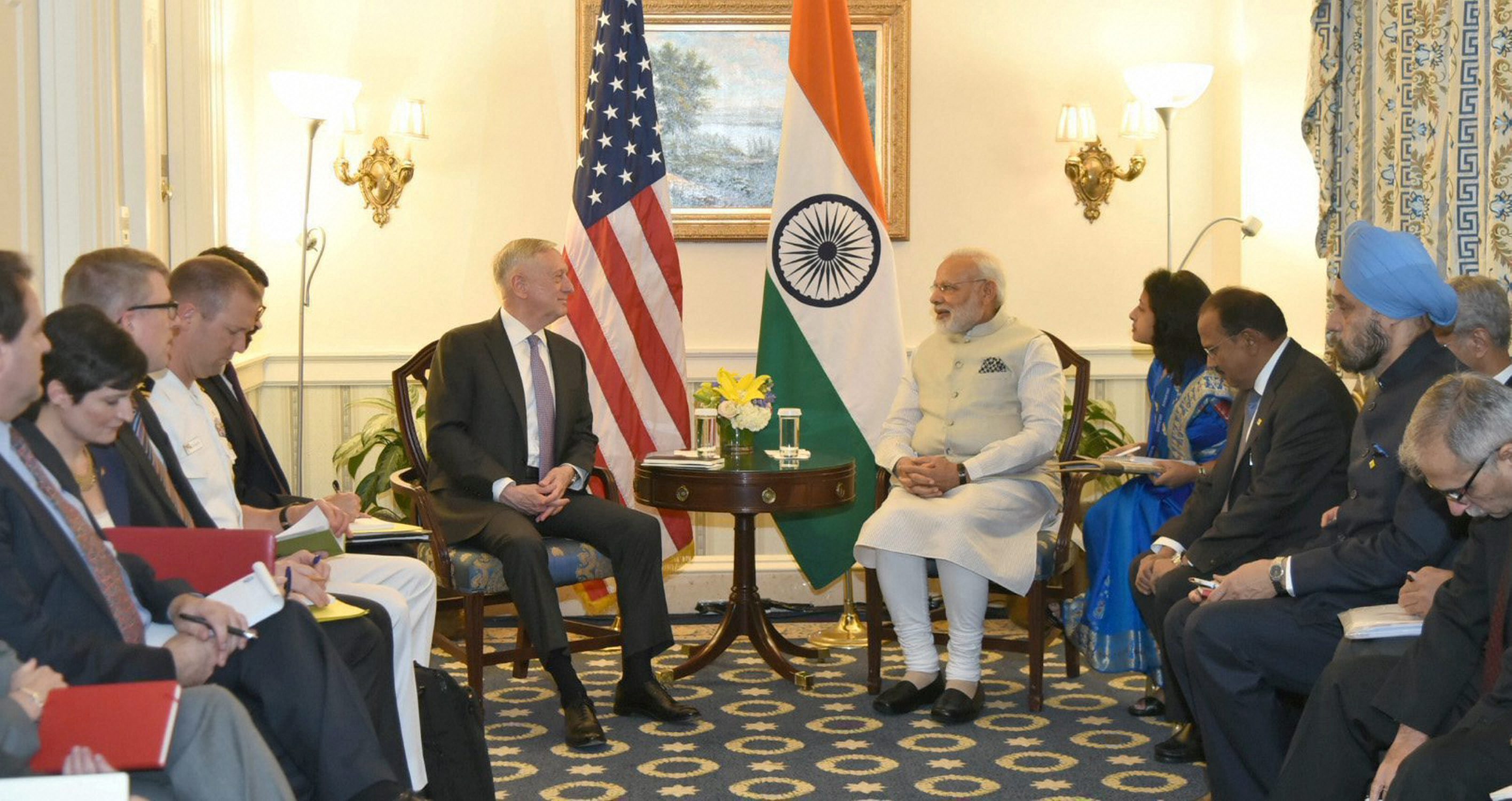
Expectations on content and deliverables for the first summit between President Donald Trump and Prime Minister Narendra Modi had been rather modest. The policy experts within the Trump administration were clearly eager to continue the recent progress in our bilateral relations. However, some of President Trump's top political advisers have a track record of portraying India as a problem for the U.S., both on trade and immigration.
The Washington, D.C. foreign policy community has, thus far, seen Trump's political team play a lead role in setting the top-line agenda for key summits.
However, for the Modi-Trump summit, the policy team clearly set the tone and substance for the summit, allowing a surprisingly positive visit.
Since Prime Minister Modi took office, U.S.-India relations have been on a tremendous upswing. President Obama saw in Modi a key partner to support a global climate deal. Then Defense Secretary Ashton Carter had a rare vision of India's importance, showing a willingness to create new programs to support India's nascent defense sector while demanding very little in return. The strength of our energy and defense ties were sufficient to ignore the continued irritations on the trade front in areas like intellectual property (IP) rights, local manufacturing requirements, and price controls.
Also Read | Layoffs Are Rising In Tech, But These Skills Are Helping People Unlock Better Pay
Since taking office, President Trump and key members of his administration would voice support for the trajectory of the relationship when asked. On the campaign trail, candidate Trump had participated in a highly-visible campaign stop with Indian-Americans, quipping “I am a big fan of India.” Defense Secretary James Mattis gave a positive response when asked about India during his confirmation hearing.
India is the world's largest democracy, and our relationship with it is of the utmost importance. In my view, and particularly on security and defense issues, the U.S.- India relationship has been strengthened in recent years. Cooperation on defense trade and technology has grown to the benefit of both countries under the Defense Technology and Trade Initiative. I also believe that India's ‘Act East' policy allows it to play a greater role in contributing to security in the Asia-Pacific region.James Mattis, U.S. Defense Secretary On January 12
However, in more practical and unprompted moments, India has been the target of regular criticism from the Trump administration. Examples include the claim that India leveraged the Paris climate talks to extract easy money from the United States; the ‘Buy American, Hire American' executive order which calls for a review of the existing H-1B visa program; and the trade policy review covering nations with which the U.S. has a large deficit, including India. The annual USTR ‘Special 301' trade review included India as one of 11 nations on the ‘priority watch list', noting “lack of sufficient measurable improvements to its IP framework on longstanding and new challenges that have negatively affected U.S. right holders over the past year.”
Ahead of the June Modi-Trump summit, there were concerns among American and Indian foreign policy experts that the agenda would be driven by the political team. In that scenario, the conversation would likely be dominated by President Trump attempting to score points at India's expense, highlighting the ways that engagement with India has been a one-sided affair that harmed American interests. While Prime Minister Modi may be less driven by diplomatic protocol than many of his peers, any major slights — real or perceived — can fuel the old Indian fears of the U.S. attempting to make India a junior partner in conforming to the American worldview.
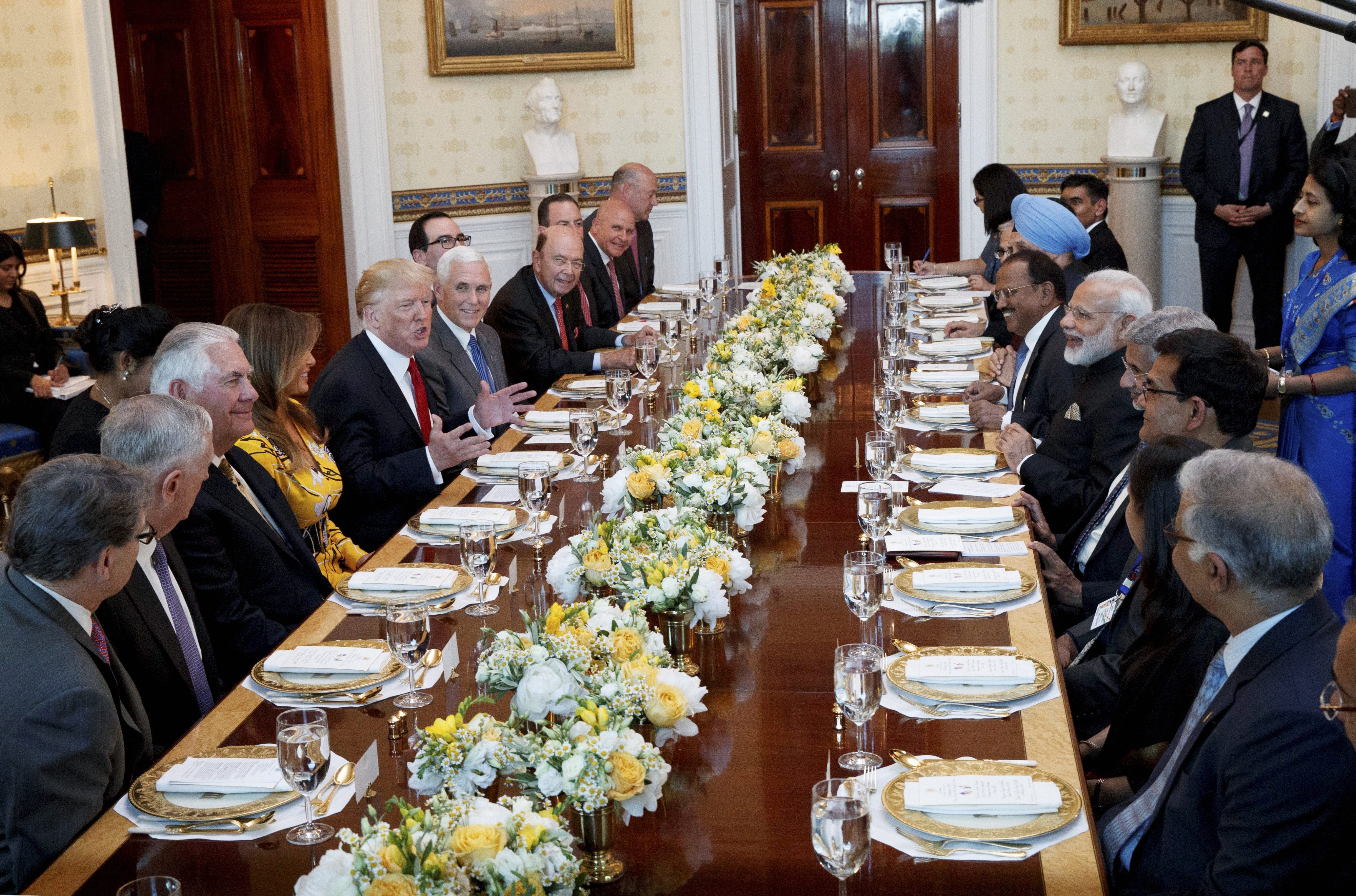
All was said and done, the summit was quite successful. As reflected in the joint statement, the joint press statement, and the White House fact sheet, the most important lines of cooperation were maintained, sometimes with a slight redirection.
- Cooperation on Asian security remains central, being the lead-off section of the joint statement.
- India's concern about China's ‘Belt and Road' initiative was highlighted, namely that China was not properly consulting other nations, and that it creates a debt trap that deepens Beijing's hooks into other Asian nations.
- The U.S. agreed to tougher-than-usual language on Pakistan, noting the terror attacks from Pakistani soil.
- Energy cooperation saw a shift in focus away from clean energy and towards fossil fuels, but had a lengthy write-up.
- America's intention to become a nuclear power partner was reiterated.
This positive agenda was further reiterated on June 27 when Vice President Mike Pence addressed the U.S.-India Business Council.
VIDEO: @POTUS knows that the U.S/India relationship is one of our most important strategic relationships. #usibc42 https://t.co/FZmJ2LUvQr
Also Read: Trump Promotes a U.S. Gas Trade With India That Already Exists
Contentious issues like U.S. immigration policies were not highlighted, but that reflects the reality that a middle ground is not currently in sight.
The two leaders did point out that there is a trade imbalance favoring India.The statements note the desire to rebalance this trade, but the language is relatively positive — looking for solutions that help both economies, rather than issuing threats to immediate resolve individual issues of contention.
With a solid leaders-level summit now behind us, there is some comfort that the broad contours of our recent engagement will continue. The work falls to our numerous cabinet-level dialogues like the Strategic and Commercial Dialogue, the Trade Policy Forum, and the Financial and Economic Partnership to establish new concrete markers highlighting our shared economic, energy, and defense interests.
Even in the best of times, progress can slow down for extended periods, due to attention on global crises and other reasons.Also Read: Trump Warns Modi India Must Reduce Obstacles to U.S. Exports
If that happens, it will be important for senior leaders from both nations to focus on the broad reasons for engagement laid out during this summit, and not fall prey to base political instincts that can put a chill into the relationship. This point is particularly significant for the Trump administration, which has a real tension between its policy apparatus and political apparatus. In this first summit, the policy apparatus won the day.
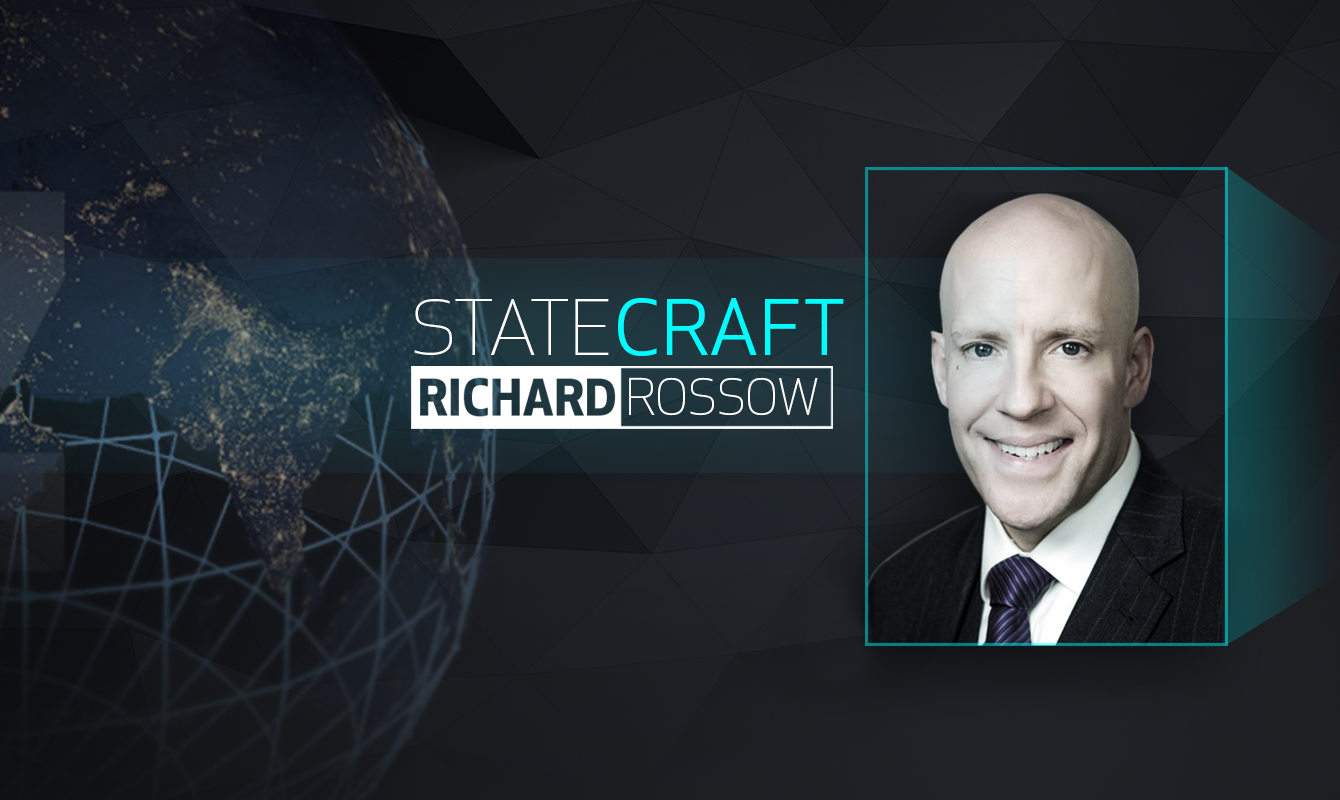
Richard Rossow is the Wadhwani Chair in U.S. India Policy Studies at The Center for Strategic and International Studies in Washington D.C.
The views expressed here are those of the author's and do not necessarily represent the views of BloombergQuint or its editorial team.
Essential Business Intelligence, Sharp Market Insights, Practical Personal Finance Advice, Daily Fuel, Gold and Silver Prices and Latest Stories — On NDTV Profit.