Large state-owned banks will benefit the most if the government decides to increase the foreign direct investment limit in Indian lenders, according to brokerages such as Morgan Stanley, Edelweiss and ICICI Direct.
Prime Minister Narendra Modi's administration is holding talks to raise the foreign investment limit in private sector banks to 100 percent from 74 percent and in state-run banks to 49 percent from 20 percent, the Business Standard newspaper reported citing a government official it did not identify. Foreign investment includes foreign direct investment and overseas portfolio investment through various routes.
Currently, India allows an aggregate foreign investment in private banks from all sources of up to a maximum limit of 74 percent of paid up share capital. For state-owned banks, this limit is capped at 20 percent.
Here's what the brokerages had to say:
- It would imply a significant increase in the banking sector weight in MSCI Index, given the higher foreign investment headroom.
- To pave the way for higher foreign flows in banks, particularly private players.
- HDFC Bank Ltd. will be the biggest beneficiary as foreign holding is close to 74 percent limit.
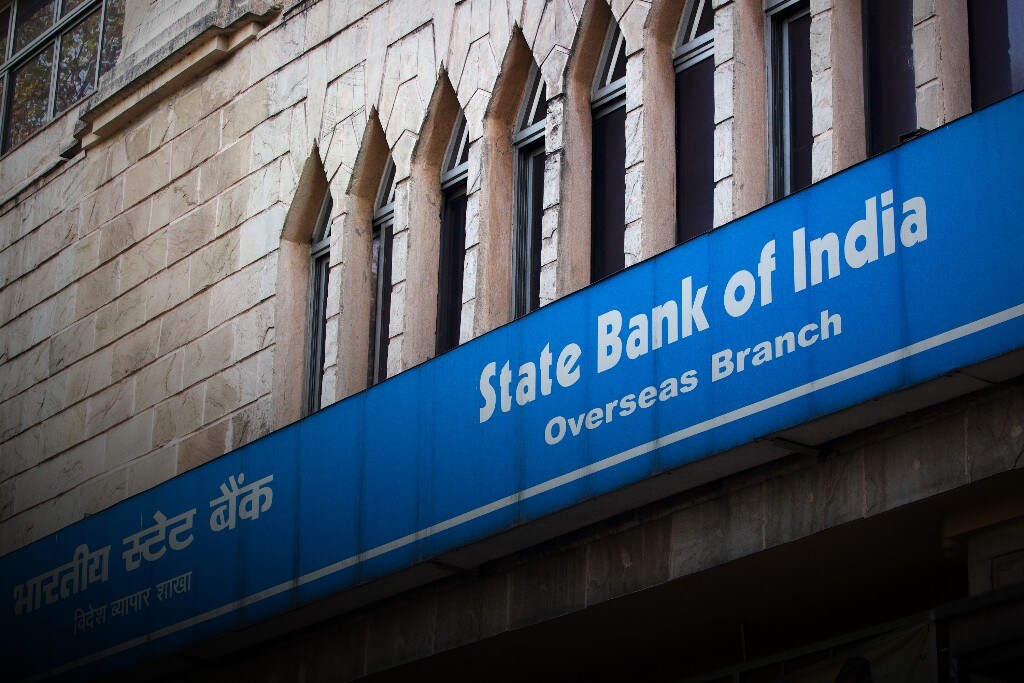
- Large public sector banks such as State Bank of India, Punjab National Bank, and Bank of Baroda, which see foreign interest, will remain key beneficiaries.
- Likely to act as an acquisition trigger for mid-sized regional private banks such as South Indian Bank Ltd., City Union Bank Ltd., among others, i.e., they can turn out to be acquisition targets with no single large promoter seen in these banks.
Which Banks Stand To Gain The Most?
Current foreign shareholding for most of the private banks barring HDFC Bank (73 percent) are reasonably lower than regulatory maximum limit of 74 percent.
.png)
Current foreign shareholding for the state-owned banks is not even close to the current limit of 20 percent.
.png)
Also Read: Banks Surge on Report India Is Mulling More Foreign Investment
Higher FDI limits could be of greater significance once the need for capital increases, as banks move to Basel-IIIcapital adequacy norms, and with transition to IndAS accounting norms, according to a note by brokerage Jefferies.
Incidentally, most of the private banks received board approvals for a 74 percent FII shareholding limit.
However, Jefferies does not expect higher FDI limits to change things materially for state-owned banks, unless the government is able to bring in long-term strategic investors.
Another important aspect would be the Reserve Bank of India's comfort with such a change, given the sensitivity of the sector. The RBI has been hesitant in the past in opening up the sector and had rejected a similar proposal in 2015, according to a Times of India article.
Shares of banking stocks are seeing a boost, with the Nifty Bank index surging the most in two months in early trade today led by HDFC Bank.
Also Read: Banks Get A Lesson In Treasury Risk Management From Viral Acharya
Essential Business Intelligence, Continuous LIVE TV, Sharp Market Insights, Practical Personal Finance Advice and Latest Stories — On NDTV Profit.