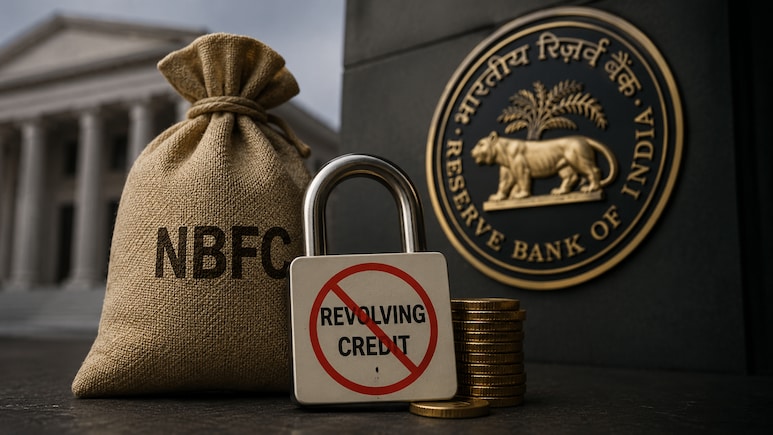
The Reserve Bank of India's proposal to restrict non-bank lenders from offering revolving credit lines could weigh on growth and profitability at NBFCs, with Bajaj Finance and Tata Capital facing greater exposure than Cholamandalam Investment and Finance.
The proposed framework would allow NBFCs to offer only term loans with a predetermined repayment schedule and a sanctioned limit that does not replenish after borrowers make repayments. Bullet repayment structures would continue to be permitted.
The change could force lenders to rework products built around reusable credit limits, affecting customer acquisition as well as fees and yields. The impact is likely to vary depending on the share of revolving credit products in each lender's portfolio.
Also Read | Layoffs Are Rising In Tech, But These Skills Are Helping People Unlock Better Pay
ALSO READ: Bajaj Finance Shares Tumble As RBI Draft Looks To Curb NBFC Revolving Credit
Bajaj Finance Exposure
Bajaj Finance has the highest exposure among the three lenders, with revolving credit products accounting for about 15% of its assets under management, according to IIFL analysis.
Tata Capital's exposure is estimated at a high single-digit to low double-digit percentage of its portfolio. Cholamandalam Investment and Finance has exposure of less than 1%, according to IIFL.
What RBI Proposes
Revolving credit allows borrowers to repeatedly draw from a sanctioned credit limit as they repay outstanding amounts. The RBI's proposed framework would instead require NBFCs to structure such lending as term loans with fixed repayment schedules and non-replenishing limits.
The revolving credit feature is used across several NBFC product categories, meaning the proposed rules could have implications beyond individual loan products, according to IIFL.
The restrictions could also make it harder for NBFCs to acquire customers for products that depend on flexible or reusable credit limits.
Lenders may need to shift these customers towards products with fixed repayment structures, which could affect the fees and yields generated from such lending.
Essential Business Intelligence, Sharp Market Insights, Practical Personal Finance Advice, Daily Fuel, Gold and Silver Prices and Latest Stories — On NDTV Profit.