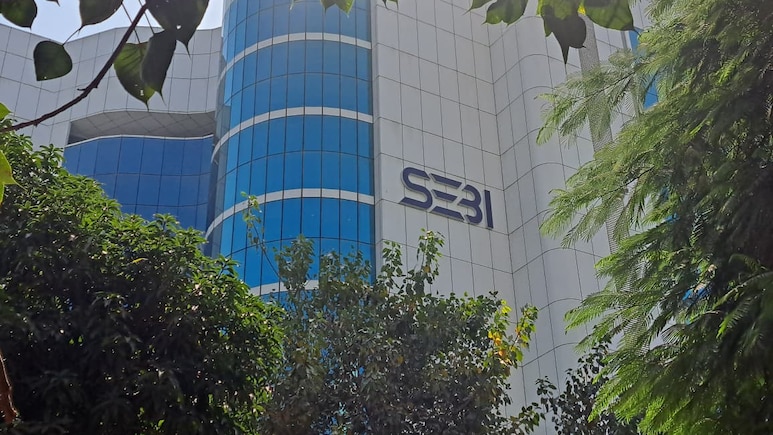
Capital markets regulator Securities And Exchange Board of India (SEBI) on Tuesday relaxed the timelines for listed municipalities to submit financial results to stock exchanges, giving them more time to meet disclosure requirements.
Under the revised framework, listed municipalities will now have to submit half-yearly unaudited financial results within 60 days at the end of the first half-year, compared with the earlier 45-day deadline.
ALSO READ: HSBC, Visa Top Execs See GIFT City Giving Indians Greater Access To Forex, Global Payments
Also Read | Layoffs Are Rising In Tech, But These Skills Are Helping People Unlock Better Pay
Annual audited financial results will have to be submitted within 90 days from the end of the financial year along with the audit report, against the earlier 60 days, according to a circular.
The SEBI said the timelines were relaxed considering the practical challenges faced by municipalities during data collection, interdepartmental coordination and meeting disclosure requirements.
The changes form part of operational measures specified by SEBI through a circular amending the framework for issue of listing of municipal debt securities.
The markets watchdog said the amendments follow recommendations of a Working Group constituted in August 2024 on changes required in the regulatory framework for municipal debt securities.
For municipal debt securities issued through private placement, SEBI has specified that the face value of each security shall either be Rs 1 lakh or Rs 10,000, as deemed fit.
Securities issued with a face value of Rs 10,000 will have a fixed maturity and be without any structured obligations..
The trading lot of a listed municipal debt security issued through private placement and traded on a stock exchange will always be equal to the face value of such security, SEBI said in the circular.
These face value requirements will apply only to privately placed municipal debt securities and not for public issues.
SEBI has also introduced a two-step escrow account mechanism for issuers that are pooled finance vehicles or special purpose vehicles (SPV) set up under the Government's Pooled Finance Development Fund Scheme.
The constituent municipalities will be required to created the specified accounts, while the pooled finance vehicle or SPV will maintain an separate interest payment accounts and sinking fund accounts.
Funds from the corresponding accounts of constituent municipalities will be transferred to these accounts as per the agreement between the SPV and municipalities.
The SPV or pooled finance vehicle will also have to maintain throughout the tenure of the municipal debt securities, an amount equivalent to one year interest obligation in the interest payment account, as per the circular.
ALSO READ: McDonald's Stumbles But Rivals Gain Edge In Fast-Food Value War
SEBI said such entities may include additional cash collateral, program equity by the state government, access to state finance commission devolutions to urban local bodies..
They may also use full or partial credit guarantee from a highly rated development finance institution or multilateral institution and any other appropriate credit enhancement structure to improve credit ratings and provide greater protection to investors, it added.
(This story has not been edited by NDTV staff and is auto-generated from a syndicated feed.)
Essential Business Intelligence, Sharp Market Insights, Practical Personal Finance Advice, Daily Fuel, Gold and Silver Prices and Latest Stories — On NDTV Profit.