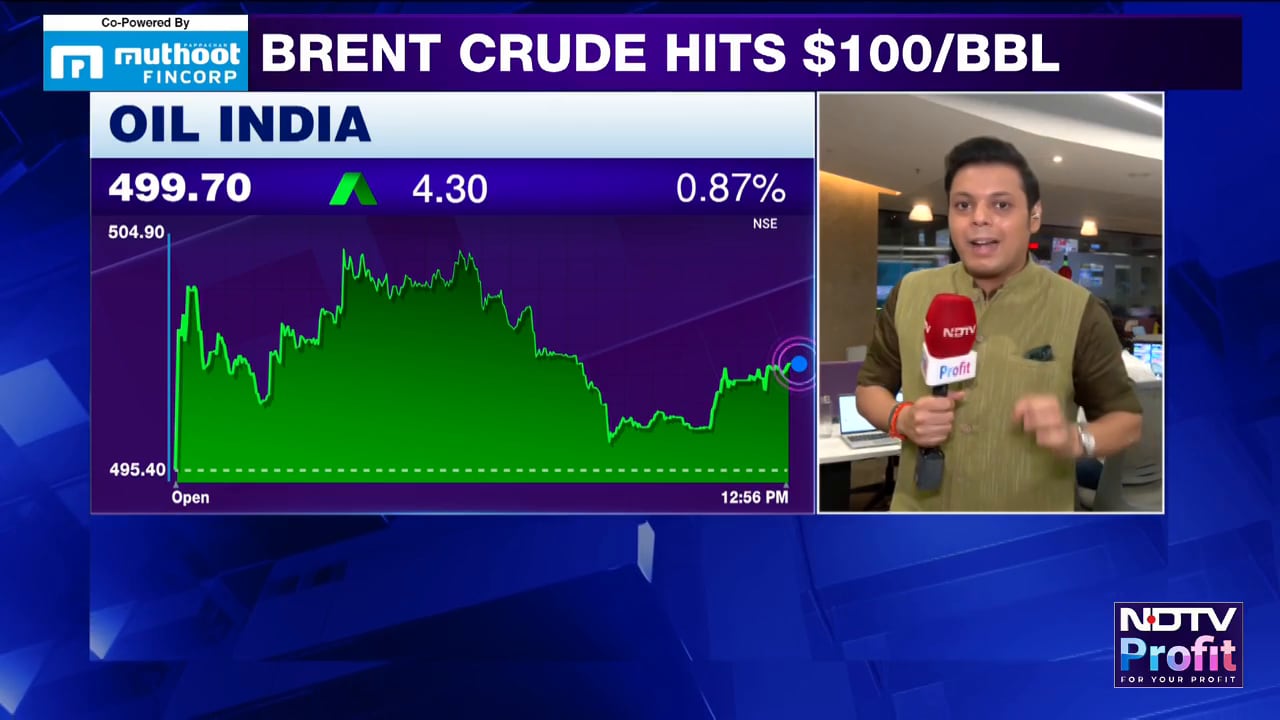
- Global crude oil prices rose for the third straight week, hitting multi-week highs on Sept 9
- Brent crude futures increased 2.17% to $100 per barrel, WTI reached $94.41 per barrel
- Saudi energy facilities were attacked by Iran-backed Houthis, halting some operations and wounding 73
Oil Prices On September 9: Global crude oil prices hit multi-week highs on Wednesday, gaining for the third straight week after Iran-backed Houthis attacked Saudi energy facilities and Tehran threatened the US with 'economic warfare'. Brent crude futures last rose 2.55% to $100.3 per barrel. The US West Texas Intermediate crude was at $94.19 per barrel, up 1.16%.
Brent crude earlier rose as much as $100.45 per barrel, its highest since July 24, while WTI reached $94.60 per barrel, its highest since June 8. That kept both crude benchmarks in technically overbought territory. The Brent crude benchmark has risen 10% so far in September and nearly 60% year-to-date. Brent crude prices have jumped by a quarter since early August as hopes for a permanent resolution to the six-month-old war faded and as fighting flared again.
Since the Iran war began on Feb. 28, Brent has surged by over 30% to $126.41 per barrel, a peak reached on April 30, 2026.
This week, attacks by Iran-backed Houthis on Saudi energy facilities set oil installations ablaze, threatening a significant expansion of the conflict. The attacks also threaten crude shipments via the Red Sea, which has been a key alternative route to the crucial Strait of Hormuz, where oil flows have been severely curtailed since the start of the Iran war on Feb. 28.
Also Read | Layoffs Are Rising In Tech, But These Skills Are Helping People Unlock Better Pay
US Strikes Iranian Tankers
The Middle East war intensified on Tuesday with Iranian-backed Houthis in Yemen launching strikes on several Saudi cities, further embroiling a US ally in the conflict. In a sharp escalation of the six-month-old geopolitical conflict, US forces hit multiple Iranian oil tankers and Iran targeted a US base in Jordan and attacked ships on Wednesday.
ALSO READ: Brent Crude Flirts With $100-Level After Six Weeks As US Strikes Iranian Tankers
The latest attacks threaten to deepen disruptions to Middle East oil supplies, already strained by strikes on regional energy infrastructure and key shipping lanes. Also, Iran threatened US with "economic warfare" and said it fired an advanced missile at US warships, underscoring the risks of further escalation in the war only days after both sides traded blows again.
Operations at some energy facilities in Saudi Arabia, the world's top oil exporter, were halted on Tuesday following attacks by Yemen's Iran-aligned Houthis that wounded 73 people, in what Saudi authorities called a dangerous escalation. Analysts also said that higher oil prices have stoked inflation fears, especially in Asia, as many economies are heavily dependent on imported energy.
Middle-East Tensions Spike Oil Prices
The Houthis attacked four cities in the south of Saudi Arabia, which is a US ally, on Tuesday setting oil installations on fire. Oil exports from the Gulf region have been severely impaired since Iran attacked energy infrastructure in the region and ships passing through the Strait of Hormuz following joint strikes from the US and Israel in late February.
Saudi Arabia, the world's second-biggest crude producer behind the US, has been circumventing the strait by shipping oil west to the Red Sea. But Tuesday's attacks appear to be among the largest carried out against that nation, and threaten to worsen the war's global economic effect by disrupting Middle East energy supplies beyond the blockaded Strait of Hormuz.
ALSO READ: 'Crude May Take Up To 12 Months To Normalise Fully': Julius Baer's Mark Matthews
Iran said negotiations with Oman are in their final stages, while the two countries had already agreed on a framework for a temporary navigational corridor in August. The framework also includes plans for mine clearance and further talks on a permanent navigation arrangement. However, the proposed corridor does not necessarily mean a full reopening of the waterway. Iran has previously insisted that vessels using the route would remain subject to its approval and surveillance.
On Saturday, US forces had struck three Iranian oil tankers, including one near Kharg Island, Iran's main oil export hub, according to US Central Command. The attacks followed strikes by Iran's Revolutionary Guards on US warships operating in the region. Shipping traffic through the Strait of Hormuz also slowed at the start of this week, after Iran threatened to retaliate for any new US attacks.
The Strait of Hormuz handled about one-fifth of global daily oil and liquefied natural gas supplies before the conflict began in late February. Before the US and Israel attacked Iran in February, about 20% of world oil supplies passed through the Strait of Hormuz. A growing number of banks, including Goldman Sachs, Bank of America and HSBC, have raised their crude price forecasts in recent days.
ALSO READ: $100 Crude Could Spell Trouble; Underweight Pvt Banks, IT, Says Aniruddha Sarkar Of Equinova
Crude Oil Outlook
Despite the risks, some oil continues to move through Hormuz. Macquarie estimates roughly seven million barrels a day of crude and refined products are currently crossing the Strait, versus about 20 million barrels a day before the war. Goldman Sachs raised its Brent and WTI price forecasts by $5 to $85 and $80, respectively, for December 2026 and to $80 and $75, respectively, for 2027, reflecting its new assumption that Middle East shipping disruptions will continue into 2027.
Essential Business Intelligence, Sharp Market Insights, Practical Personal Finance Advice, Daily Fuel, Gold and Silver Prices and Latest Stories — On NDTV Profit.