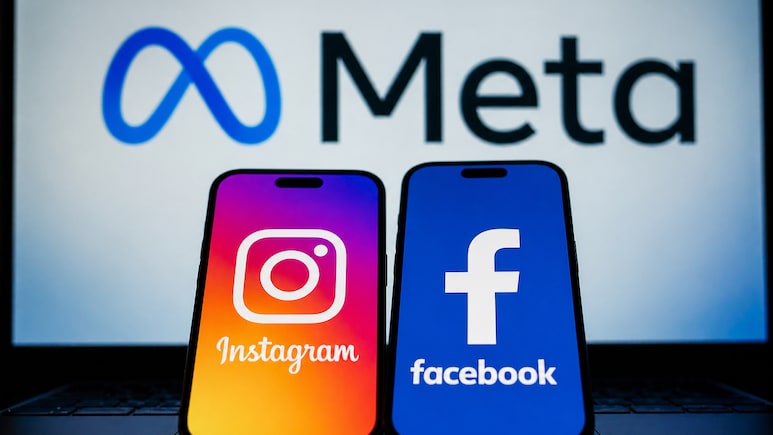
- Meta Platforms will pay up to $16.68 billion to settle claims by 29 US states
- Claims accused Meta of designing Instagram and Facebook to encourage teen addiction
- Settlement requires daily limits, night blocks, and stronger age verification for teens
Meta Platforms has agreed to pay up to $16.68 billion to settle claims brought by 29 U.S. states accusing the company of designing Instagram and Facebook to encourage compulsive use among children, misleading consumers about the platforms' safety and improperly collecting data from underage users, according to court filings.
The settlement was reached as a federal trial was underway in California, bringing an end to one of the most closely watched legal challenges over the impact of social media on children and teenagers.
ALSO READ : Ex-Meta Staffer Says 99% Of Teens Shunned Early Safety Tool
Under the agreement, Meta has committed to introducing daily usage limits and blocking nighttime access for teenage users.
The company will also strengthen age-verification measures aimed at preventing children from accessing its platforms or age-restricted content.
The settlement further requires Meta to develop additional tools to help parents and guardians monitor and protect children online.
The company, however, has denied the allegations and admitted no liability as part of the agreement. The court filing states that Meta “denies the allegations against it and that it has any liability to the Plaintiffs.”
The trial involved allegations by the attorneys general of California, Colorado, Kentucky and New Jersey that Meta violated state consumer-protection laws by intentionally designing its platforms in ways that fostered addictive use among young users.
The states also accused Meta of violating the federal Children's Online Privacy Protection Act by collecting personal information from children without notifying or obtaining consent from their parents.
ALSO READ : Instagram Chief Adam Mosseri To Testify In Major Meta Child Safety Trial
They alleged that some of the information was subsequently used to develop machine-learning and generative artificial intelligence systems, Reuters reported.
Meta has maintained that it has taken extensive measures to safeguard young users.
The company has also argued that describing its platforms as addictive could not constitute consumer deception because social media addiction is not formally recognised as a psychiatric disorder.
The settlement comes as Meta, Snap, Alphabet and TikTok owner ByteDance face a broader wave of lawsuits over allegations that their platforms have contributed to worsening mental-health problems among young people.
Meta has suffered several recent legal setbacks. In March, a New Mexico jury ordered the company to pay $375 million after finding that it had misled consumers about platform safety.
Earlier this month, another judge ordered Meta to pay $567 million after concluding that the company's conduct created a public nuisance and imposing youth-safety measures.
In a separate Los Angeles case, Meta and Google were found liable for harm suffered by a plaintiff, who was awarded $6 million over claims involving depression and anxiety. The companies have said they plan to appeal those verdicts.
Essential Business Intelligence, Sharp Market Insights, Practical Personal Finance Advice, Daily Fuel, Gold and Silver Prices and Latest Stories — On NDTV Profit.