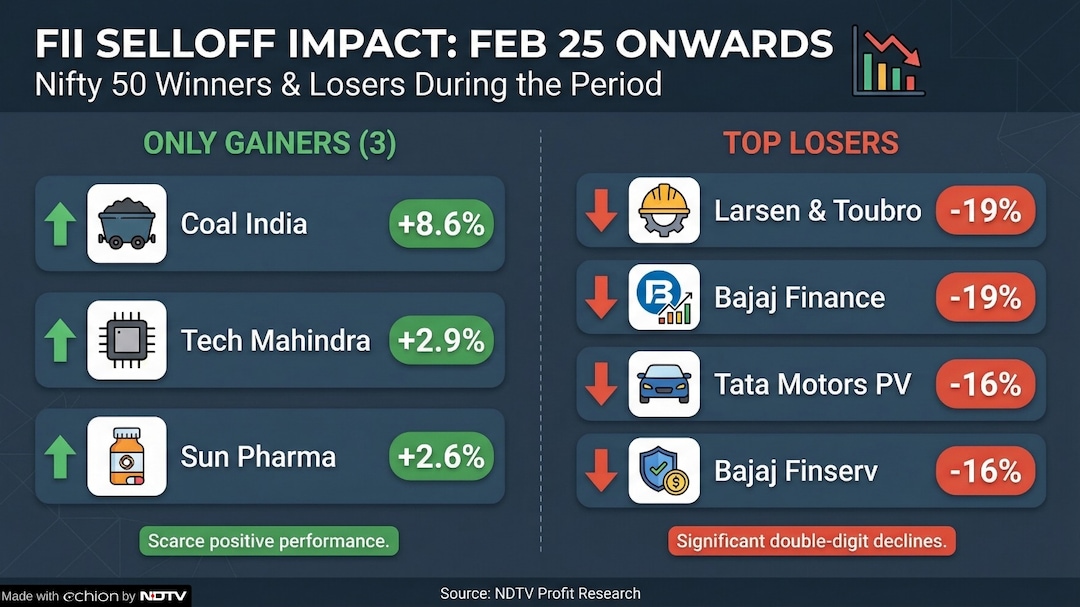
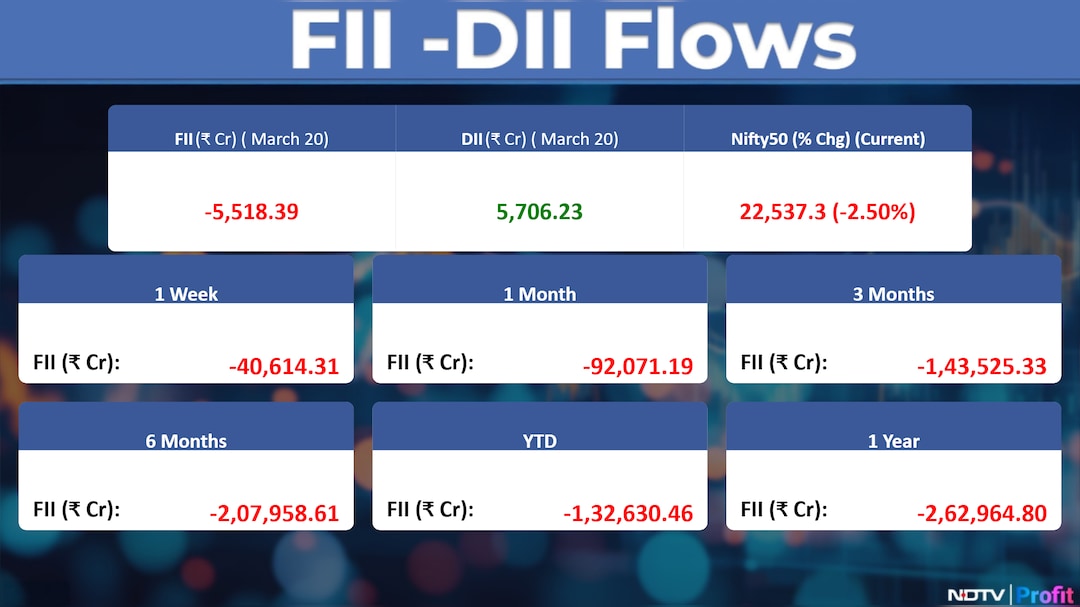
The recent correction in Indian stocks have been aggravated by relentless selling by foreign portfolio investors. The FPIs have been net sellers for the last 16 sessions, offloading shares worth Rs 1 lakh crore between Feb. 25 and March 20.
During this period, the blue-chip Nifty 50 and BSE Sensex have declined 9% and 9.5%, respectively. Buying from domestic institutional investors over the last 18 consecutive sessions have lent some support to the markets.
Also Read | Layoffs Are Rising In Tech, But These Skills Are Helping People Unlock Better Pay
Here are the three key reasons why FPIs have been 'Sell India':
Iran War
The ongoing Iran war has been the preeminent reason for the FPI selloff. The United States and Israel launched the war on the Islamic Republic on Feb. 28, which followed Tehran's retaliation through missile and drone strikes at targets across the Persian Gulf.
The three-week old conflict has taken a heavy toll on global risk assets, including India. Shipping through the vital Strait of Hormuz has been disrupted, roiling energy markets.
ALSO READ: Iran Says Strait of Hormuz Not Closed, Warns US Against 'Delirious Threats'
Oil Prices
International oil prices have climbed to multi-year highs with the global benchmark Brent hitting $120 per barrel at one point. Iran has targeted oil and gas facilities in major producing Arab countries of the Gulf that have taken million of barrels out of production. The blockade of the Strait of Hormuz has further crippled energy supplies.
High oil prices will likely trigger inflation in the Indian economy, impacting purchasing power of consumers, drag demand for goods and services and impact corporate earnings. Trade disruptions with the Gulf will also cause revenue loss for Indian exporters and the lakhs of workers they employ.
India's current account deficit is expected to widen due to a higher oil import bill and lower remittances from the Gulf.
Depreciating Rupee
The above mentioned factors have weighed on the rupee. The local currency has depreciated 4.5% against the US dollar so far this year. It hit a new record low on Monday.
A weaker rupee translates to poor returns for foreign investors owning Indian assets. On a year-to-date basis, the Nifty has declined 15% in dollar terms compared to 11.5% in INR terms.
The government using fiscal measures to cushion the impact of higher energy prices have kept the bond market on edge. The yield on the benchmark 10-year government security has risen eight basis points since the start of the war. That will trickle down to higher borrowing costs for corporates.
ALSO READ: Goldman Sees Rupee Sliding To 95, Putting Pressure on RBI
Essential Business Intelligence, Sharp Market Insights, Practical Personal Finance Advice, Daily Fuel, Gold and Silver Prices and Latest Stories — On NDTV Profit.