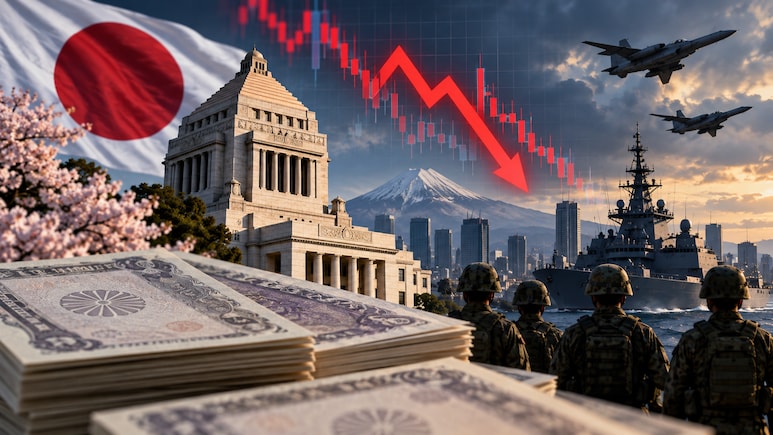
Japanese government bonds fell after the government was said to be considering a new mid-term defense spending target equivalent to 3.5% of gross domestic product, adding to fiscal concerns and outweighing support from a solid 20-year auction.
Defense officials have signaled a willingness to sharply increase defense spending in meetings with their US counterparts, according to people familiar with the matter. Bond futures extended losses after the report, while the benchmark 10-year yield rose 4.5 basis points to 3.03%, its highest level since 1996.
The proposal would be a “strong selling factor” for bonds, with no funding source indicated for the additional annual spending, said Katsutoshi Inadome, senior strategist at Sumitomo Mitsui Trust Asset Management. It also shows the Prime Minister Sanae Takaichi's expansionary fiscal stance remains unchanged, he added.
Fiscal concerns were already weighing on the bond market. Japan's ministries have requested a record amount of spending for the next fiscal year, intensifying scrutiny over how the plans will be financed and whether additional bond issuance will be required.
Also Read | Layoffs Are Rising In Tech, But These Skills Are Helping People Unlock Better Pay
The domestic pressures are being compounded by a global debt selloff. Escalating Middle East tensions pushed oil prices higher, fueling inflation concerns and driving up borrowing costs globally. The 10-year Treasury yield breached 5% on mounting inflationary pressures as well as rising expectations of Federal Reserve tightening at its meeting this week.
The Bank of Japan is also widely expected to raise rates this week, with traders looking to Governor Kazuo Ueda's post-decision press conference for signals on the pace and scope of further tightening.
The selloff came despite a smoothly received 20-year bond auction. The bid-to-cover ratio was 4.01, compared with 3.98 at the previous sale, and a 12-month average of 3.73. In another sign of robust investor interest, the tail, or gap between average and lowest-accepted prices, was 0.15, compared with 0.17 last month.
What Bloomberg strategists say:
Tuesday's 20-year Treasury auction has a decent setup after demand beat the one-year average at today's JGB auction. That reduces the risk of a negative read across and could prompt relative value hunters to step up.
JGB buying was evenly spread across Japanese lenders, which is positive for secondary trading.
However, there is limited room for yield compression until investors see what guidance the Fed and BOJ provide along with their widely expected rate hikes this week.
— Mark Cranfield, Markets Live Strategist. Read more on MLIV.
While the outcome of the 20-year sale was not as severe as feared, “vigilance remains necessary” given rising oil prices and the spillover of upward pressure on long-term government bond yields in the US and Europe, said Ryutaro Kimura, senior bond strategist at BNP Paribas Asset Management. “Consequently, it remains difficult to expect a sustained decline in super-long JGB yields.”
Essential Business Intelligence, Sharp Market Insights, Practical Personal Finance Advice, Daily Fuel, Gold and Silver Prices and Latest Stories — On NDTV Profit.