- Ray Dalio advises holding 5% to 15% of portfolios in gold for long-term wealth protection
- He warns fiat currencies lose value due to excessive money printing and rising debt levels
- Gold is preferred over fiat money as it cannot be printed and holds value across borders
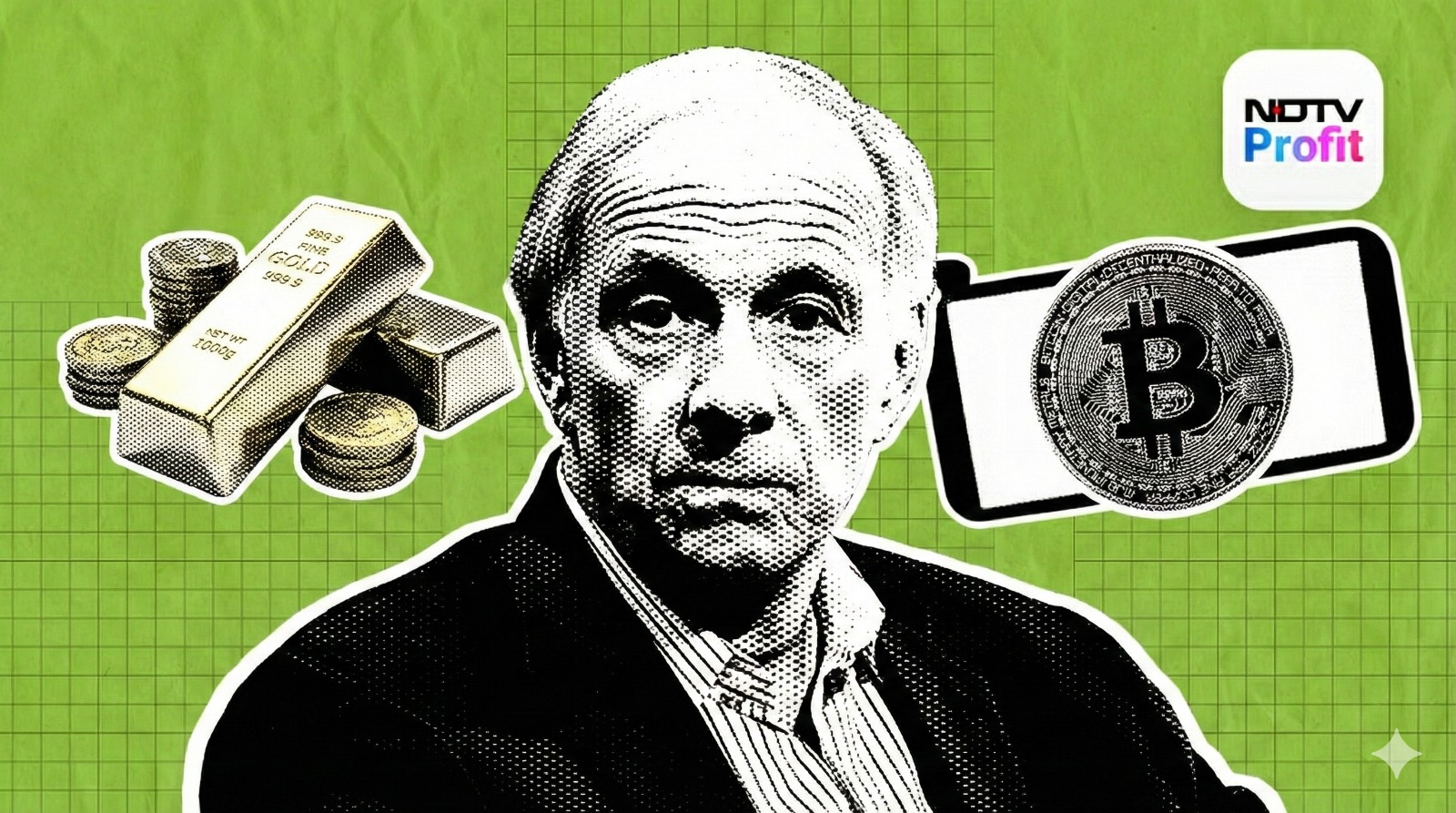
Veteran investor Ray Dalio has renewed his long-standing warning on fiat currencies, urging individuals to allocate between 5% and 15% of their portfolios to gold, which he proceeds to describe as the "most reliable form of money" over long periods of history.
Fiat currencies, for context, are national money that are not backed by a specific physical commodity, and are instead based on confidence in governments and their central banks.
Speaking on the WTF podcast, hosted by Nikhil Kamath, Dalio said excessive amounts of money printing — and rising debt levels across major economies — are steadily eroding the real value of paper currencies.
Also Read | Layoffs Are Rising In Tech, But These Skills Are Helping People Unlock Better Pay
"Money is debt, and debt is money," Dalio said, adding that governments across the world are producing too much of both.
Money Is Created Out Of Thin Air | The Reason WhyHow Much Gold Is Too Much Gold?
This structural imbalance, according to Dalio, is what makes fiat currencies vulnerable over time. "I don't want that kind of money," he said, explaining why he prefers assets that are not someone else's liability.
Gold, he argued in the podcast, stands apart from fiat currencies, because it cannot be printed, is widely recognised across borders, and has historically served as a store of wealth when confidence in paper money weakens.
Dalio said he has personally maintained around 10% of his assets in gold for long periods and believes most investors should think similarly. "Individuals should have between 5% and 15% of their portfolio in gold," he said, stressing that the allocation should be based on portfolio construction rather than short-term price movements.
He also cautioned against market timing, noting that gold's role is diversification and protection rather than high returns.
India's Forex Reserves Up Marginally To $689 Billion As Gold Holdings RiseGold vs Bitcoin
Dalio also drew a clear distinction between gold and digital assets like Bitcoin. While he acknowledged that Bitcoin has some characteristics of money, most notably its limited supply, he also said it does not match gold's reliability as a store of value or wealth.
"Bitcoin is a form of money, but it has its problems," Dalio said, pointing to concerns about traceability, government interference, and the risk of technological vulnerabilities.
Dalio disclosed that he hold a small amount of Bitcoin, but described it as "less attractive than gold". Stablecoins, he added, are even less compelling as a store of wealth, since they are tied to fiat currencies, and hence, attract their weak points.
Crypto Winter Squeezes Bitcoin Miners As AI Pivot Gains UrgencyBeyond asset allocation, Dalio warned that the world is facing a convergence of high debt, political polarisation, and shifting global power structures, adding that these are factors that have historically led to currency depreciation. "Through history, there have been too many claims on money and not enough value behind it," he said.
As governments continue to rely on debt and monetary expansion, Dalio's message rings clear — gold remains the most enduring hedge against the gradual loss of purchasing power in fiat money.
'World Is in A Bubble': Ray Dalio Warns Of A Perfect Storm — Debt, Politics, Geopolitics & Tech CollidingEssential Business Intelligence, Sharp Market Insights, Practical Personal Finance Advice, Daily Fuel, Gold and Silver Prices and Latest Stories — On NDTV Profit.