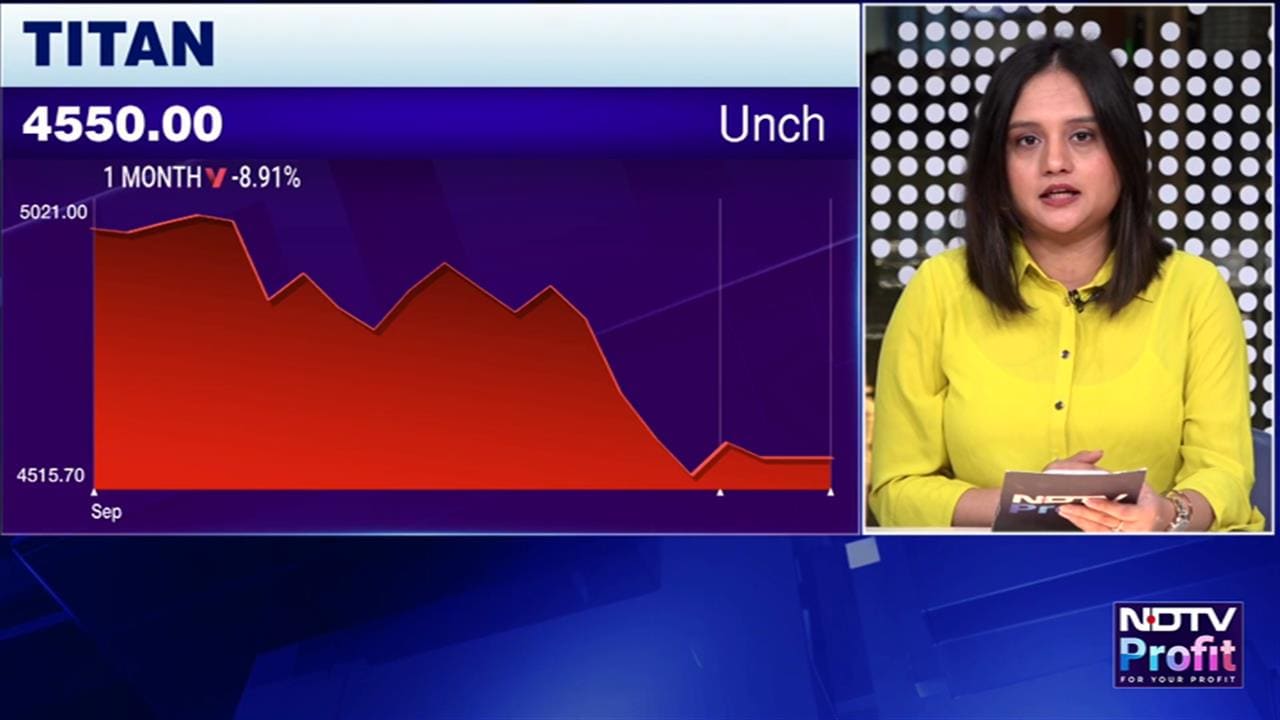
- Recent gold price drop seen as buy-on-dips opportunity by some bullion traders
- Physical gold serves as long-term insurance, not for short-term capital gains
- Gold prices fell 1.2% amid rising US Treasury yields and crude oil above $100
The recent lull in gold prices, marked by rising yields and policy tightenings by various central banks, is seen as a buy-on-dips opportunity by a section of bullion traders. For retail investors, navigating through the precious metal volatility by applying the equity-market profit-taking rules is akin to falling into a strategic trap, warn wealth managers and market experts.
With crude oil prices topping $100 a barrel again, gold prices came under renewed pressure on Wednesday, sliding by about 1.2% to $4,109.22 an ounce.
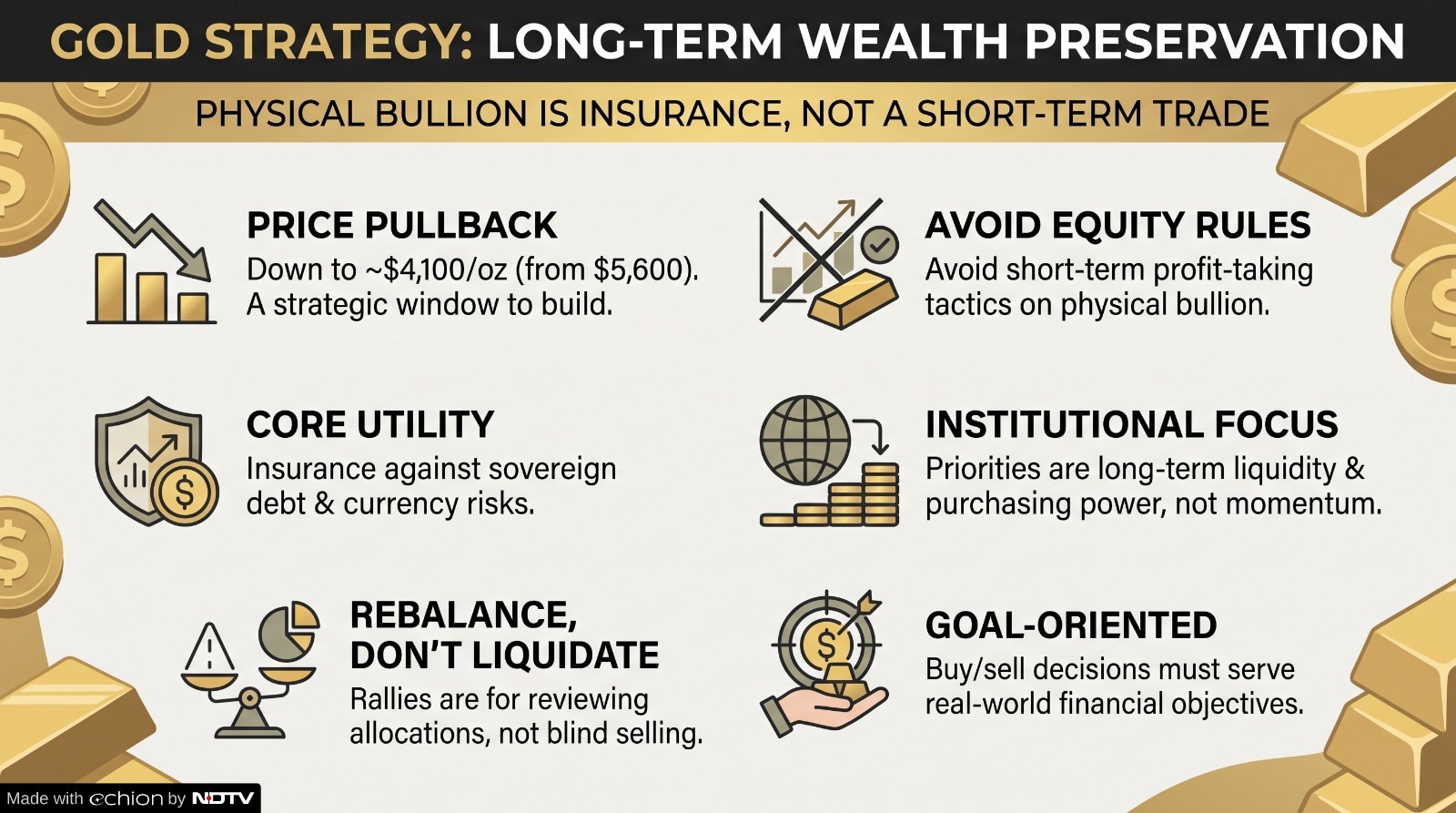
Max Baecker, president of American Hartford Gold, cautioned against the instinct to assign universal price levels for buying the dip or booking profits. He noted that physical bullion functions fundamentally differently from paper assets, requiring a strategy rooted in wealth preservation rather than short-term capital gains.
Also Read | Layoffs Are Rising In Tech, But These Skills Are Helping People Unlock Better Pay
"Our focus at American Hartford Gold is physical ownership, so I wouldn't assign a universal price where people should take profits or buy a dip," Baecker told NDTV Profit in an emailed interaction. "Those decisions depend on what someone paid, their time horizon and how much gold they already hold."
Because the primary utility of physical gold is long-term insurance against sovereign debt risks and currency debasement, the decision to buy or sell should not be dictated solely by chart levels, he explained.
The warnings come as gold prices experience a meaningful pullback from their historic highs. After surging past $5,600 an ounce in early 2026, international prices have since eased toward the $4,100-$4,150 range. The pullback in recent days has been driven by surging US Treasury yields, which have spiked to their highest levels since 2002.
A similar cooling is visible in the domestic market, where MCX gold futures—which scaled an all-time peak above Rs 1.93 lakh per 10 grams earlier this year—are now trading below the Rs 1.5 lakh mark.
ALSO READ: RBI Repo Rate Hike: Will Gold Prices Fall After Rates Rise To 5.50%? What Investors Should Know
Despite the near-term price pressure, global market watchers continue to treat the yellow metal strictly as a structural hedge rather than a tactical trading asset. John Reade, senior market strategist at the World Gold Council, recently highlighted that major accumulators do not treat bullion as a short-term momentum play.
Writing in a recent World Gold Council market commentary, Reade noted that institutional buyers are "generally not trading gold around the next inflation print or cash-rate meeting." Instead, allocation decisions are shaped by "longer horizons and the need to preserve liquidity and purchasing power across a wide range of economic and geopolitical scenarios", he was quoted as stating by Livewire Markets in August.
For long-term retail accumulators, a sudden macroeconomic pullback in gold prices should not be viewed as a technical breakdown, but rather as a strategic window to build or average down a core position, as per the experts.
Conversely, when gold goes on a historic, prolonged rally, investors should not blindly liquidate to book profits, they caution, adding that a strong rally is simply a cue to review portfolio allocations and rebalance if bullion has become overweight relative to other asset classes.
"A pullback can offer an opportunity to build a long-term position, while a strong rally may be a reason to review allocations," Baecker explained. "The key is whether the purchase or sale serves your financial goals."
Ultimately, the decision to liquidate the gold holdings shouldn't depend on a flashing price target on a trading screen, according to the experts. The decision, they said, should be taken after factoring whether the sale of bullion serves an investor's immediate and real-world financial objectives.
ALSO READ: Gold Eases Below $4,150: Why American Hartford Gold Says The Bullion Floor Won't Break
Essential Business Intelligence, Sharp Market Insights, Practical Personal Finance Advice, Daily Fuel, Gold and Silver Prices and Latest Stories — On NDTV Profit.