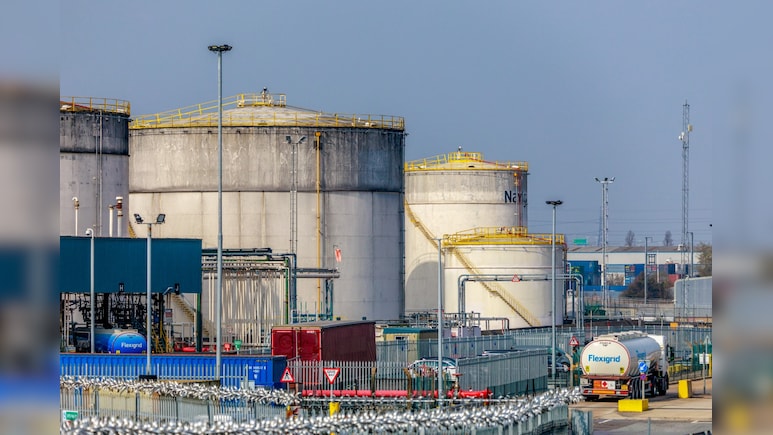
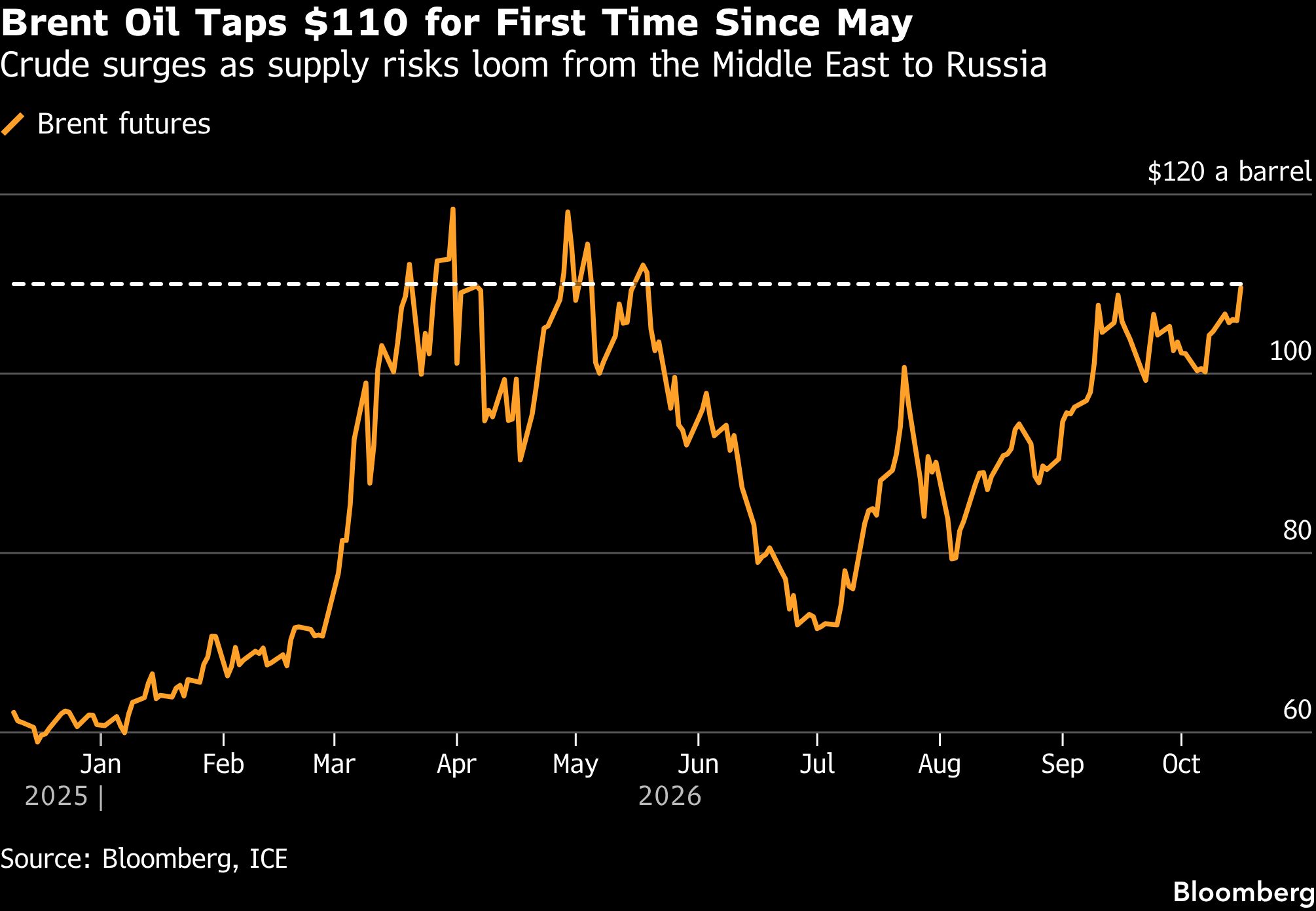
Brent oil hit $110 a barrel for the first time since May as prospects for imminent supply relief dwindle, prompting traders to ramp up bets on higher prices ahead of the weekend. The global benchmark rose 3.7%, notching a second straight weekly gain, as bullish sentiment crystallized in the course of a session punctuated by reports of ongoing conflict in major export centers.
Iran-backed Houthi rebels continue to pummel Saudi Arabia with missile and drone strikes, while Russia and Ukraine exchange tit-for-tat attacks on energy infrastructure.
The last time prices reached these levels was almost five months ago, when paralyzed global crude and fuel flows spurred a fragile, short-lived agreement that briefly reopened the Strait of Hormuz.
Also Read | Layoffs Are Rising In Tech, But These Skills Are Helping People Unlock Better Pay
Now, cargo volumes traversing the key waterway are nearing pre-war levels, topping 100 million barrels of crude last week. Still, prices remain stubbornly high, leaving US President Donald Trump with fewer and fewer options to tame energy costs ahead of the Nov. 3 midterm elections.
US lawmakers introduced a bill Friday to block Trump's deal with Moscow to release several hundred million barrels of diesel. The legislation reflects widespread opposition to any measures that would allow Russia to pad its war chest.
“After a brief reprieve, the oil market is having to price risk back in, particularly heading into the weekend,” said Rebecca Babin, senior energy trader at CIBC Private Wealth Group.
Diesel and gasoline futures also rose. Diesel settled at $4.90 a gallon in New York. Contracts for both commodities are trading at the highest-ever levels seasonally.
The continued exclusion of Russian diesel from global markets forces refineries elsewhere to boost oil processing to meet demand. Trump has reiterated that Moscow will follow through with a diesel release. But ongoing strikes like the recent attack on Russia's Ryazan refinery reported by Reuters are amplifying doubts about whether the agreement will deliver as promised.
Analysts are closely watching developments in the Persian Gulf for any signs the conflict is worsening. Trump declined to rule out using a weapon known as the “Mother of all Bombs” on Iran after the Nov. 3 election, according to an interview with Newsmax. CNN reported earlier this week that the US has developed strike plans that could include using a large-yield bomb known as the GBU-43/B Massive Ordnance Air Blast Bomb.
“The conflict is likely to escalate,” Eurasia Group analysts wrote in a note, raising their odds of intensification to 65% from 35%. “The standoff status quo is no longer sustainable for the US.”
The US has also sought to tame prices by drawing from emergency stockpiles and lobbying other nations to do the same. On Friday, the US offered up to 17 million barrels from the Strategic Petroleum Reserve.
Crude is up more than 75% this year as the wars in the Middle East and Russia disrupt supplies. Physical markets continue to signal tightness as refined products such as diesel have rallied even harder, with European futures for the commodity up more than twofold this year.
Friday's outsized price swing was the first of its kind in a range-bound trading week, even as headlines pointed to a worsening energy security environment across the globe. The disconnect between futures prices and surging physical markets has left traders wary of being caught wrong-footed. As a result, open interest in the global benchmark touched the lowest since March 2025 earlier this month.
Adding to technical quirks, Brent mostly lagged the US benchmark's gains in recent sessions, narrowing the gap between the two, as lower costs to ship American barrels buoyed demand.
The price of sending a typical cargo from the Gulf Coast to Rotterdam has fallen about 12% over the past week, according to Baltic Exchange data. Trend-following commodity trading advisers and technical factors have also contributed to the relative strength.
(This story has not been edited by NDTV staff and is auto-generated from a syndicated feed.)
Essential Business Intelligence, Sharp Market Insights, Practical Personal Finance Advice, Daily Fuel, Gold and Silver Prices and Latest Stories — On NDTV Profit.