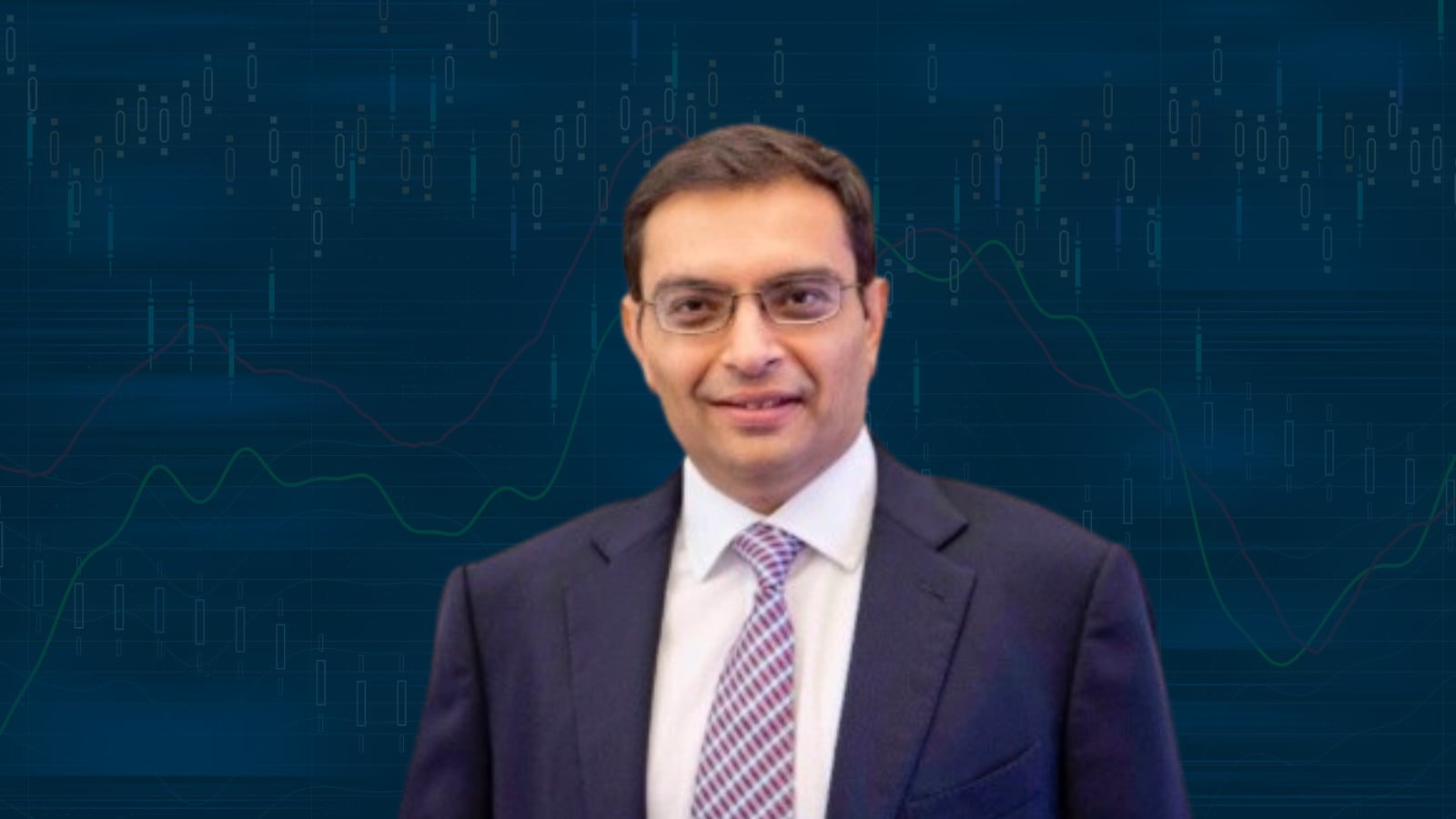
There are two crucial factors that demand careful consideration before making investment decisions: first, evaluating whether the chosen company can sustain growth rates exceeding the market average; and second and equally vital, the confidence investors hold in the likelihood of this outperformance persisting over an extended duration, according to Hiren Ved, chief executive officer of Alchemy Capital Management Pvt.
"If one can convince oneself on these two, and obviously, other things being equal, that your return ratios are reasonable, your governance is good, and you're not doing any capital misallocation during that time frame, then the market is willing to live with higher multiples," Ved told BQ Prime's Niraj Shah on Alpha Moguls.
Indian markets are currently experiencing a long-term structural bull market. After a considerable period, things seem to be falling into place, according to Ved. "This is a bull market, so don't get off the horse; stay on the horse."
Headwinds Versus Tailwinds
Whenever there are domestic or global macroeconomic headwinds, the market tends to exhibit a narrower focus. And, during periods of favourable economic tailwinds, there is a notable improvement in the overall market breadth, according to Ved. "We are seeing a significant improvement in the breadth of the market in the last four months since April," he said.
"The number of sectors and stocks hitting 52-week highs is of a very different order, and that tells us that the quality of this rally is far superior to the quality of many rallies we see, where the markets tend to be very narrow."
This surge in the breadth of market participation signifies a superior quality to the ongoing rally when compared to numerous past instances, where market movements were more limited in scope, Ved said.
Pockets Of Opportunities
Manufacturing
Anticipating a similarity to the market cycle witnessed from 2003 to 2007, the market will broadly repeat itself in terms of the sectors that will outperform, according to Ved.
Over the past 12–18 months, Alchemy Capital has invested significantly in manufacturing companies and capital goods, driven by the belief that these themes will remain profitable over an extended period, Ved said.
Engineering Research and Development
Focus lies not on the larger market capitalisation information and technology companies but predominantly on engineering research and development companies, Ved said.
This quarter's performance in the engineering R&D space was enlightening, according to him. "Most companies couldn't achieve 7-8% quarter-on-quarter growth. However, KPIT Ltd. was an exception and stood out."
"We saw engineering R&D companies structurally growing faster than IT services. So I think that we continue to stay with that theme because we do believe it's a long-term theme," Ved said.
Consumption
Alchemy Capital invested more in the discretionary consumption bucket where premiumisation is happening because, as the country's per capita income crosses $2,500, there is more money available to spend on premiumisation across the board, according to the CEO.
"So whether it is liquor companies or apparel companies or so on and so forth, we continue to have exposure there because we believe that premiumisation as a trend is likely to continue," he said.
Watch the full video here:
Edited excerpts from the interview:
In the last six to 12 odd months, has it been difficult to generate Alpha, or has it been possible because the broader end of the spectrum has rallied even more than the indices?
Hiren Ved: Niraj, I think, the cycles that we have seen in the markets are due to either domestic or global macro headwinds. Then, the market tends to become narrow. And when, there are tailwinds or some of those headwinds tend to recede, you tend to see improvement in the breadth of the market and that is what we are seeing, especially in the last four months.
Since April, we have seen a significant improvement in the breadth of the market. The number of sectors and stocks that are hitting 52-week highs is of a very different order. And that tells you that the quality of this rally is far superior than the others, where the markets tend to be very, very narrow.
A lot of that has to do with two or three things. One is that, last year, we had significant headwinds on margins. And there was negative operating leverage for a lot of companies, especially non-BFSI companies, and you had rising interest rates. Therefore, you had a compression of P/E multiples and high-growth stocks. So, you had a double whammy---you had a margin compression, and you had an impact on P/E multiples because of rising rates.
This year, you have the exact opposite. You have falling commodity prices and margins are coming back. As for rates, one could argue that there may be another rate hike or two, but by and large we are towards the end of the cycle rather than the beginning. Last year, we were just starting the rate hike cycle. This year, we are almost towards the end of the rate hike cycle.
Therefore, you have seen a dramatic change in the way the markets have responded. So, I think that if that continues to be the construct, where margins will improve, and rates seem to be topish, the breadth of the market will be reasonably strong.
With the recent commentary from the fed or the big four central bank, if there is a bit of a liquidity withdrawal, then we might see a bit of a corrective move as well. Are you preparing for something like that in the second half, to maybe take advantage later on, or are you convinced about the long term so much that you are not making wholesale changes to the portfolio?
Hiren Ved: We are completely convinced that we are in a long-term structural bull market in India. After a long time, a lot of things are falling into place. That does not mean that in any long-term bull market, you will not have phases where there are corrections or sideways movements in the market.
However, having played a couple of bull markets in the past, the lesson is that do not try to optimise within a bull market, if you are convinced on the big picture. You may make a few tactical shifts between sectors here and there. All that is fine. It really depends on each investor or portfolio manager's philosophy, but one big learning is that you do not try to optimise by saying that okay, there could potentially be a correction because of withdrawal of liquidity and therefore, let me keep some cash and then I will reinvest it later on.
The risk with that is no different than, let us say, six or eight months ago, when there was big expectation that the U.S. economy will go into a recession, and everybody was talking about it. The fact remains that the U.S. hasn't gone into a recession.
The problem, therefore, in terms of making these macro level forecasts is that you don't know whether you will be right or wrong, no matter how strongly everybody believed that, that would be the scenario. So, I do not want to change anything or my positioning in the portfolio, based on some hypothetical event that may or may not occur in the future.
I think it is important that, at the very baseline level, we believe that we are in a good market cycle, and that we are in a good economic cycle. There will be challenges and headwinds in between. There will be events in between which could be elections next year, which could lead to a slowdown in the second half. The cumulative impact of all the rate hikes might come a little later. We don't know. But I think, one thing is very clear from our perspective---that this is a bull market, don't get off the horse, stay on the horse.
Is your portfolio currently materially different from what an average portfolio construct would be–a bit of financials, maybe less IT, or no IT, or exposure to some of the B2G sectors, etc? Are you different there?
Hiren Ved: Niraj, if you remember, last year, and or maybe even before that, and for a reasonable period of time, our view has been that we were very bullish on manufacturing as a sector. My view is that we are going to see the kind of sector leadership that we saw during the 2003, or 2002-2003 to 2008-2009 bull market, which is industrials, capital goods, auto ancillary, power, real estate. Now, you can throw in renewable energy, electronic manufacturing services, defence, because every cycle has a couple of new leaders, hotels, hospitals, right? Pretty much very similar to the cycle that we saw from 2003 to 2007 will broadly repeat in terms of the sector leadership that will outperform.
Now, having said that, based on that conviction, not today, but over the last 12 to 18 months, we have been infusing manufacturing companies, capital goods companies. And we believe that these are the investments or themes that will run for a fairly long period of time. Therefore, we have the balance. We have the big banks and financials. We have a lot of stuff in that manufacturing bucket across many of these sectors that i mentioned, and we do have tech, IT investments also.
Now IT has obviously gone through a cycle where there are a few headwinds in the IT services sector. But largely, our exposure is not to the bigcap IT services sector, but largely to the R&D companies. And you had people like Kishore of KPIT on your show several times. You can see the difference. And this quarter was most instructive in that sense. None of the companies were able to deliver a 7%-8% quarter on quarter growth. KPIT stood out. So, we have to ask the question, why that, given the environment that we are seeing, some companies are able to grow much faster. And that was our theme, for a long time, when we saw the R&D companies structurally growing faster than IT services.
So, I think that we continue to stay with that theme because we do believe it is a long-term theme. Yes, there was a phase post-Covid, when even they grew faster, and now maybe there is a little bit of moderation, but structurally, they are still growing faster than IT services. So, i think that is how we are positioned if you ask me.
And then, finally the area which has been very soft is the consumption space in general, because obviously, we have seen that we have had a K-shaped recovery. So, consumption at the lower end is not doing that great, but consumption at the higher end has done okay and has held out. But then again, our view is that we are more invested in the discretionary consumption bucket where there is premiumisation happening because we believe that as our per capita income crosses $2,500, there is more money available to spend on premiumisation across the board. So, whether it is liquor companies, apparels, or so on and so forth. We continue to have exposure there, because we believe that premiumisation as a trend is likely to continue. And even in this consumption cycle, we have seen that it is people at the lower end who got more more impacted than those at the higher end.
How do you tell yourself to be convinced about holding on to an investment in an expensive stock when the narrative from the sell side is that both things are looking very expensive? The whole sector might be going through a bit of a drawdown, but this stands out. How do you deploy the mental model to stay invested or invest more in such companies?
Hiren Ved: Niraj, I think that it is very important to understand why you have bought something. What is the core hypothesis behind that? And if you see all the high-growth companies of the past, one argument that I hear when you ask a lot of investors about why they missed a great growth company, more often than not, the answer is valuations.
We were looking at and studying those companies that have delivered consistently, compounded at a very decent clip, 20% plus over years and years. And when you try to dissect as to what makes these companies tick, why is the market willing to give a higher valuation to these companies, we found that it is because there is visibility of higher above average growth.
So, two things are important here about average. You can find out a sector average, broadly speaking. If your growth is above average, and there is reasonable visibility that this growth will continue for some length of time, the markets continue to trade these companies at higher multiples. That is what history has taught us.
Therefore, when I tend to look, or what convinces me to hold on to these companies, is that every time when I look at the numbers or I reflect on the numbers, or I read on these companies, or I interact with these companies, I am only checking at two things. Will the growth rate continue to be higher than average? And, do I have reasonable confidence in the probability that this will continue for some length of time? If one can convince oneself of these two, and obviously other things being equal, that your return ratios are reasonable, your governance is good, you are not doing any capital misallocation during that timeframe, then the market is willing to live with higher multiples.
Unfortunately, there is no science, what that higher multiple could be. In the heydays of HDFC Bank, four times price to book multiple was a high multiple. In the heyday of Bajaj Finance's growth cycle, six or seven times price to book was a new norm. There was no historical context to it.
Today, if you look at the R&D companies, they are all at 50-60 times multiples, right? There is no historical context, but there is one historical context. It is that, if there is reasonable runway for growth, and if companies are delivering reasonably higher returns above capital, then I think the markets are willing to give a higher P/E.
Now, obviously, we must also understand this–one of the downsides of investing in growth companies is that you are also susceptible to sometimes sharp drawdowns because your valuation assumes that there is no error in execution or there are no pitfalls for a couple of quarters. Exactly like you mentioned when you interviewed the CEO of Laurus Labs. We don't own it, but I am just saying that it did phenomenally well. Every growth company may sometimes go through a patch, where it is changing the business, there are a few headwinds, it is making investments, the numbers are not as great as you would like them to be, and you could see disappointment on the stock price for some time before it gets back on to the growth path.
So, one has to be careful that while the journey from A to Z may look very tantalising, because the CAGR you can make, or the returns you can make, are obviously above average, but the journey may not necessarily be as smooth. And that is where your conviction matters the most. And I think that how will you build that conviction is the most important secret sauce in it.
How do you allocate more to a particular space within manufacturing versus some of the others, because almost every company that you hear the quantum of order flows, the book to win ratios, the con calls from the companies all look very optimistic? How do you decide what is the first among equals?
Hiren Ved: It is not easy, because valuations of many of these stocks do tend to capture some of these tailwinds. Therefore, the question is, how do you incrementally allocate money to those names.
First of all, I believe that we are still at the early stages of the cycle. So optically, the valuations may look higher. Also, some of these companies would have delivered 100+% returns, some of them 40%-50%, which is way higher than what the markets have delivered. So, maybe intermittently, even in these high-growth companies, you may get to a phase where you have a time correction, till the earnings catch up.
Now again, the thing is that it is all about as long as earnings growth keeps coming in, you will be fine even if you enter at a higher level. Maybe your returns from there on would matter more than what somebody would have made historically. Now, what we do is that–and though it is a challenge–while we continue to deploy money in some of these companies in the manufacturing sector, whether it be auto ancillary, capital goods, etc, we start with a slightly lower weightage than what we would have done historically, because if you do get a time or a price correction, that gives you the ability to add. You are still playing for the longer term. Your view is that you are still in the early stages of this cycle. So that is one way to do it.
Secondly, I also believe that there is always a hunting ground for good quality companies in sectors, which are currently not doing well. For example, in discretionary consumption, where these stocks haven't done anything great. They are still bouncing around their bottoms rather than bouncing around their tops, but where the risk-reward is very favourable to you, because all the headwinds are priced in today.
Now, people want to wait till they see the first signs of improvement in their numbers. But investing is all about the future. It is not about the past and your judgment of whether most of the bad news is already in the price, and if you believe that it is not manufacturing alone that is going to do well. Healthcare will also do well and so will consumption.
Then how do you allocate money in the portfolio to some of those sectors, which may not be in favour today, but structurally you know that the business model is good. It is just the external environment that is tough. Once that external environment changes and consumption comes back, which eventually it will at some point, then these companies will start to perform.
Now the question is, are you a just in time investor or are you willing to say that okay, a part of my portfolio is in this high-growth, secular growth bucket, but a part of my portfolio is also in companies, which are very strong, but currently going through a tough phase, but it is already in the price, because the stocks haven't done much and nobody is chasing these companies today. Everybody is chasing the former.
So, you have to create a mix of risk-rewards in your portfolio, where you have a combination of these secular growth stories, but you also have exposure to companies or sectors that are not doing well.
Now suddenly, people are figuring out okay, what should i do in pharma, because suddenly pharma is doing well. If you had asked anybody a question three months or six months ago, people wouldn't have cared about what is happening.
So, I think the definition of a bull market is that every sector participates finally and even the laggards will. Maybe, it participates right at the end, but every sector will. And there is continuous sector rotation that keeps happening. That is how a bull market keeps going and I think something similar will happen in this bull market. It has already happened.
Essential Business Intelligence, Sharp Market Insights, Practical Personal Finance Advice, Daily Fuel, Gold and Silver Prices and Latest Stories — On NDTV Profit.