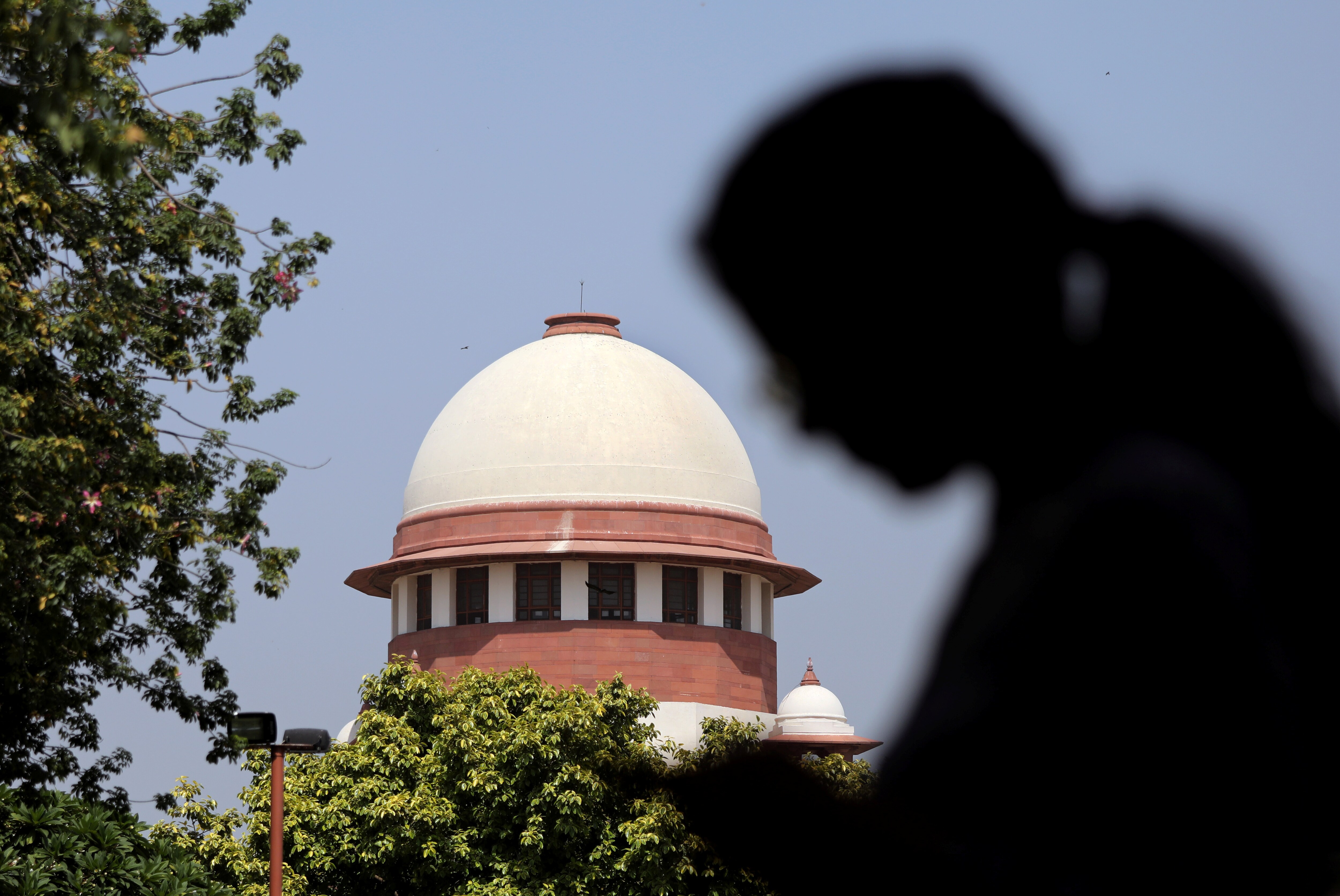
In two separate rulings this week, the Supreme Court has laid down the law on when charitable institutions can claim tax exemptions.
Housing development boards like the Noida Authority, a statutory body like the Institute of Chartered Accountants of India, cricket associations like the Board of Control for Cricket in India, and educational institutes, among others were appealing before the apex court, arguing that they exist solely for charitable purposes and not for purpose of profit.
The apex court has not decided on the facts of each case but has laid down broad principles that will govern the tax status of 'charitable institutions'.
It has said that:
Educational institutions cannot have objects which are unrelated to education. They can't engage in any for-profit activity.
Statutory corporations, boards, authorities and commissions are involved in the advancement of objects of general public utility. To determine whether they meet the tax exemption criteria, you have to look at their objective. And just the fact that the goods and services they are supplying are at a nominal mark up, won't take away their exemption status.
If a trade promotion body is conducting paid workshops, training courses, skill development courses, etc., such activities are in the nature of services “in relation to” trade, commerce or business and won't qualify for a tax exemption.
And lastly, the tax department will have the power to call for audited accounts to assess if tax exemption is being rightfully claimed.
The Supreme Court judgement has acted like a needle which sews together loose threads that have been hanging because of a lot of litigation in this area, Advocate Tarun Jain told BQ Prime, in a Twitter Spaces conversation.
The judgement kind of gives a thumb rule to settle all the past, pending and future disputes and streamlines the law.Tarun Jain, Advocate, Supreme Court
In the same conversation, Ajay Rotti, partner at Dhruva Advisors, articulated the key contention.
While 'charitable purpose' has a clear definition under the income tax law, what created all the problems is the fact that a charitable organisation can have certain incidental activities to earn profits from, he said.
So far, this has been understood to mean that such an organisation would still be eligible for exemptions, and that has been the law, (and that is how) it has been interpreted by both courts and taxpayers thus far. What happens to those incidental activities and how you read those incidental activities is what really changes with this decision.Ajay Rotti, Partner, Dhruva Advisors
Supreme Court rules on tax exemption for charitable institutions.
How will it impact sports organisations, statutory regulators, education institutes, & private trusts?@ajayrotti & @taxlawyer_tj weigh in, tune in now! @PayaswiniLLBhttps://t.co/ywN0cdSy4wFor instance, incidental activities of even statutory regulatory bodies can constitute commercial or business receipts, the apex court has held.
As an example, the bench has stated that statutory bodies providing other facilities or services such as admission forms, coaching classes, registration processing fees, etc., at markedly higher price would constitute commercial receipts.
In such a case, the limit prescribed under the law will need to be complied with, if the tax exemption is being sought.
As per the income tax law, the aggregate receipts from incidental activities during the financial year cannot exceed 20% of the total receipts.
Similar assessment will need to be done for institutions rendering government-backed schemes, such as housing projects and water supply.
Their earnings will continue to be eligible for tax exemption, but the revenue department will have to look into whether their earnings are within the limits prescribed by the law, the apex court has said.
There is one set of bodies, though, where the apex court's ruling has not clarified the exemption.
In the case of BCCI and state cricket boards, their case "needs further scrutiny", the Supreme Court said, directing assessing officers to scrutinise the records of these organisations, namely state cricket boards of Saurashtra, Gujarat, Rajasthan, Baroda, and Rajkot, who were parties in the case.
With respect of sports bodies, what the court says is there are overwhelming factors which require detailed examination, Jain said.
One is that there are huge amounts involved, and there's doubt if there is any charitable activity. There is a lot of monopolistic activity, at least exclusivity, which exists. Who are they giving sponsoring rights, advertisement rights, etc., all this needs scrutiny.Tarun Jain, Advocate, Supreme CourtRotti remarked that the judgement actually delves into how much the regional boards are spending on searching talent, training young cricketers, and said the boards are not spending substantial amount on those things. Therefore, you need to consider even these factors before one decides whether they are doing any charitable work.
'We need to see what each of those activities are, what activities are resulting in surplus, and would they become commercial activity, and if those become commercial activity they stand to lose the exemption benefit,” Rotti said.
Essential Business Intelligence, Continuous LIVE TV, Sharp Market Insights, Practical Personal Finance Advice and Latest Stories — On NDTV Profit.