Edmund Burke once said, “Law and arbitrary power are at eternal enmity.” And it's an adage that lawyers and activists around the world have sworn by for years. But the plot thickens when one of India's most reputed lawyers says that arbitrariness has crept into the country's legal system.
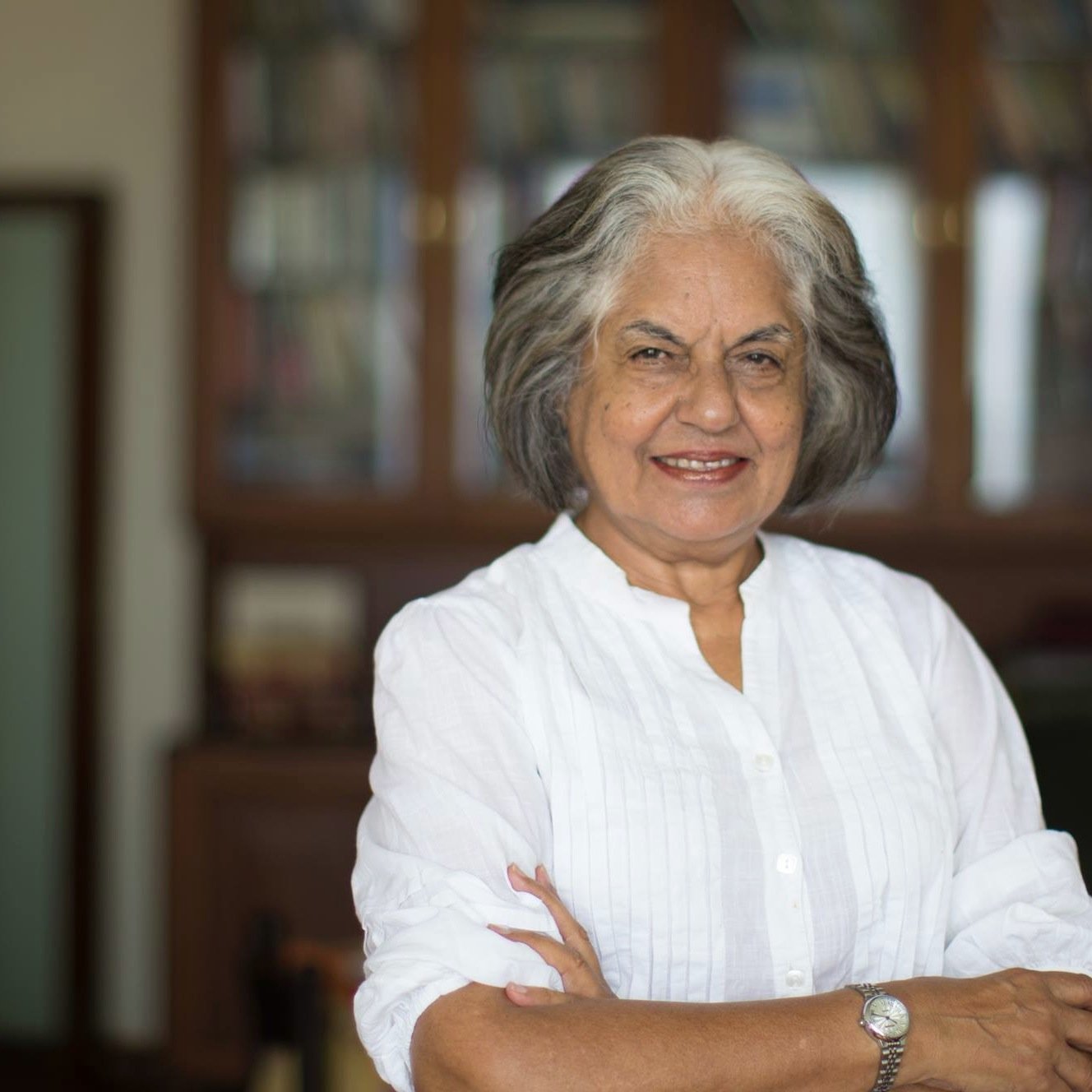
Former Additional Solicitor General of India and Senior Counsel, Indira Jaising is challenging the way in which senior counsels are appointed by the apex court.
Why Should Seniors Wear Different Gowns?
In a writ petition filed at the Supreme Court in 2015, Jaising questioned the age-old rationale behind designating some lawyers as senior counsels.
In the petition, she states that she is pursuing this matter “to protect the rights of the general public to secure the services of senior lawyers at reasonable rates; to abolish the de facto monopoly that exists at the Bar of the Supreme Court of India and to end the arbitrary and discriminatory manner and method of designating senior advocates in exercise of powers under the said Section 16 of the Act of 1961 by the Supreme Court of India ( on the administrative side)”
While speaking at length on the origin of the practice of designating senior counsels, and how it has evolved over the years in India, she tells BloombergQuint at this year's Harvard US India Conference in Mumbai that the whole process has degenerated into a system of face law instead of case law.
She says, “ So, what you have is a disgruntled Bar with a whole lot of very bright juniors who cannot make it to the top for various reasons, one of them being that they are not designated and you have a creamy layer at the top who monopolise the legal profession. And this also results in a skewing of the fees that people charge, legal services come to become expensive.”
Designated senior counsels tend to command higher fees, respect and bragging rights at courts across India. In fact, at the very start of her petition, Jaising submits that she herself was designated as a senior advocate by the Bombay High Court in 1986 and is only pursuing this matter pro bono and in public interest.
The case has been pending at the Supreme Court for over a year. This January, the matter was given a fresh lease of life by the Supreme Court. A bench of the then Chief Justice of India TS Thakur and Justices DY Chandrachud and L Nageswara Rao ruled that the matter would now be heard next month. The bench also clarified that the court will not designate any new senior counsels till the matter is finally decided.
In her chat with BloombergQuint, Jaising points out what she finds most worrisome. “You must have noticed that the kind of the gown which senior counsels wear is different, it has a ridiculous looking flap at the back. In fact the whole gown is ridiculous. I don't see why we need to wear gowns. What bothers me the most is the outward manifestation of two classes.”
Judicial Independence In An Authoritarian State?
Over the past few years, much has been said about the importance of having an independent judiciary in India. Be it during the NJAC-collegium debate on appointment of judges or the right to privacy being a fundamental right or even the manner in which demonetisation was carried out in India - the country has looked at the apex court to uphold the rule of law on all these occasions.
"We are living under an authoritarian state and this is the hallmark of an authoritarian state - centralisation of power in the hands of one person,” Jaisingh says. She is concerned about the collapse of cabinet system, or accountability to parliament. She also calls the current system one where there is “Ordinance Raj”.
She adds, “There is no judicial overreach, it's judicial inaction. On the issue of demonetisation, it was judicial inaction. The hijacking of power has not been from the executive to the judiciary, but it's been from parliament to the executive and when the executive acts, it acts in the most deadly way. The Supreme Court cannot act in the same way...”
Essential Business Intelligence, Continuous LIVE TV, Sharp Market Insights, Practical Personal Finance Advice and Latest Stories — On NDTV Profit.