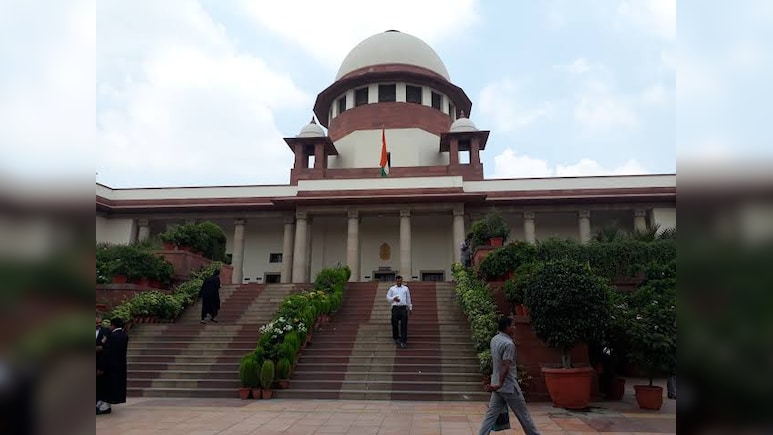
The Supreme Court will on Monday hear a challenge to the Centre's decision to impose a fee on certain UPI payments above Rs 2,000, potentially ending the platform's nearly six-year fee-free regime.
Advocate Anjan Datta has challenged the government's decision in a petition that questions both the September 14 notification and the Merchant Discount Rate framework unveiled on September 15. The proposed fee structure is set to come into force on October 15.
ALSO READ : Why Kalshi Just Lost A Key Court Battle Over Who Can Regulate Prediction Markets
Also Read | Layoffs Are Rising In Tech, But These Skills Are Helping People Unlock Better Pay
Under the framework, merchants will be charged an MDR of 0.4% on specified UPI person-to-merchant (P2M) transactions exceeding Rs 2,000.
The charge will be capped at Rs 300 for transactions of Rs 75,000 and above.
The government has, however, retained zero charges for person-to-person (P2P) UPI transactions, regardless of the transaction value.
P2P payments account for about 37% of UPI transaction volumes and nearly 70% of transaction value.
Certain essential and low-margin sectors, including railways, telecommunications, insurance, fuel and agricultural inputs, will be subject to a flat MDR of Rs 5 on transactions above Rs 2,000.
Transactions involving mutual funds, securities, stockbrokers and dealers will attract an MDR of 0.02%, subject to a maximum charge of Rs 300.
According to the Supreme Court's September 28 cause list, the matter will be heard by a bench comprising Chief Justice of India Surya Kant and Justices Joymalya Bagchi and V Mohana.
The petitioner has questioned the legal basis and manner in which the MDR framework was introduced, alleging a lack of adequate statutory safeguards, transparency and public consultation.
The plea also challenges the constitutional validity of the amended Section 10A of the Payment and Settlement Systems Act, 2007.
ALSO READ : Remove Woman's Morphed Images In 24 Hours: Delhi HC Issues Meta Takedown Order In CJP Case
It argues that the provision gives the executive broad discretion to determine which electronic payment systems should receive protection from charges.
The petition further raises questions over the distinction between UPI and RuPay debit card transactions.
While the new framework introduces a monetary threshold for UPI payments, the no-charge protection for RuPay debit card transactions continues without a similar ceiling, the plea said.
The petitioner has argued that the framework could increase costs for merchants, particularly businesses operating on thin margins, and could eventually create an indirect burden on consumers.
The plea seeks quashing or suspension of the MDR framework insofar as it applies to UPI transactions above Rs 2,000.
Alternatively, it has sought a fresh review based on transparent consultation, publication of relevant data and an impact assessment, along with safeguards for micro and small enterprises.
The Centre, the Reserve Bank of India and other authorities have been named as respondents in the case.
(With inputs from PTI)
Essential Business Intelligence, Sharp Market Insights, Practical Personal Finance Advice, Daily Fuel, Gold and Silver Prices and Latest Stories — On NDTV Profit.