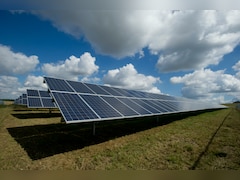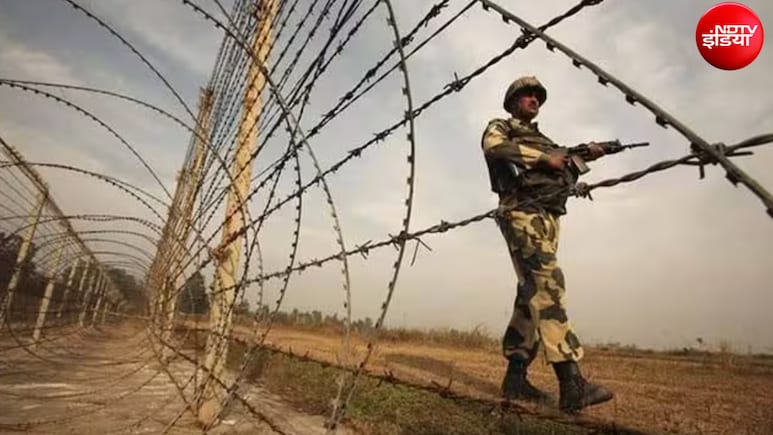
The Centre has restricted new solar, wind and hybrid renewable energy projects within 1 km of the Line of Control (LoC), Line of Actual Control (LAC) and the International Border (IB), concerning national security concerns.
The Ministry of Home Affairs (MHA) has also classified areas within 50 km of the LoC, LAC and the International Border as "sensitive".
Under the new guidelines, projects proposed within this zone will need security clearance from the MHA. Those planned within 20 km of the International Border will additionally require a no-objection certificate (NOC) from the Ministry of Defence, PTI reported. It had first issued an office memorandum on June 5 before releasing the detailed guidelines.
The guidelines make it clear that no project activity will be allowed within 1 km of the LoC, LAC or the International Border. Projects proposed between 1 km and 50 km will be examined by the MHA on a case-by-case basis, while those located between 1 km and 20 km of the International Border will require clearance from both the MHA and the Defence Ministry.
Also Read: India Adds 27 Arunachal Pradesh Sites To Official Maps Amid China Row
The new norms will also apply to projects that are required to submit fresh applications.
The MHA has further barred developers from employing engineers, workers or other staff from neighbouring land-border countries, particularly Pakistan, Bangladesh and China, without prior approval from the Centre.
Project developers will also need the Centre's approval, including security clearance from the MHA, before transferring project land to any foreign company.
According to the ministry, the guidelines were framed after consultations with stakeholders to balance national security concerns with the government's push to expand renewable energy and improve ease of doing business.
Existing projects exempt
The MHA clarified that projects which had already received security clearance before the guidelines were issued will not have to apply again.
Fresh applications will be routed through the Ministry of New and Renewable Energy (MNRE), which will forward proposals along with the state government's in-principle land approval and project coordinates to the MHA for security clearance and to the Defence Ministry for an NOC, wherever required.
The ministry also said the MNRE must ensure that project land is allocated in a way that prevents long stretches of construction running parallel to the international border.
Projects involving foreign investment will continue to require separate approval from the Department for Promotion of Industry and Internal Trade (DPIIT) under the existing FDI policy.
The MNRE will communicate the final approval only after obtaining the required security clearance from the MHA and, where applicable, the Defence Ministry's NOC.
Security measures tightened
The guidelines require every project in sensitive areas to have a dedicated police post to monitor construction activities. Foreign nationals visiting project sites will also be subject to monitoring.
Developers must ensure that all employees are verified before entering project sites and comply with directions issued by local police and the Border Security Force (BSF).
Projects must also install security systems, including anti-drone equipment, to be operated by the CISF or state police, with the cost to be borne by the project developer.
Also Read: Who Is Bhawana Kanth? Meet India's First Woman Fighter Combat Leader
In addition, developers will have to provide roads wide enough for use by the BSF and the armed forces during emergencies.
The guidelines prohibit hotels and accommodation facilities within 5 km of the border, although cafeterias will be allowed inside project premises.
The MHA has also imposed height restrictions on project-related civil infrastructure in sensitive areas. Structures can be up to 3 metres high within 1-8 km of the border, 5 metres between 8 km and 20 km, and 15 metres between 20 km and 50 km.
Essential Business Intelligence, Sharp Market Insights, Practical Personal Finance Advice, Daily Fuel, Gold and Silver Prices and Latest Stories — On NDTV Profit.