Union Road Transport and Highways Minister Nitin Gadkari has said he considers himself responsible for 40% of India's air pollution, linking the rising pollution levels to the expansion of road infrastructure and increasing vehicle ownership.
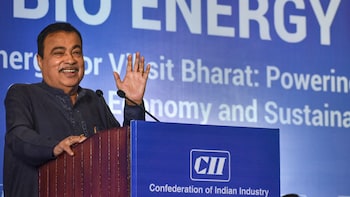
Speaking at the 14th CII Bioenergy Summit in Delhi on Tuesday, November 17, Gadkari called for India to move beyond conventional fuels such as petrol and diesel and accelerate the adoption of alternative energy sources.
The minister highlighted the environmental impact of the country's growing automobile industry and said the increasing number of vehicles on roads was contributing to pollution.
ALSO READ: Nitin Gadkari On Expressway Speed Limits: No Challans Up To 120 Kmph, 20% Margin Explained
Also Read | Layoffs Are Rising In Tech, But These Skills Are Helping People Unlock Better Pay
He also discussed the potential of ethanol, methanol, biodiesel, hydrogen and other alternative fuels to reduce emissions and India's dependence on fuel imports.
Nitin Gadkari On India's Air Pollution
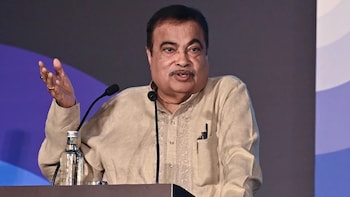
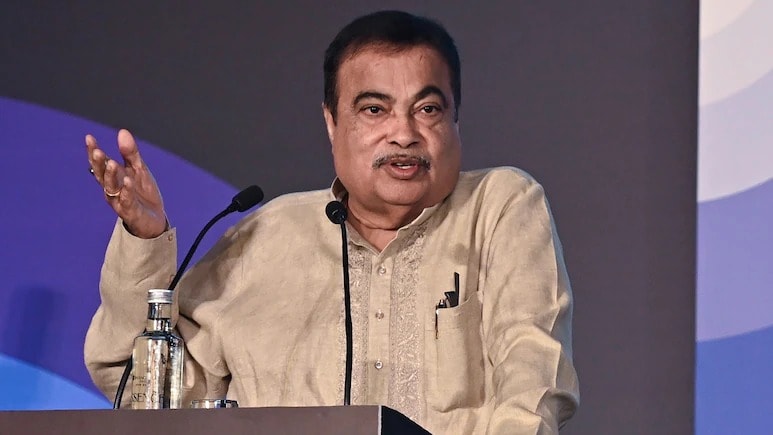
Speaking about the connection between road development and rising pollution, Gadkari said, "I am the Transport Minister. I am responsible for 40% of air pollution in the country."
He explained that the development of better roads had also encouraged more people to purchase vehicles, resulting in increased emissions.
"We are building good roads in the country. People are buying vehicles, and everyone is driving on the roads, releasing smoke and increasing pollution," he said.
Gadkari also highlighted the growth of India's automobile industry during his tenure as minister. He said the industry's valuation had increased from Rs 14 lakh crore when he took charge to Rs 22 lakh crore currently.
He added that India had moved from the seventh position to become the world's third-largest automobile market, overtaking Japan.
"When I became the minister, the automobile industry was worth Rs 14 lakh crore. Today, it is worth Rs 22 lakh crore. Earlier, we were at the seventh position globally. Now, we are at number three, having overtaken Japan," he added.
3,000 Plants Coming Up Under GOBARdhan Yojana
Gadkari also highlighted the potential of bioenergy in addressing India's pollution challenges. He said around 3,000 plants were coming up under the GOBARdhan Yojana, of which 250 had started operations, while nearly 200 were in the process of being established.
The minister also pointed to stubble burning as a contributor to Delhi's pollution and stressed the need to find alternatives to the practice.
"If stubble is not burnt, there will be no pollution in Delhi. Therefore, bioenergy has tremendous potential," he said.
He also discussed the possibility of using biofuels in the aviation sector, saying that discussions were underway globally about making 2% biofuel blending mandatory in Sustainable Aviation Fuel (SAF).
"We can directly produce Sustainable Aviation Fuel from ethanol or rectified spirit. We are conducting experiments with isobutanol," Gadkari said.
He added that isobutanol could emerge as an alternative to diesel. According to the minister, Kirloskar had developed generator sets that run entirely on ethanol and isobutanol, along with a tractor engine using these fuels.
"I have asked for a date for the inauguration, and I am going to Pune now. If we encourage this, our tractors will run on ethanol," he said.
Gadkari Proposes Converting Carbon Dioxide Into Urea
The minister also discussed the possibility of using carbon dioxide emissions from industries to manufacture products such as urea and dimethyl ether (DME).
He said hydrogen extracted from water through the electrolysis process could be combined with carbon dioxide to produce urea, potentially reducing India's dependence on imported fertilisers.
"Now, the idea is to produce urea from carbon dioxide. DME will also be produced from carbon dioxide. The Power Ministry has also issued a tender for this," he said.
Explaining the proposed process, Gadkari noted that hydrogen could be extracted from water using an electrolyser and combined with carbon dioxide to manufacture urea.
"I have been continuously pursuing the idea that if hydrogen is extracted from water through the electrolyser process and added to 16% CO2, it can be used to produce urea," he said.
Highlighting the country's fertiliser import expenditure, Gadkari said, "Today, our country imports urea worth Rs 6 lakh crore. This can be saved."
Gadkari Backs DME To Reduce India's LPG Imports
Gadkari also pitched dimethyl ether (DME) as another alternative that could help India reduce its dependence on imported LPG.
He said India could produce DME domestically and blend it with LPG to reduce imports.
The minister also noted about India's energy strategy was focused on reducing imports, making fuels more affordable, lowering pollution and encouraging domestic production.
ALSO READ: Gadkari Revives Skybus Dream: All About The 'Flying Bus' He Has Been Pitching Since 2022
"Import substitution, cost-effectiveness, pollution-free solutions and indigenous production are our policies," he said.
Gadkari added that the government was exploring several alternative energy sources, including ethanol, methanol, biodiesel and LNG, while also working towards a gas-based economy and greater use of hydrogen.
Essential Business Intelligence, Sharp Market Insights, Practical Personal Finance Advice, Daily Fuel, Gold and Silver Prices and Latest Stories — On NDTV Profit.